[2025–2026 Global Sake Export Data Decoded] Record 81 Countries & South Korea’s All-Time High ¥4.4B Surge — Why Global Gen Z/Millennials and Sommeliers Choose Sake After Wine
Culture & Trends

[2025–2026 Global Sake Export Data Decoded] Record 81 Countries & South Korea’s All-Time High ¥4.4B Surge — Why Global Gen Z/Millennials and Sommeliers Choose Sake After Wine

2026-11-139min readSakeStream
Back
EXECUTIVE SUMMARY & KEY TAKEAWAYS

Official Ministry of Finance and JSS figures confirm ¥45.88 billion in sake exports across an all-time record 81 countries. Above all, we decode why South Korea surged +17.4% to a historic ¥4.395 billion and 5,483 kL even as wine and whisky imports cooled.

Key Sections in This Report:

¥45.9 Billion Across a Record 81 Countries: Decoding Sake’s Structural Shift

At a moment when global wine and spirits markets face historic headwinds from inflation and shifting generational drinking habits, Japanese sake (nihonshu) is charting an unmistakable trajectory of its own. According to full-year confirmed figures published by Japan’s Ministry of Finance Trade Statistics and the Japan Sake and Shochu Makers Association (JSS) Official Portal, total global exports of Japanese sake reached ¥45,879.49 million (approx. ¥45.9 billion, +5.5% YoY) in 2025—marking the second-highest export value in history, trailing only the 2022 post-pandemic peak. Even more tellingly, export volume climbed +8.0% YoY to 33,549 kL, while the number of destination markets expanded to an all-time record of 81 countries and territories.

What makes these numbers structurally transformative is value density. The average export unit price stood at ¥1,368 per liter (roughly ¥985 FOB per 720ml bottle, translating to $65–$180 on international restaurant lists)—nearly double the unit value recorded a decade ago. As documented in the National Tax Agency (NTA) Sake Export Statistics, sake has decisively shed its legacy stereotype as a hot, inexpensive accompaniment to casual overseas sushi rolls. Today’s export growth is overwhelmingly powered by chilled, wine-glass-served Junmai Ginjo, Junmai Daiginjo, and unpasteurized nama labels built for contemporary gastronomy.


Global Top 10 Sake Export Destinations Matrix (Confirmed 2025 Data & 2026 Momentum)

Drawing on Ministry of Finance Customs Trade Statistics and annual JSS market briefings, the table below maps the world’s top 10 export destinations by value. While China and the United States remain the twin pillars above the ¥10 billion mark, #4 South Korea (+17.4%), #7 Canada (+26.0%), and #9 France (+13.8%) each shattered their all-time value records—while Latin America surged roughly 4x compared to 2020 on the back of booming Nikkei gastronomy in São Paulo, Lima, and Mexico City.

RankMarketExport Value (YoY)Volume & Unit Value MetricsCore 2025–2026 Structural Growth Drivers
#1China¥13.30B (+14.0%)High unit price · Fine dining & giftingResilient coastal and tier-1 inland omakase demand for ultra-premium Junmai Daiginjo
#2United States¥11.05B (Steady)#1 Global Volume (7,720 kL)Michelin wine-list integration in NY/LA/SF plus halo effect from local American craft kura
#3Hong Kong¥4.82B (Ultra-luxury)¥2,376/L Avg. Unit PriceGlobal collector, auction, and luxury hotel hub for rare ¥30,000–¥150,000 bottles
#4South Korea¥4.395B (+17.4% · Record)#3 Volume (5,483 kL · Record)Boom of Seongsu/Hannam/Cheongdam sake bars & convenience-store Smart Order pickup
#5Taiwan¥2.70B (Mature)End-to-end sub-zero reefer networkRepeat Japan travelers seeking allocated 720ml seasonal & artisanal regional labels
#6Singapore¥1.50B (High-margin)Top Southeast Asian unit valueWealth hub driving prestige sushi omakase and modern Asian tasting-menu pairings
#7Canada¥1.31B (+26.0% · Record)Fastest growth in North AmericaNatural-wine drinkers in Vancouver and Toronto embracing low-ABV terroir Junmai
#8Australia¥0.84B (Expanding)Modern Australian seafood synergySydney and Melbourne chefs pairing crisp acid-driven sake with raw bar & fermentation
#9France¥0.63B (+13.8% · Record)European sommelier bellwether10th anniversary of Kura Master & widespread French bistro/starred by-the-glass service
#10United Kingdom¥0.62B (Solid growth)London luxury hospitalityAuthority of London’s IWC judging hub & five-star hotel sommelier programs

Inside South Korea’s All-Time Record ¥4.395 Billion (+17.4%) Breakthrough

The single most striking storyline in global beverage analytics right now is South Korea’s counter-cyclical surge. Cross-referencing Korea Customs Service (KCS) import ledgers reveals a remarkable divergence: while Korean imports of still wine and Scotch single-malt whisky contracted from their pandemic highs across 2024–2025, Japanese sake simultaneously set all-time records in both value (¥4.395 billion, +17.4% YoY) and volume (5,483 kL, #3 globally).

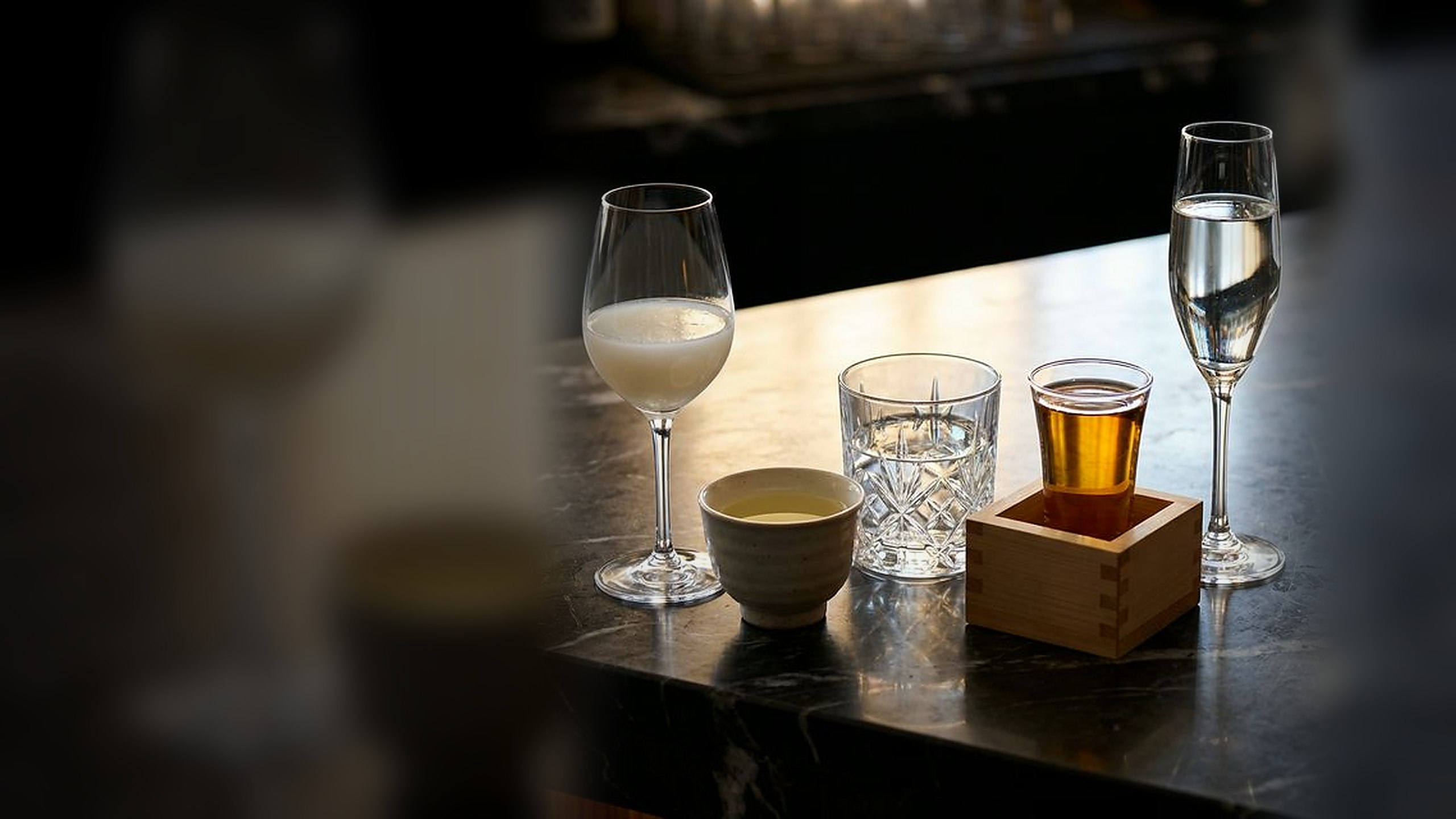
Premium wine-glass sake experiences rapidly expanding across Seongsu-dong, Hannam-dong, and Cheongdam-dong in Seoul

Why are Korea’s 20s-and-30s ("2030 generation") diners and leading sommeliers pivoting so decisively toward premium sake? On-the-ground trade data points to three converging structural revolutions:

Retail Infrastructure Revolution (App-Based Smart Order)
Major Korean convenience chains (CU, GS25, 7-Eleven, Emart24) have turned mobile "Smart Order" click-and-collect into a nationwide phenomenon. Allocated 720ml Junmai Ginjo bottles once restricted to luxury Gangnam department stores can now be browsed with tasting notes on a smartphone and picked up steps from home.
Spatial & Cultural Revolution (Seongsu, Hannam & Cheongdam Sake Bars)
Sake in Seoul has broken completely free of old-school izakaya clichés. In converted industrial lofts in Seongsu-dong and intimate tasting counters in Hannam-dong and Cheongdam-dong, curated sakes are poured into ultra-thin Riedel or Kimura stems alongside aged sashimi (sukseong-hoe) and charcoal-kissed Korean beef.
Palate Revolution (13–14% ABV, Micro-Effervescence & Bright Acidity)
Younger Korean consumers strongly reject harsh alcohol burn. Modern Japanese brewing—centered on 13–14% ABV undiluted designs, lively malic/succinic acidity, and fresh bottling fizz—aligns effortlessly with contemporary lighter, brighter dining preferences.

Three Stylistic Archetypes Driving the 81-Country Gastronomy Boom

Below is a neutral profile of three bottle styles widely featured across restaurant lists and import portfolios worldwide.

①

Modern Terroir Junmai Ginjo (Low-ABV, Micro-Sparkling & Crystal Clarity)

Across wine bars from Seoul’s Cheongdam-dong to Lower Manhattan and Montreal, this is the gateway style converting natural-wine devotees overnight. Expect white peach and Muscat lift on the nose, fleeting natural petillance on entry, and a taut mineral-acid cut that leaves zero cloying sweetness.

Benchmark Labels
Mimurosugi Dio Abita (Imanishi Shuzo, Nara) / Kaze no Mori ALPHA 1 (Yucho Shuzo, Nara) / Ubusuna Yamada Nishiki (Hananoka Shuzo, Kumamoto)
720ml Price Guide
Japan retail ¥1,980–¥3,300 / Overseas retail & Korean Smart Order KRW 48,000–85,000 (approx. $38–$68 USD)
Cold-Chain Requirement
Strict refrigerated logistics (-5°C to +5°C reefer transport). Matured cold-chain pipelines into Korea, Taiwan, Hong Kong, and Singapore unlocked this entire segment.
Sommelier Verdict
At 13–14% ABV, two diners can comfortably share a full bottle over dinner just like a premier cru Chablis or Riesling.
②

Competition-Crowned Flagship Junmai Daiginjo (Prestige Omakase & Gifting)

The undisputed anchors of Hong Kong (¥2,376/L average FOB), Singapore, Shanghai, and five-star hotel dining rooms in Seoul and London. Trophies at IWC and SAKE COMPETITION serve as instant global quality passports.

Benchmark Labels
Dassai 23 (Asahi Shuzo, Yamaguchi) / Kokuryu Junmai Daiginjo (Kokuryu Shuzo, Fukui) / Tenbi Junmai Ginjo Hotaten (Choshu Shuzo, Yamaguchi)
720ml Price Guide
Japan retail ¥2,750–¥11,000 / International fine-dining list $110–$380 USD (KRW 120,000–420,000)
Export Advantage
Sub-zero aging and 23–50% rice polishing yield a weightless, liquid-silk mid-palate that elevates caviar, sea urchin (uni), and shaved white truffle without metallic clash.
2026 Evolution
Buyers have moved past raw polishing-ratio numbers, rewarding single-origin rice provenance (such as Special A-Zone Hyogo Yamada Nishiki) and transparent estate storytelling.
③

Modern Kimoto/Yamahai & Bottle-Fermented Sparkling Sake (French & Steakhouse Ready)

Powering record export gains in France (+13.8%) and Canada (+26.0%) as well as upscale Hanwoo beef temples in Seoul, traditional lactic-starter sakes and awa sparkling bottles allow sommeliers to build end-to-end sake pairings across Western tasting menus.

Benchmark Labels
Shichiken Sparkling Yama no Kasumi / Hoshi no Kagayaki (Yamanashi Meijo) / Gensai Tokubetsu Junmai (Suehiro Shuzo, Fukushima) / Daishichi Kimoto Junmai (Daishichi Shuzo, Fukushima)
720ml Price Guide
Japan retail ¥1,870–¥11,000 / International trade & retail $35–$160 USD (KRW 45,000–210,000)
Gastronomic Range
Bridges Champagne-style aperitif service all the way to charcoal-grilled ribeye, brown-butter sauces, and aged mountain cheeses.
By-the-Glass Economics
Pasteurized kimoto and yamahai expressions evolve gracefully for 7–14 days after opening, slashing spoilage risk for restaurant by-the-glass programs.
"Five years ago, overseas sommeliers treated sake as a novelty reserved for sushi courses. Across 81 markets in 2026, omitting a dedicated sake section between white and skin-contact wines is increasingly viewed as leaving half of a chef’s umami palette on the table." — Head Sommelier, Cheongdam-dong Fine Dining, Seoul
1,215 Breweries · 2,891 Labels · Neutral Archive
Linked from 1,215 Breweries · 2,891 Labels · 8,673 Reviews

Featured Breweries, Specs & Flavor Balance

Flagship LabelBrewery & RegionSignature Rice & WaterBrewery Profile
MimurosugiImanishi Sake Brewery Co., Ltd. (510 Miwa, Sakurai-shi, Nara 633-0001, Japan)Tsuyuhakaze, Yamadanishiki, Omachi · Subsurface water from sacred Mt. Miwa (medium-soft water)Brewery Profile
TENBUNishi Shuzo Co., Ltd. (4970-17 Yokura, Fukiage-cho, Hioki City, Kagoshima 899-3309, Japan (Tenbu Sake Kura: 3142-10 Yokura, Fukiage-cho, Hioki City))Yamada Nishiki (Tojo Special A District, Hyogo), Aiyama, Akaiwa Omachi · Satsuma Peninsula Deep Subterranean Natural Soft Water ('HOUMEI')Brewery Profile
KazenomoriYucho Sake Brewery Co., Ltd. (1160 Nakahonmachi, Gose-shi, Nara 639-2216, Japan)Akitsuho, Tsuyuhakaze, Yamadanishiki, Omachi · Deep subterranean water from the Mt. Kongo and Mt. Katsuragi range (hard water, approx. 214 mg/L)Brewery Profile
UbusunaHananoka Shuzo Co., Ltd. (2226-2 Nishiyoshiji, Nagomi-machi, Tamana-gun, Kumamoto 861-0906, Japan)Nagomi-machi Natural-Farmed Homase, Higo Kabashiko, Yamada Nishiki · Brewery Shrine Spring Water (Kikuchi River Basin Subterranean Water from the Former Bairin Tenmangu Well)Brewery Profile
DassaiDassai Inc. (Asahi Shuzo Co., Ltd.) (2167-4 Osogoe, Shuto-cho, Iwakuni-shi, Yamaguchi 742-0422, Japan)Yamada Nishiki (100% Exclusive Use) · Osogoe Natural Subterranean Soft Water (Shuto-cho, Iwakuni)Brewery Profile
Ise AsahiAsahi Sake Brewery Co., Ltd. (3032 Yamaoyodo, Meiwa-cho, Taki-gun, Mie 515-0303, Japan)Kaminoho, Yamadanishiki, Gohyakumangoku · Subsurface water from the pristine Kushida River (soft water)Brewery Profile
KokuryuKokuryu Sake Brewing Corporation (1-38 Matsuoka-Kasuga, Eiheiji-cho, Yoshida-gun, Fukui 910-1133, Japan)Hyogo Tojo Yamada Nishiki, Fukui Sakahomare, Gohyakumangoku, Koshinoshizuku · Mt. Hakusan Range & Kuzuryu River Subterranean Soft WaterBrewery Profile
TenbiChoshu Brewery Co., Ltd. (72 Yoshika, Kikugawa-cho, Shimonoseki-shi, Yamaguchi 750-0316, Japan)Yamada Nishiki, Saito no Shizuku · Koya River System & Kikugawa Natural Subterranean Medium-Soft WaterBrewery Profile
ShichikenYamanashi Meijo Co., Ltd. (2283 Daigahara, Hakushu-cho, Hokuto City, Yamanashi 408-0312, Japan)Hakushu-Grown Yumesansui, Yamada Nishiki, Hitogokochi (Estate & Contract-Farmed) · Mt. Kaikomagatake Subterranean Soft Water (Ojira River System, Top 100 Famous Waters)Brewery Profile
GensaiSuehiro Sake Brewery Co., Ltd. (12-38 Nisshin-machi, Aizuwakamatsu-shi, Fukushima 965-0861, Japan)Yumenoka, Fukunoka, Yamadanishiki, Gohyakumangoku, Kamenoo · Subsurface snowmelt soft water from Mt. Hakase and the Aizu BasinBrewery Profile
510 Miwa, Sakurai-shi, Nara 633-0001, Japan · Imanishi Sake Brewery Co., Ltd. (Est. 1660)
Mimurosugiラムネガス華やか
Subsurface water from sacred Mt. Miwa (medium-soft water) Tsuyuhakaze, Yamadanishiki, Omachi Kyokai No. 9 strain, Miwa Heritage Yeast and Bodaimoto

Founded in 1660 at the foot of sacred Mount Miwa and Omiwa Shrine—revered as the ancestral deity of Japanese sake brewing—Imanishi Shuzo crafts Mimurosugi using shrine-mountain subterranean water and locally grown Yamadanishiki and Tsuyuhakaze rice. Luminous lychee, white peach, and Muscat aromas flow into a crystal-clear, juicy palate with a brisk finish that pairs effortlessly with sushi, sashimi, and delicate crudo.

Flavor Balance (1–5 Rice Grains)Shows which flavor direction the balance leans toward (1 to 5 rice grains), never a quality rank or score.
Serving & Glassware:Recommended Temperature: 10–14°C (Cool Cellar) & 42–45°C (Bain-Marie Warmed / Nurukan) / Recommended Glassware: Thin-rimmed white Burgundy or Riedel O Daiginjo wine glass. Right after opening at 10°C, savor the vibrant micro-effervescence and taut lactic/citric tension shaped by Subsurface water from sacred Mt. Miwa (medium-soft water); after 15 minutes as it reaches 14°C, multi-dimensional Tsuyuhakaze, Yamadanishiki, Omachi umami and savory kimoto complexity blossom.
Global Gastronomy Pairings
• Charcoal-grilled Yamato heritage chicken with narazuke sake-lees glaze and Yamato Wagyu shabu-shabu
• Crispy-scaled Jeju tilefish (okdom) and creamy abalone liver (geu) rice porridge risotto
• Dover sole meunière with cultured hazelnut brown butter, Meyer lemon, and capers
“Mimurosugi Roman Junmai Ginjo Yamadanishiki and Dio Abita open with morning-dew clarity and delicate lychee and white peach notes—juicy on the mid-palate yet vanishing effortlessly thanks to soft Mount Miwa water. The absolute pinnacle of the 'clean and juicy' style.”
Domestic Review · SAKETIME三輪の酒神礼賛
“Mimurosugi Kioke Bodaimoto—fermented in vats coopered from sacred Mount Miwa cedar using ambient lactic bacteria and brewery yeast—is true terroir sake, weaving silky acidity with white peach and cedar-herb nuances for Michelin-level pairings.”
Global Sommelier · Vivino / Michelin Guide Sommelier SelectionCamille L.
“Stopped by Imanishi Shuzo after visiting Omiwa Shrine and picked up Mimurosugi 'Hanakyun' Origarami and Junmai Ginjo Tsuyuhakaze—the Tsuyuhakaze's pink-grapefruit acidity and subtle bitterness are addictive at the dinner table.”
SNS Buzz · X (Twitter)@nara_sake_pilgrim
4970-17 Yokura, Fukiage-cho, Hioki City, Kagoshima 899-3309, Japan (Tenbu Sake Kura: 3142-10 Yokura, Fukiage-cho, Hioki City) · Nishi Shuzo Co., Ltd. (Est. 1845)
TENBUフルーティ甘味旨味
Satsuma Peninsula Deep Subterranean Natural Soft Water ('HOUMEI') Yamada Nishiki (Tojo Special A District, Hyogo), Aiyama, Akaiwa Omachi Nishi Shuzo Proprietary Cultured Yeast

Created in 2020 by Nishi Shuzo—the legendary Kagoshima distillery behind Tomino Hozan shochu—Tenbu brings world-class precision to Japan's southernmost mainland prefecture. Crafted with ultra-soft Satsuma mountain water and elite Yamada Nishiki and Aiyama rice, its lush lychee-and-white-peach aromatics, velvety sweetness, and crystal-clear finish pair magnificently with Kagoshima black Wagyu, Kurobuta pork shabu-shabu, and silver-stripe round herring sashimi.

Flavor Balance (1–5 Rice Grains)Shows which flavor direction the balance leans toward (1 to 5 rice grains), never a quality rank or score.
Serving & Glassware:Recommended Temperature: 10–13°C (Chilled / Hanabie to Suzubie) / Recommended Glassware: Thin-rimmed, medium-bowled white wine glass (such as Riedel O Daiginjo). Avoid over-chilling below 6°C so the delicate esters are not muted. Upon pouring, experience crystalline purity from Satsuma Peninsula Deep Subterranean Natural Soft Water ('HOUMEI') and lifted orchard-fruit aromatics; after 15 minutes as the glass warms to 14°C, silky Yamada Nishiki (Tojo Special A District, Hyogo), Aiyama, Akaiwa Omachi mid-palate umami opens gracefully.
Global Gastronomy Pairings
• Kinko Bay amberjack & silver-stripe round herring (kibinago) sashimi with salt-grilled kuruma prawn
• Jeju silver belt-fish sashimi and delicate pan-fried scallop & cod jeon with citrus soy
• Poached lobster tail and white asparagus warm salad with yuzu-infused citrus hollandaise
“Tasted Tenbu Junmai Daiginjo alongside the Junmai Ginjo Aiyama. Any preconceptions about southern Kyushu sake vanish on the first sip—breathtaking clarity, white-peach perfume, and velvet texture born of Nishi Shuzo's fermentation mastery.”
Domestic Review · SAKETIME / 国内口コミ薩摩の美酒探訪家
“Drawing on Nishi Shuzo's global experience in both luxury shochu and New Zealand biodynamic winemaking, Tenbu achieves a modern, satin-textured elegance that dazzles international sommeliers.”
Global Sommelier · Vivino / Global SakeVictor Sterling
“Had Tenbu Junmai Ginjo with Kagoshima Kurobuta pork shabu-shabu on a trip south and was blown away! Its dewy aromatics and soft sweetness wrapped around the sweet pork fat in pure harmony.”
SNS Buzz · X (Twitter) / Instagram@kagoshima_gourmet_club
1160 Nakahonmachi, Gose-shi, Nara 639-2216, Japan · Yucho Sake Brewery Co., Ltd. (Est. 1719)
Kazenomoriガス酸味フルーティ
Deep subterranean water from the Mt. Kongo and Mt. Katsuragi range (hard water, approx. 214 mg/L) Akitsuho, Tsuyuhakaze, Yamadanishiki, Omachi Kyokai No. 7, Bodaimoto Indigenous Lactic Acid Bacteria and Yeast

Brewed in Gose City, Nara by 1719-founded Yucho Shuzo, Kaze no Mori unites ancient Muromachi-era Bodaimoto heritage with cutting-edge fermentation science across an all-Muroka Nama Genshu lineup. Fermented with ultra-hard Katsuragi Mountain subsurface water (over 200mg/L hardness) and local Akitsuho rice, its signature micro-effervescence, Muscat and pear aromatics, and chiseled mineral finish captivate diners from sushi counters to Michelin-starred French and Italian tables.

Flavor Balance (1–5 Rice Grains)Shows which flavor direction the balance leans toward (1 to 5 rice grains), never a quality rank or score.
Serving & Glassware:Recommended Temperature: 10–14°C (Cool Cellar) & 42–45°C (Bain-Marie Warmed / Nurukan) / Recommended Glassware: Thin-rimmed white Burgundy or Riedel O Daiginjo wine glass. Right after opening at 10°C, savor the vibrant micro-effervescence and taut lactic/citric tension shaped by Deep subterranean water from the Mt. Kongo and Mt. Katsuragi range (hard water, approx. 214 mg/L); after 15 minutes as it reaches 14°C, multi-dimensional Akitsuho, Tsuyuhakaze, Yamadanishiki, Omachi umami and savory kimoto complexity blossom.
Global Gastronomy Pairings
• Charcoal-grilled Yamato heritage chicken with narazuke sake-lees glaze and Yamato Wagyu shabu-shabu
• Crispy-scaled Jeju tilefish (okdom) and creamy abalone liver (geu) rice porridge risotto
• Pan-roasted Breton blue lobster with Champagne, tarragon, and cultured butter beurre blanc
“Kaze no Mori Akitsuho 657 opens with a lively pop and a ribbon of fine micro-bubbles in the glass: fresh Muscat and green apple aromatics, a juicy burst of rice sweetness, and a taut, stony finish driven by ultra-hard Katsuragi mountain water. Experiencing this level of craftsmanship at an everyday price is nothing short of a miracle.”
Domestic Review · SAKETIME大和の美酒巡礼
“Chobee Yamamoto's work at Yucho Shuzo—bridging 15th-century Nara temple brewing texts with precision low-temperature fermentation—is thrilling. The high-hardness mineral tension and natural effervescence of Kaze no Mori ALPHA and 807 deliver a gastronomic experience unlike anything else in the world of wine or sake.”
Global Sommelier · Vivino / World Sommelier AssociationMaximilian H.
“Opened Kaze no Mori ALPHA 8 alongside Yamadanishiki 807 tonight—807's crystalline purity and mineral grip at 80% polishing defy belief, while the ALPHA series pushes boundaries with every release. Still the #1 bottle that turns friends into lifelong sake lovers.”
SNS Buzz · X (Twitter)@kazenomori_holic
2226-2 Nishiyoshiji, Nagomi-machi, Tamana-gun, Kumamoto 861-0906, Japan · Hananoka Shuzo Co., Ltd. (Est. 1902)
Ubusunaガスシャンパン酸味
Brewery Shrine Spring Water (Kikuchi River Basin Subterranean Water from the Former Bairin Tenmangu Well) Nagomi-machi Natural-Farmed Homase, Higo Kabashiko, Yamada Nishiki Kyokai No. 9 (Kumamoto Yeast) & Indigenous Brewery Yeast

Created in Nagomi, Kumamoto by Kiyotaka Kanda of Hananoka Shuzo to embody 'earth, native ecosystem, and ancestral regenerative agriculture,' Ubusuna stands at the absolute pinnacle of contemporary craft sake. Brewed with pesticide-free local Yamada Nishiki and revived Edo-era heirloom rices (Homase and Kabashiko) using kimoto and wooden vats, its Champagne-like pinpoint mousse and electric orchard-and-yuzu complexity transfix fine-dining tables worldwide.

Flavor Balance (1–5 Rice Grains)Shows which flavor direction the balance leans toward (1 to 5 rice grains), never a quality rank or score.
Serving & Glassware:Recommended Temperature: 10–14°C (Cool Cellar) & 42–45°C (Bain-Marie Warmed / Nurukan) / Recommended Glassware: Thin-rimmed white Burgundy or Riedel O Daiginjo wine glass. Right after opening at 10°C, savor the vibrant micro-effervescence and taut lactic/citric tension shaped by Brewery Shrine Spring Water (Kikuchi River Basin Subterranean Water from the Former Bairin Tenmangu Well); after 15 minutes as it reaches 14°C, multi-dimensional Nagomi-machi Natural-Farmed Homase, Higo Kabashiko, Yamada Nishiki umami and savory kimoto complexity blossom.
Global Gastronomy Pairings
• Charcoal-grilled Kumamoto Akaushi beef steak and Binchotan-roasted Amakusa Daio giant heritage chicken
• Charcoal-seared Hanwoo 1++ brisket point (chadolbagi) paired with aromatic minari and chilled dongchimi radish
• Pan-roasted Breton blue lobster with Champagne, tarragon, and cultured butter beurre blanc
“Miraculously secured Ubusuna Homase 5-Nojo and Yamada Nishiki 2-Nojo. Fine, persistent bubbles carry waves of Japanese citrus, white peach, wild herbs, and living earth minerality—one of the most spine-tingling bottles of my life.”
Domestic Review · SAKETIME / 国内口コミテロワール日本酒探求家
“Encountering Ubusuna gave me the same electric shock as my first glass of Jacques Selosse. The vibrating energy born from regenerative paddies, native microbes, and wooden vats stands shoulder to shoulder with the greatest wines on earth.”
Global Sommelier · Vivino / Global SakeGuillaume Delacroix
“Popped Ubusuna Kabashiko 4-Nojo! To think an heirloom Edo-era Kumamoto rice once praised as the finest in the realm has been revived into something so dewy, aromatic, and transcendent—pure genius from Hananoka Shuzo.”
SNS Buzz · X (Twitter) / Instagram@craft_sake_chronicle
2167-4 Osogoe, Shuto-cho, Iwakuni-shi, Yamaguchi 742-0422, Japan · Dassai Inc. (Asahi Shuzo Co., Ltd.) (Est. 1948)
Dassai安定フルーティガス
Osogoe Natural Subterranean Soft Water (Shuto-cho, Iwakuni) Yamada Nishiki (100% Exclusive Use) Proprietary Cultured Ginjo Yeast (Kyokai No. 9 & No. 1801 Strains)

From the mountain valleys of Iwakuni, Yamaguchi, Dassai revolutionized global sake through data-driven precision brewing and ultra-polished Yamada Nishiki rice. Led by the iconic Dassai 23, its opulent aromas of white peach and Poire Williams, silky-smooth mid-palate, and crystalline finish pair effortlessly with fine Edomae sushi and Michelin-starred French cuisine.

Flavor Balance (1–5 Rice Grains)Shows which flavor direction the balance leans toward (1 to 5 rice grains), never a quality rank or score.
Serving & Glassware:Recommended Temperature: 10–13°C (Chilled / Hanabie to Suzubie) / Recommended Glassware: Thin-rimmed, medium-bowled white wine glass (such as Riedel O Daiginjo). Avoid over-chilling below 6°C so the delicate esters are not muted. Upon pouring, experience crystalline purity from Osogoe Natural Subterranean Soft Water (Shuto-cho, Iwakuni) and lifted orchard-fruit aromatics; after 15 minutes as the glass warms to 14°C, silky Yamada Nishiki (100% Exclusive Use) mid-palate umami opens gracefully.
Global Gastronomy Pairings
• Shimonoseki wild tiger pufferfish tessa wrapped around Yasuoka green onion and kelp-cured Hagi tilefish
• Dry-aged Korean wild sea bream hoe and chilled king prawn salad (daeha-naengchae) in pine-nut sauce
• Poached lobster tail and white asparagus warm salad with yuzu-infused citrus hollandaise
“Returning to Dassai 23 after years of drinking geeky craft sake reminds you just how astonishingly pure and regal it is. Honeyed melon and floral notes glide across the palate before vanishing into a water-pure finish.”
Domestic Review · SAKETIME / 国内口コミ吟醸香マイスター
“The most requested luxury sake in our Paris dining room. The elegance achieved from Yamada Nishiki polished down to 23% creates a transcendent pairing with poached blue lobster and caviar, rivaling prestige Champagne.”
Global Sommelier · Vivino / Global SakeClaire Laurent
“Opened a bottle of Dassai Beyond for visiting international guests. The moment it hit the Riedel glasses, the entire table lit up with floral perfume—an undeniable superstar bottle.”
SNS Buzz · X (Twitter) / Instagram@tokyo_gourmet_note
3032 Yamaoyodo, Meiwa-cho, Taki-gun, Mie 515-0303, Japan · Asahi Sake Brewery Co., Ltd. (Est. 1875)
Ise Asahi食中酒旨味バランス
Subsurface water from the pristine Kushida River (soft water) Kaminoho, Yamadanishiki, Gohyakumangoku Mie Prefectural Yeast, Kyokai Yeast

Founded in 1875 in Meiwa Town, Mie Prefecture—site of the ancient Saiku imperial palace that served Ise Grand Shrine—Asahi Shuzo brews its flagship 'Ise Asahi' ('Rising Sun of Ise') using pure soft subterranean water from the clear Kushida River and Mie-grown Kami no Ho, Yamada Nishiki, and Gohyakumangoku rice. Named for the morning sun rising over Ise Bay, it combines a velvety soft-water entry with rounded, noble rice umami and a poised finish. It pairs wonderfully with sake-steamed Ise Bay clams, spiny lobster and sea bream sashimi, and Matsusaka Wagyu sukiyaki.

Flavor Balance (1–5 Rice Grains)Shows which flavor direction the balance leans toward (1 to 5 rice grains), never a quality rank or score.
Serving & Glassware:Recommended Temperature: 10–14°C (Cool Chilled / Hanabie to Suzubie) / Recommended Glassware: Thin-rimmed white wine stem (Riedel O Daiginjo) or stemmed porcelain cup. At 10°C upon opening, enjoy the crystalline poise of Subsurface water from the pristine Kushida River (soft water) and refined aromatics; after 15 minutes as it warms toward 14°C, three-dimensional Kaminoho, Yamadanishiki, Gohyakumangoku umami and balanced acidity expand to bridge sashimi and roasted main courses.
Global Gastronomy Pairings
• Ise-Shima spiny lobster sashimi and chilled ginjo-steamed Matoya oysters
• Charcoal-grilled Hanwoo beef tongue and Wando abalone butter-seared with crisp white kimchi
• Crispy-skinned sea bass poêlé in a delicate clam, saffron, and citrus nage broth
“Tasted Ise Asahi Junmai Ginjo Kami no Ho and the Tokubetsu Junmai. Smooth, rounded entry typical of soft Kushida River water, letting the plump sweet umami of Mie Kami no Ho rice unfold gently—spot-on with grilled clams and white fish sashimi.”
Domestic Review · SAKETIME 三重レビュー伊勢街道の酒旅
“A 150-year-old heritage brewery in Meiwa Town, home to ancient Saiku history. Its calm aromatics and silky umami harmonize beautifully with steamed shellfish and roast beef.”
Global Sommelier · Sacred Ise & Culinary Sakecatherine_vance_uk
“Asahi Shuzo's 'Ise Asahi' near the Saiku Historical Museum! Its balance of gentle rice sweetness and clean finish is spot-on, and it's deeply comforting when gently warmed.”
SNS Buzz · X (旧Twitter) 三重地酒めぐり@iseshima_kanpai
1-38 Matsuoka-Kasuga, Eiheiji-cho, Yoshida-gun, Fukui 910-1133, Japan · Kokuryu Sake Brewing Corporation (Est. 1804)
Kokuryuメロン旨味フルーティ
Mt. Hakusan Range & Kuzuryu River Subterranean Soft Water Hyogo Tojo Yamada Nishiki, Fukui Sakahomare, Gohyakumangoku, Koshinoshizuku Proprietary In-House Cultured Yeast

Founded in 1804 in Eiheiji, Fukui, Kokuryu pioneered commercial luxury Daiginjo in Japan, uniting soft Kuzuryu River water with prized Tojo Yamada Nishiki and local Sakahomare rice. Legendary bottlings like Ishidaya, Nizaemon, Shizuku, and Hachijuhachigo deliver crystalline elegance that elevates Echizen snow crab and haute kaiseki.

Flavor Balance (1–5 Rice Grains)Shows which flavor direction the balance leans toward (1 to 5 rice grains), never a quality rank or score.
Serving & Glassware:Recommended Temperature: 10–13°C (Chilled / Hanabie to Suzubie) / Recommended Glassware: Thin-rimmed, medium-bowled white wine glass (such as Riedel O Daiginjo). Avoid over-chilling below 6°C so the delicate esters are not muted. Upon pouring, experience crystalline purity from Mt. Hakusan Range & Kuzuryu River Subterranean Soft Water and lifted orchard-fruit aromatics; after 15 minutes as the glass warms to 14°C, silky Hyogo Tojo Yamada Nishiki, Fukui Sakahomare, Gohyakumangoku, Koshinoshizuku mid-palate umami opens gracefully.
Global Gastronomy Pairings
• Iced Echizen snow crab sashimi and kelp-cured Wakasa guji (tilefish)
• Dry-aged Korean wild sea bream hoe and chilled king prawn salad (daeha-naengchae) in pine-nut sauce
• Wild sea bream carpaccio with bergamot olive oil, shaved bottarga, and micro herbs
“Kokuryu Daiginjo Shizuku and Hachijuhachigo—collected drop by drop via shizuku bag-hanging—glide effortlessly across the palate with noble white peach and melon aromatics. Sublime with Echizen crab.”
Domestic Review · SAKETIME / 国内口コミ大吟醸の求道者
“Kokuryu Ishidaya and Nizaemon belong at the same table as Grand Cru Montrachet—defined by weightless silk texture, profound purity, and an aristocratic finish.”
Global Sommelier · Vivino / Global SakeSébastien Girard
“Even beyond the ultra-rare flagships, everyday bottles like Kokuryu Icchorai and Junmai Ginjo deliver astonishing value with the same unmistakable Kuzuryu clarity and poise.”
SNS Buzz · X (Twitter) / Instagram@fukui_eshikoto_fan
72 Yoshika, Kikugawa-cho, Shimonoseki-shi, Yamaguchi 750-0316, Japan · Choshu Brewery Co., Ltd. (Est. 1871)
Tenbiガスフレッシュ甘味
Koya River System & Kikugawa Natural Subterranean Medium-Soft Water Yamada Nishiki, Saito no Shizuku Kyokai No. 901 & Kyokai No. 701 Yeast

Launched in late 2020 in Shimonoseki, Yamaguchi by Choshu Shuzo, Tenbi skyrocketed to national stardom with its bright, uplifting house style. Bearing sun-and-moon labels for day and night expressions, it offers crisp green apple and white grape aromatics, delicate pinpoint effervescence, and vibrant malic acidity that pair beautifully with seafood ceviche, seasonal vegetable tempura, and modern izakaya fare.

Flavor Balance (1–5 Rice Grains)Shows which flavor direction the balance leans toward (1 to 5 rice grains), never a quality rank or score.
Serving & Glassware:Recommended Temperature: 10–13°C (Chilled / Hanabie to Suzubie) / Recommended Glassware: Thin-rimmed, medium-bowled white wine glass (such as Riedel O Daiginjo). Avoid over-chilling below 6°C so the delicate esters are not muted. Upon pouring, experience crystalline purity from Koya River System & Kikugawa Natural Subterranean Medium-Soft Water and lifted orchard-fruit aromatics; after 15 minutes as the glass warms to 14°C, silky Yamada Nishiki, Saito no Shizuku mid-palate umami opens gracefully.
Global Gastronomy Pairings
• Shimonoseki wild tiger pufferfish tessa wrapped around Yasuoka green onion and kelp-cured Hagi tilefish
• Jeju silver belt-fish sashimi and delicate pan-fried scallop & cod jeon with citrus soy
• Poached lobster tail and white asparagus warm salad with yuzu-infused citrus hollandaise
“Opened Tenbi Junmai Ginjo Usunigori Nama (Momoten). Silky lees-touched sweetness meets a lively tingle and a grapefruit-pith finish so refreshing the 720ml bottle vanished in an evening.”
Domestic Review · SAKETIME / 国内口コミ令和の地酒ウォッチャー
“Reminiscent of Basque Txakoli or young Loire Chenin Blanc with its lively spritz and bright acidity—an absolute dream pairing at oyster bars and seafood tapas counters.”
Global Sommelier · Vivino / Global SakeSophia Lin
“Chilled white-label Tenbi Junmai Ginjo tonight. Beyond the gorgeous mizuhiki-inspired label, that crystalline purity and bright malic lift on the palate are simply one of a kind.”
SNS Buzz · X (Twitter) / Instagram@sake_palette
2283 Daigahara, Hakushu-cho, Hokuto City, Yamanashi 408-0312, Japan · Yamanashi Meijo Co., Ltd. (Est. 1750)
Shichikenガスフルーティさわやか
Mt. Kaikomagatake Subterranean Soft Water (Ojira River System, Top 100 Famous Waters) Hakushu-Grown Yumesansui, Yamada Nishiki, Hitogokochi (Estate & Contract-Farmed) Proprietary House Yeast & Kyokai No. 1801

Founded in 1750 in Hakushu at the foot of the Southern Japanese Alps in Yamanashi, Shichiken ('Seven Sages of the Bamboo Grove') harnesses crystal-clear Mount Kaikomagatake snowmelt water. Renowned globally for its bottle-fermented sparkling sakes—including 'Mori no Kanade' aged in Suntory Hakushu whisky barrels—as well as its crisp 'Furinbizan' Junmai and 'Onakaya' Junmai Daiginjo, it pairs seamlessly with French gastronomy, roast poultry, and sushi.

Flavor Balance (1–5 Rice Grains)Shows which flavor direction the balance leans toward (1 to 5 rice grains), never a quality rank or score.
Serving & Glassware:Recommended Temperature: 5–8°C (Well-Chilled / Yukibie) / Recommended Glassware: Tall flute or thin-rimmed tulip Champagne stem. Chill thoroughly before opening to preserve pinpoint effervescence shaped by Mt. Kaikomagatake Subterranean Soft Water (Ojira River System, Top 100 Famous Waters). Immediately upon pouring, enjoy the vibrant spritz and lifted aromatics; after 10–15 minutes as it warms toward 10°C, silky Hakushu-Grown Yumesansui, Yamada Nishiki umami and bright acid tension unfold across the mid-palate.
Global Gastronomy Pairings
• Kelp-cured Yatsugatake spring-water Kai salmon and traditional Koshu soy-simmered abalone (nigai)
• Aged Jeju flounder hoe (raw slices) dressed with cold-pressed perilla oil and crisp minari water dropwort
• Hokkaido scallop & Oscietra caviar crudo with finger lime and white truffle vinaigrette
“Every bottle of Shichiken radiates the pure, mineral-soft character of Hakushu mountain water. From the silky 'Kinu no Aji' Junmai Daiginjo to the pinpoint mousse of 'Hoshi no Kagayaki' and 'Mori no Kanade' sparkling sakes, the craftsmanship is world-class.”
Domestic Review · SAKETIME / 国内口コミ白州の名水ファン
“Through collaborations with Alain Ducasse and its Hakushu whisky-cask-aged sparkling expressions, Shichiken has redefined sake's role in haute gastronomy—offering notes of white peach, vanilla bean, and whisper-light forest smoke.”
Global Sommelier · Vivino / Alain Ducasse & Global GastronomyPierre-Luc G., Paris
“Visited Shichiken's historic brewery in Hakushu and brought home Mori no Kanade Sparkling! The marriage of Hakushu whisky-barrel oak and delicate ginjo fruitiness alongside smoked cheese is pure heaven.”
SNS Buzz · X (Twitter) / Instagram@yamanashi_terroir
12-38 Nisshin-machi, Aizuwakamatsu-shi, Fukushima 965-0861, Japan · Suehiro Sake Brewery Co., Ltd. (Est. 1850)
Gensaiガスフルーティ旨味
Subsurface snowmelt soft water from Mt. Hakase and the Aizu Basin Yumenoka, Fukunoka, Yamadanishiki, Gohyakumangoku, Kamenoo Suehiro Proprietary Yeast (M310 strain & Kaeigura Yeast), Utsukushima Yume Yeast (F7-01)

Named in honor of Harunaka (Gensai) Tanaka—the visionary Edo-period chief retainer who reformed the Aizu domain and elevated its brewing craft—Gensai represents the pinnacle of Suehiro Shuzo's Daiginjo artistry. Brewed with Special A-grade Yamadanishiki polished to 35%–40%, it delivers regal orchard-fruit aromatics, gossamer silkiness, and a poised finish worthy of celebratory kaiseki banquets.

Flavor Balance (1–5 Rice Grains)Shows which flavor direction the balance leans toward (1 to 5 rice grains), never a quality rank or score.
Serving & Glassware:Recommended Temperature: 10–13°C (Chilled / Hanabie to Suzubie) / Recommended Glassware: Thin-rimmed, medium-bowled white wine glass (such as Riedel O Daiginjo). Avoid over-chilling below 6°C so the delicate esters are not muted. Upon pouring, experience crystalline purity from Subsurface snowmelt soft water from Mt. Hakase and the Aizu Basin and lifted orchard-fruit aromatics; after 15 minutes as the glass warms to 14°C, silky Yumenoka, Fukunoka, Yamadanishiki, Gohyakumangoku, Kamenoo mid-palate umami opens gracefully.
Global Gastronomy Pairings
• Aged Joban coastal flounder sashimi and Aizu white asparagus & kuruma prawn tempura with mountain salt
• Jeju silver belt-fish sashimi and delicate pan-fried scallop & cod jeon with citrus soy
• Wild sea bream carpaccio with bergamot olive oil, shaved bottarga, and micro herbs
“Tasted Suehiro Daiginjo Gensai. Radiant melon and white-peach aromatics meet a crystal-clear, silky palate that showcases over 170 years of competition-level brewing mastery.”
Domestic Review · SAKETIME 福島県大吟醸・鑑評会受賞酒レビューAizu_Domain_Heritage
“Gensai Daiginjo embodies the timeless elegance of competition-grade Daiginjo—seamless, floral, and weightless on the palate alongside caviar and white-truffle hors d'oeuvres.”
Global Sommelier · IWC / Luxury Sake ConnoisseurVictoria Sterling
“Opened a paulownia-boxed bottle of Daiginjo Gensai for a family milestone celebration. Its regal presentation and effortlessly graceful, floral palate delighted every guest at the table.”
SNS Buzz · X (Twitter) / Instagram@celebration_sake

Recommended Pairing

Charcoal-Grilled 1++ Hanwoo Chateaubriand with Fresh Wasabi
Structured Yamahai and acid-driven Junmai Ginjo slice cleanly through sweet, delicate marbling
Korean-Style Dry-Aged Flounder & Sweet Shrimp Sashimi (Sukseong-hoe)
Sub-zero-shipped 13–14% ABV Junmai Ginjo resonates with amplified aged-fish inosinic umami
Cheongdam-Style Binchotan Chicken Tsukune & Charred Scallion Skewer
Savory lactic depth of Kimoto Junmai embraces smoky binchotan char and caramelized glaze
SakeStream
A neutral global sake editorial archive and database documenting 1,215 breweries, 2,891 labels, brewing water & rice provenance, and 8,673 verified tasting records without proprietary ranking tiers.
Weekly Sake Dispatch

Weekly Sake & Tasting Dispatch

Curated seasonal releases, sub-zero arrivals, and tasting city guides across global editions.
ArticlesBreweries