Hiroki Shuzo in Fukushima. From near-closure to one of Japan's most sought-after brands.
On the Brink of Closure
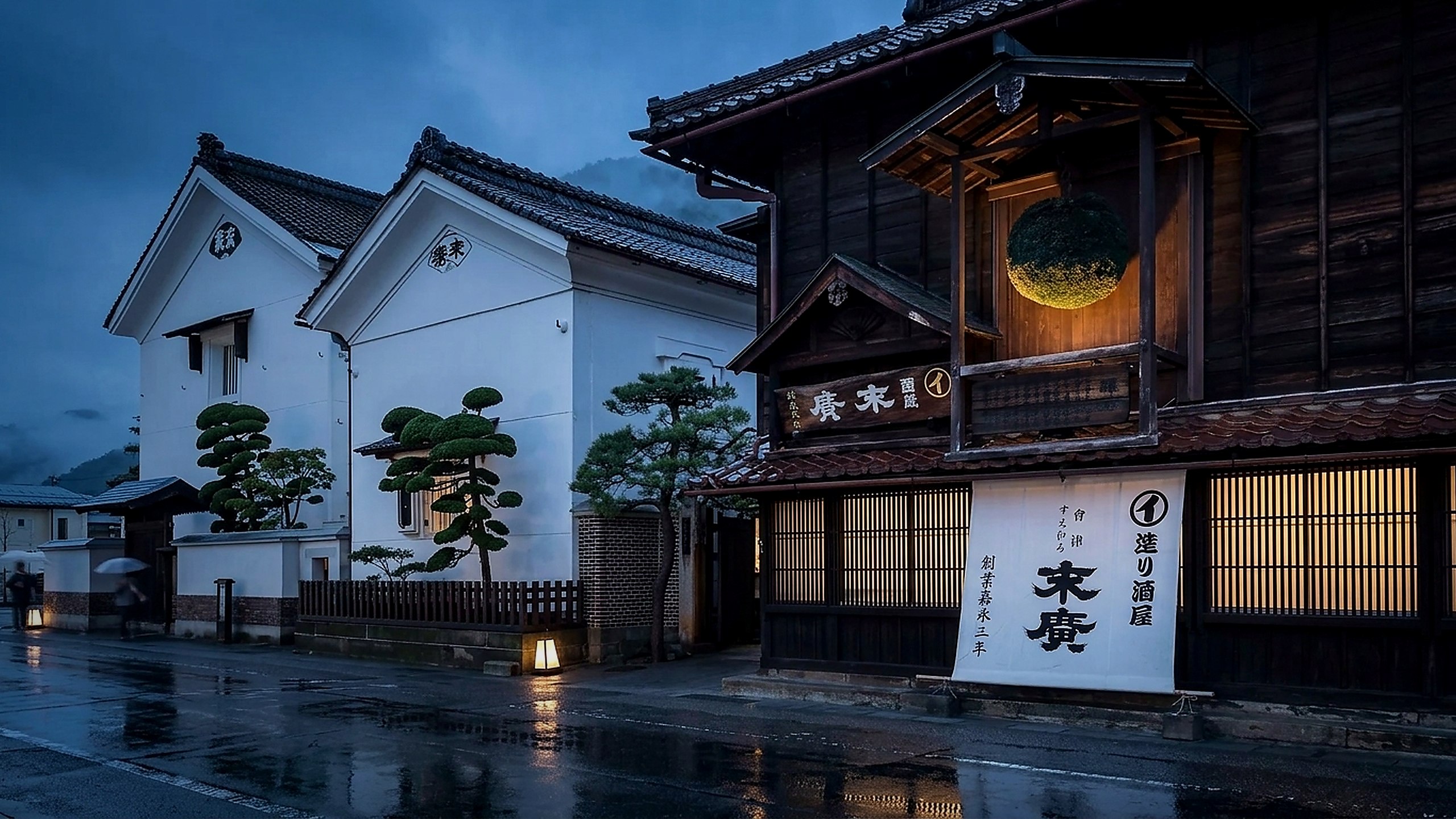
Aizu-Bange, Kawanuma District, Fukushima Prefecture. In this small town at the southern edge of the Aizu Basin, where snowmelt from the Iide mountain range flows deep underground, stands Hiroki Shuzo Honten — a brewery with roughly two centuries of history, founded in the mid-Edo period. But in the 1990s, the sake market was deep in a prolonged slump. Pushed aside by cheap shochu, wine, and beer, breweries across Japan were closing year after year.
Hiroki Shuzo was no exception. Its business, centered on the local brand Izumikawa and ordinary table sake, grew harder every year, and the brewery's very survival was in question. In this dire situation, ninth-generation Kenji Hiroki returned from university and a stint working in Tokyo. Then, following his father's sudden death, he faced a stark decision: take over brewing entirely on his own, with no experience as a toji. It was the late 1990s.
Quick Specs & 2026 Rating Summary
A One-Man Brewery's Challenge
No toji. No brewers. Aging equipment and no money. All Hiroki had was an unwavering belief: "I will absolutely make delicious sake."
He attended the prefectural brewing research institute, relearning fermentation science from scratch — koji making, yeast starter management, moromi temperature curves. Shuttling between textbook and brewhouse, through repeated failures, he established a method of careful small-batch brewing. Small batches were not merely a product of constraint: the smaller the mash, the finer the temperature control, and the more precisely the moment of pressing can be judged, down to a matter of hours. Hiroki converted the handicap of working alone into an advantage in quality control. During this period, a television documentary featured him as a young brewer on the edge of extinction, and encouragement and orders poured in from across the country. But what he wanted was not sympathy — it was recognition of quality itself.
The turning point came around 2000 with "Hiroki Tokubetsu Junmai." Made in the then-rare unfiltered namazume style, sealing the just-pressed umami and fresh texture into the bottle, it drew unanimous praise from specialist sake retailers nationwide. It instantly became a "phantom sake," and entered sake history as a forerunner of the unfiltered nama boom.
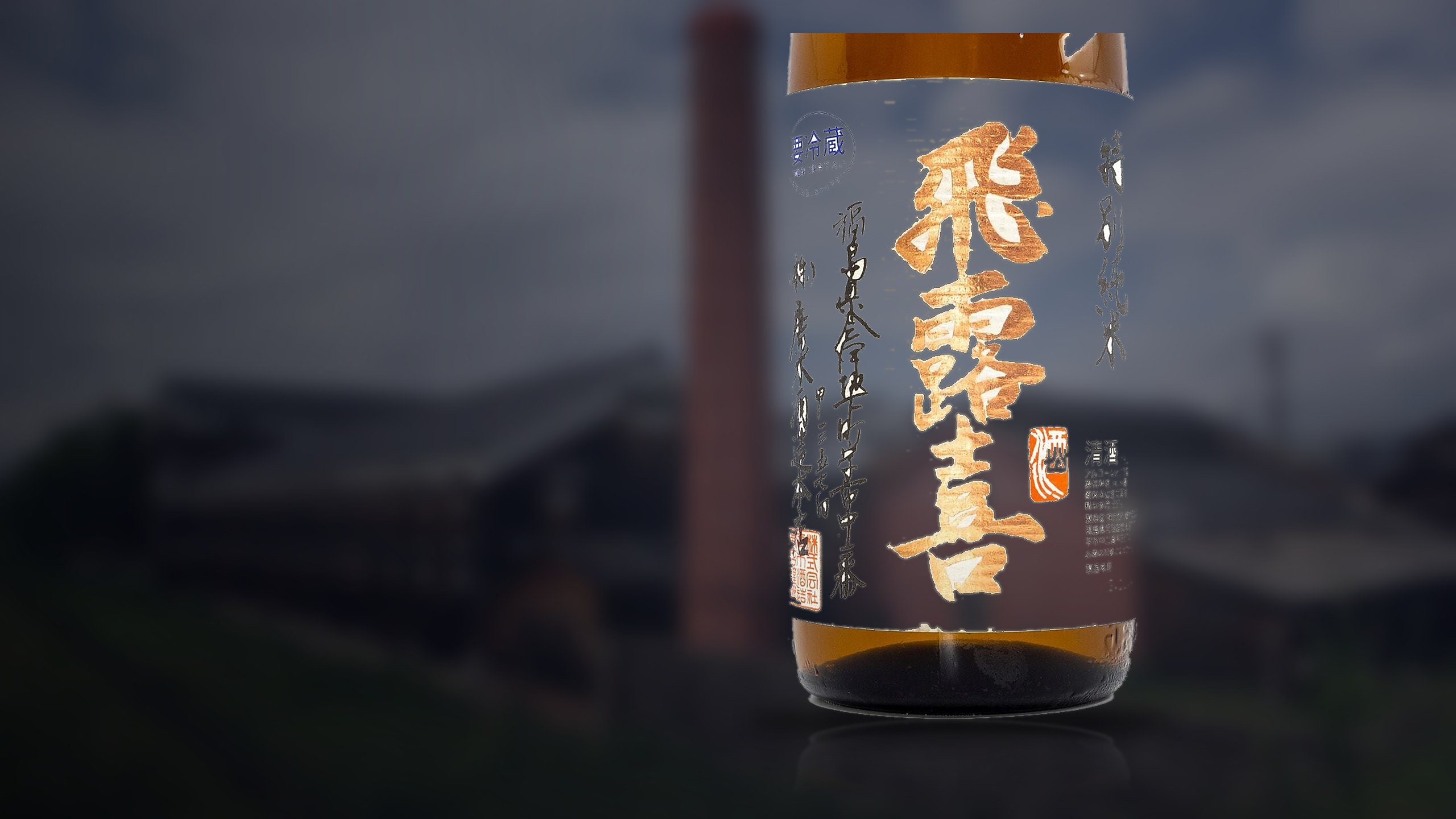
The name "Hiroki" (飛露喜) means "joy revealed, taking flight" — a name full of hope, fitting for sake born from a brewery on the edge of extinction.
Flavor Profile — The Royal Road of Deliciousness
If you could describe Hiroki's flavor in one word, it would be "classic." Not flashy, but with a reliability that makes you say "delicious" with every sip. Aroma, umami, and finish — none dominates, yet all harmonize at a high level. This design rests on the soft mouthfeel granted by the Iide range's gentle water and the poised umami of Yamada Nishiki and Gohyakumangoku.
The Tokubetsu Junmai features gentle ginjo aromas, full rice-derived umami, and a clean finish. Perfect as a food-pairing sake, it complements everything from sashimi to yakitori to tempura. Its temperature range is remarkably broad: chilled at 10°C it shows sharply defined fruit; gently warmed at 40°C the rice's sweetness and umami bloom. That one bottle can be enjoyed across this range is itself proof of the precision of its design.
The Ginjo Namazume offers even more gorgeous aromatics and juicy flavor, best enjoyed chilled alongside white fish sashimi or light appetizers. At the junmai daiginjo level, a core of distinctly Hiroki umami runs beneath the polished transparency — a bottle of unshakable conviction for special occasions.
Fukushima Brewing and 3.11
The 2011 earthquake, tsunami, and nuclear disaster dealt a devastating blow to Fukushima's breweries. Reputation damage led consumers at home and abroad to avoid Fukushima sake; for a time, even customs clearance abroad became difficult. But Hiroki and fellow Fukushima brewers chose transparency, rigorous testing, and above all, competing on quality.
Since the disaster, Fukushima sake has repeatedly led Japan's National New Sake Competition, and in 2026 its momentum reached a new peak: in the Reiwa 7 BY National New Sake Competition announced in May 2026, Fukushima won 20 Gold Medals to claim No. 1 in Japan outright for the second consecutive year and the twelfth time overall, followed on November 10, 2026 by the Reiwa 8 Tohoku Sake Awards, where 20 entries across 15 breweries earned Honor Prizes to top Tohoku for the sixth straight year. This is no coincidence. At the prefecture's sake academy, young technicians study together, and a culture of sharing brewing data across brewery lines raised the entire region's technical floor. The stance Hiroki's success embodied — quality is the strongest rebuttal — became the spiritual backbone of Fukushima brewing.
The Hiroki Lineup: Comparison and Acquisition Strategy
Hiroki embodies "orthodox deliciousness," yet each bottling wears a distinctly different expression. From the jolt of its unfiltered nama genshu to the serenity of the junmai daiginjo, here is how to read the specs — and realistically get a bottle.
| Cuvée | Class & Polish | Ref. Price in Japan (720ml) | Character & Serving Temp |
|---|---|---|---|
| Hiroki Tokubetsu Junmai | Tokubetsu Junmai, 55% | approx. ¥1,500 (3-4x abroad) | Umami, clarity, and a clean finish in perfect triad; the flagship and an ideal food sake. 10-12C |
| Hiroki Tokubetsu Junmai Kasumizake | Tokubetsu Junmai, 55% | approx. ¥1,500 | Winter-only lightly cloudy namazume; fresh rice sweetness. 8-10C |
| Hiroki Junmai Ginjo Black Label | Junmai Ginjo, 50% | approx. ¥2,200 | Yamada Nishiki's luster and volume; the core cuvée that also shines as a gift. 10-12C |
| Hiroki Junmai Daiginjo | Junmai Daiginjo, 40% | approx. ¥4,500 | Hushed aromatics and a long echo — the summit of Aizu's quiet integrity. 10-12C |
Evolution After Opening (Day 1 → Day 7)
Practical Buying & Storage Advice
Where to Find It
Hiroki is distributed exclusively through authorized retailers. At roughly ¥2,500-3,500 per 1.8L bottle, its pricing is remarkably reasonable given the quality and international standing. Rather than paying secondary-market premiums, the right path is building a relationship with a trusted retailer. If you spot it on a shelf, don't hesitate — grab it. Start with the Tokubetsu Junmai in a white wine glass at 12°C. The "royal road of deliciousness," shifting expression as the temperature rises, will quietly but surely change the way you think about sake.
Featured Breweries, Specs & Flavor Balance
| Flagship Label | Brewery & Region | Signature Rice & Water | Brewery Profile |
|---|---|---|---|
| Hiroki | Hiroki Shuzo Honten Co., Ltd. (Ko 3574 Shichuniban, Aizubange-machi, Kawanuma-gun, Fukushima 969-6543, Japan) | Yamadanishiki, Gohyakumangoku, Omachi, Fukunoka, Yumenoka · Subsurface snowmelt water from the Mt. Iide range in the Aizu Basin (soft water) | Brewery Profile |
| Maboroshi no Sake | EH Sake Brewery Co., Ltd. (1090-1 Takibe, Toyoshina, Azumino City, Nagano 399-8204, Japan) | Azumino-Grown Hitogokochi, Miyama Nishiki, Kinmon Nishiki, and Yamada Nishiki · Northern Alps Mt. Jonen Subterranean Water (200m Deep On-Site Well, Soft Water) | Brewery Profile |
| Aizu | Aizu Shuzo Co., Ltd. (603 Anazawa, Nagata, Minamiaizu-machi, Minamiaizu-gun, Fukushima 967-0006, Japan) | Yumenoka, Fukunoka, Gohyakumangoku, Omachi, Yamadanishiki · Subsurface snowmelt water from Mt. Arakai in Okuaizu (ultra-soft water, hardness ~20 mg/L) | Brewery Profile |
| Nipponichi | Gochoda Shuzo (Ko 2081 Gochoda, Shiota-machi, Ureshino-shi, Saga 849-1425, Japan) | Estate-grown Yamada Nishiki (cultivated in-house since 1988), Gohyakumangoku, and Saganohana · Subterranean soft water from the Mt. Tara and Shiota River system | Brewery Profile |
Named 'Droplets of Joy Flying Forth,' 9th-generation brewer Kenji Hiroki ignited Japan's unfiltered unpasteurized (muroka nama genshu) boom and propelled Fukushima to national acclaim. Combining polished Yamadanishiki for mid-palate depth and Gohyakumangoku for crisp structure, it delivers fresh lychee and pear aromatics with vibrant acidity that pairs effortlessly with seasonal sashimi and charcoal-grilled yakitori.
EH Sake Brewery's prestige gift and competition-grade series, slow-fermented from highly polished sake rice for luminous clarity and elegance. Brewed by EH Sake Brewery Co., Ltd. in Nagano using Northern Alps Mt. Jonen Subterranean Water (200m Deep On-Site Well, Soft Water) and Azumino-Grown Hitogokochi, Miyama Nishiki, Kinmon Nishiki, and Yamada Nishiki, it brings together toasty, savory grain aromatics, delicate, gossamer-light finish, crisp, food-friendly dry profile with memorable poise.
Known locally as Kinmon Aizu, this heritage label has served the mountain communities of Minamiaizu since 1688 with a clean, comforting profile. Brewed by Aizu Shuzo Co., Ltd. in Fukushima using Subsurface snowmelt water from Mt. Arakai in Okuaizu (ultra-soft water, hardness ~20 mg/L) and Yumenoka, Fukunoka, Gohyakumangoku, Omachi, and Yamada Nishiki, it brings together lively micro-effervescence with memorable poise.
A heritage label from Ureshino's Gochoda Shuzo (makers of Azumaichi) in Saga, 'Nipponichi' combines soft Mt. Taradake spring water with estate-grown Yamada Nishiki for plush umami and a clean finish.
Recommended Pairing
Weekly Sake & Tasting Dispatch
Curated seasonal releases, sub-zero arrivals, and tasting city guides across global editions.