Takagi Shuzo in Yamagata. Why Juyondai is called the "phantom sake."
The Birth of "Hojun Umaguchi"
In the early 1990s, sake's prevailing trend was "tanrei karakuchi" — light and dry. Clean, pale Niigata sake was considered the gold standard, while sweet or umami-rich sake was dismissed as crude. Retail shelves were lined with featherweight brews, and anything that foregrounded the flavor of rice carried the stigma of being behind the times.
The person who shattered this paradigm was Akitsuna Takagi, fifteenth-generation head of Takagi Shuzo in Murayama City, Yamagata. Returning to the family brewery after working in Tokyo's liquor distribution trade, he released "Juyondai Honmaru Hiden Tamagaeshi" in 1994. Gorgeous ginjo aromas, fruit-like sweetness, and robust rice umami — a flavor nobody had tasted before swept through Japan's sake bars and retailers on word of mouth alone. A new category called "hojun umaguchi" (rich and flavorful) was born, and the history of sake was quietly rewritten.
Quick Specs & 2026 Rating Summary
Why "Juyondai"?
The Takagi family traditionally considered the fourteenth generation unlucky, skipping from the thirteenth to the fifteenth. "Juyondai" (Fourteenth Generation) was the generation nobody claimed — a name representing what never existed, embodying the spirit of doing what nobody else dared.
And Takagi's brewing overturned industry convention again and again: championing richness in an age that worshipped lightness, and bringing competition-grade ginjo craft into an everyday bottle. The brand name itself is a manifesto of the brewery's defiance.
Revolutionary Brewing Techniques
Takagi's innovations were manifold. First, delicate flavors achieved through low-temperature long fermentation: harnessing Yamagata's severe winters, the mash is nurtured slowly under meticulous temperature control, drawing out aromatic compounds without breaking them. Second, a diverse lineup built on distinct rice varieties. Third, the pursuit of freshness through nama-zume (single pasteurization) shipping, sealing just-pressed vibrancy inside the bottle.
The rice architecture and varietal precision are staggering. Foremost is Takagi Shuzo's proprietary "Sake Rice Trilogy," developed over nearly eighteen years of in-house breeding: "Tatsu no Otoshigo" (registered 1999, bred from Yamasake No. 4 [Yamada Nishiki × Kinmon Nishiki] and Miyama Nishiki), guarded almost exclusively for Takagi Shuzo's own flagship bottlings for its crystalline poise and noble aromatics; "Sake Mirai" (1999), combining dewy umami-sweetness with vibrant acidity and generously shared with like-minded breweries across Japan to "open the future of sake"; and "Ushu Homare" (2000), uniting plush Yamagata depth with a razor-clean finish. For a single brewery to breed three original sake rices over nearly two decades was virtually unprecedented.
Equally exacting is Takagi's command of rare external rices. With Special A District "Aiyama" from Hyogo — notoriously difficult to brew because its large shinpaku dissolves so rapidly — cuvées like Nakadori Jomorohaku Banshu Aiyama unlocked sensual sweetness and three-dimensional acidity, igniting Japan's nationwide Aiyama boom. Meanwhile, using "Hakutsuru Nishiki" (bred by Hakutsuru Shuzo as a sibling cross to Yamada Nishiki from Yamadaho × Wataribune No. 2), Juyondai crafts junmai daiginjo expressions of silken purity and luminous finish distinct even from Yamada Nishiki.
Unwavering Commitment to Retail Price
Juyondai commonly trades at 10–20x retail on the resale market. A ¥2,000–3,000 bottle sells for ¥30,000–50,000. The nickname "phantom sake" comes from precisely this scarcity.
Yet Takagi Shuzo strictly requires authorized retailers to sell at retail price, cutting off supply to those who do not comply. "Sake should be enjoyed in everyday life. It must not become unaffordable." The clamor of the premium market against the quiet philosophy of the brewery — this tension is what deepens the Juyondai story.
Tasting — The Appeal of Honmaru
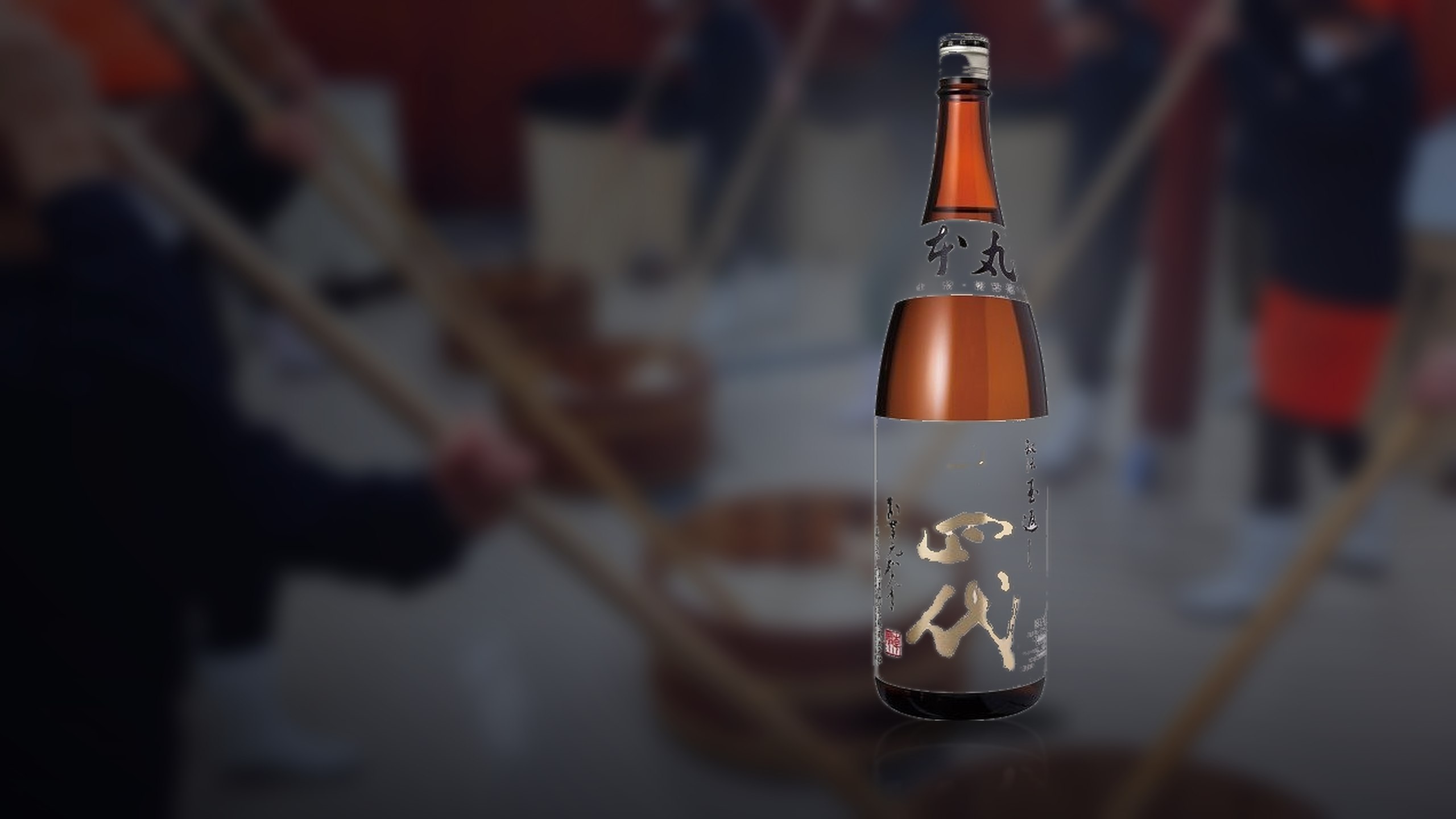
Juyondai's signature "Honmaru Hiden Tamagaeshi" delivers flavor rivaling a junmai daiginjo despite being a honjozo. The moment it hits the glass, fruity aromas of apple, banana, and melon unfold vibrantly, with a texture as smooth as silk. Layers of sweetness and umami overlap, the body of the rice rising quietly through the mid-palate into a long, graceful finish edged by the faintest astringency. Best served at 10–15°C; over-chilling closes the aroma, so let the bottle rest ten minutes out of the refrigerator before pouring.
In the upper tiers — "Tatsu no Otoshigo" and "Shichitare Nijukkan" — concentrated fruit and polished transparency coexist. Common to every class is the shock of the first sip, and the quiet engineering that keeps glass after glass from ever tiring the palate.
Juyondai: List Price vs. Market Reality — A Practical Map
No honest discussion of Juyondai can avoid the gulf between list price and market reality. Takagi Shuzo has always insisted on list-price sales, yet the secondary market multiplies prices tens of times over. Understanding this structure is the first step to experiencing Juyondai wisely.
| Cuvée | Class & Polish | Ref. Price in Japan | Character & Serving Temp |
|---|---|---|---|
| Honmaru Hiden Tamagaeshi | Tokubetsu Honjozo, 55% | approx. ¥2,500 (1.8L); resale can exceed ¥50,000 | The origin of "hojun umakuchi"; the artistry of alcohol addition. 8-12C |
| Ginsen | Ginjo, 50% | approx. ¥3,500 (1.8L) | Florality balanced with food-friendliness. 10-12C |
| Nakadori Junmai Ginjo (Banshu Aiyama etc.) | Junmai Ginjo, 50% | approx. ¥4,500 (1.8L); six figures on resale | Mid-press transparency with Aiyama's sensual sweetness. 10-12C |
| Shichitare Nijikkan | Junmai Daiginjo, drip-pressed | approx. ¥12,000 (720ml); resale in the hundreds of thousands | The zenith of shizuku sake; silk texture. 10-12C |
| Ryusen | Junmai Daiginjo, long ice-aged | approx. ¥15,000 (720ml); resale can top ¥500,000 | One of the hardest bottles to obtain on earth. 10-12C |
Realistic Ways to Meet It (in order of priority)
Practical Buying & Storage Advice
What Juyondai Gave Sake
Juyondai's greatest achievement was proving that "delicious sake doesn't have to be dry." The hojun umaguchi concept profoundly influenced the next generation — Jikon, Hiroki, Senkin — and many of today's widely celebrated artisanal labels walk the road Juyondai opened.
Nothing illustrates Akitsuna Takagi's generosity better than his extraordinary technical mentorship of "Hanamura" (花邑) at Akita's historic Ryozeki Shuzo (founded 1874). Moved by Ryozeki's heritage, pristine water, and sincerity, Takagi stepped across brewery boundaries to supervise everything from rice selection, fermentation curves, and single-pasteurization (nama-zume) protocols to naming and label design. Born from that collaboration, Hanamura — including limited bottlings brewed with Takagi's own Sake Mirai alongside Aiyama and Omachi — won immediate acclaim as a crystallization of Juyondai's hojun umaguchi DNA. Just as Takagi entrusted Sake Mirai to leading peers like Jikon, Senkin, Kudoki Jozu, and Akabu, Takagi Shuzo has chosen to lead as an "open summit" that elevates the entire craft.
It is called a phantom not merely because it is hard to find, but because a single brewer rewrote the common sense of his era — and has held the summit for three decades since. The diversity that defines today's sake landscape exists because Juyondai existed first.
Featured Breweries, Specs & Flavor Balance
| Flagship Label | Brewery & Region | Signature Rice & Water | Brewery Profile |
|---|---|---|---|
| Juyondai | Takagi Shuzo Co., Ltd. (1826 Oaza Tominami, Murayama-shi, Yamagata 995-0111, Japan) | Tatsu no Otoshigo, Sakemirai, Ushu Homare, Aiyama, Yamada Nishiki · Mount Hayama Subterranean Spring Water 'Sakura-Shimizu' (Soft Water) | Brewery Profile |
| Honmaru | Goshun Co., Ltd. (1-2-2 Ayaha, Ikeda-shi, Osaka 563-0051, Japan) | Akaiwa Omachi, Yamada Nishiki, Gohyakumangoku · Soft subterranean mountain water flowing from Mount Satsuki in Ikeda | Brewery Profile |
| Maboroshi no Sake | EH Sake Brewery Co., Ltd. (1090-1 Takibe, Toyoshina, Azumino City, Nagano 399-8204, Japan) | Azumino-Grown Hitogokochi, Miyama Nishiki, Kinmon Nishiki, and Yamada Nishiki · Northern Alps Mt. Jonen Subterranean Water (200m Deep On-Site Well, Soft Water) | Brewery Profile |
| Hanamura | Ryozeki Sake Brewery Co., Ltd. (4-3-18 Maemori, Yuzawa-shi, Akita 012-0813, Japan) | Aiyama, Yamada Nishiki, Omachi, Misato Nishiki, Akita Sakekomachi · Mount Kurikoma Subterranean Ultra-Soft Water (Rikimizu Spring System) | Brewery Profile |
| Mirai | Uehara Shuzo Co., Ltd. (1524 Ota, Shin-Asahi-cho, Takashima-shi, Shiga 520-1502, Japan) | Wataribune No. 2, Tamasakae, Ginfubuki, Yamadanishiki, Omachi, Kamenoo · Hira Mountain Range Artesian Subterranean Soft Water (Harie Spring Vein) | Brewery Profile |
| Kinmon Sekaidaka | Koyamahonke Shuzo Co., Ltd. (1798 Sashiogi, Nishi-ku, Saitama-shi, Saitama 331-0047, Japan) | Yamada Nishiki, Sake Musashi, Gohyaku Mangoku, Domestic Sake Rice · Arakawa River Basin Deep Subterranean Water Filtered Through Chichibu Paleozoic Strata (180m Deep) | Brewery Profile |
| Mongaifushutsu | Nishibori Shuzo Co., Ltd. (1452 Awanomiya, Oyama-shi, Tochigi 329-0201, Japan) | Tochigi Yumesasara, Gohyakumangoku, Tochiginohoshi, Yamada Nishiki, Aiyama · Nikko Mountains & Omoi River Subterranean Medium-Soft Water | Brewery Profile |
| Homare | Mioya Sake Brewery Co., Ltd. (I 8 Omachi, Hakui-shi, Ishikawa 925-0072, Japan) | Ishikawa Miyama Nishiki, Gohyakumangoku, Ishikawamon, Yamada Nishiki · Noto Mt. Goishigamine Subterranean Water (Medium-Soft Water) | Brewery Profile |
| Banshu | Ginban Sake Brewery Co., Ltd. (4853-3 Ogyu, Kurobe-shi, Toyama 938-0801, Japan) | Hyogo Yamada Nishiki, Toyama Gohyakumangoku · Kurobe River Alluvial Fan Top-100 Famous Subterranean Soft Water | Brewery Profile |
| Ryusen | Nakao Sake Brewery Co., Ltd. (5-32-12 Shukunosho, Ibaraki-shi, Osaka 567-0051, Japan) | Ibaraki-grown Mishima Omachi, Yamada Nishiki, Kinuhikari · Soft subterranean water from the Katsuojigawa River basin in the Hokusetsu mountain range | Brewery Profile |
Pioneered by 15th-generation master brewer Akitsuna Takagi, Juyondai revolutionized modern sake by shifting the paradigm from dry austerity to lush, nectar-like aromatics of ripe musk melon and white peach. Crafted with proprietary rice strains like Sakemirai, Ryuno-otoshigo, and Ushuhomare alongside Special A-grade Yamadanishiki using the prized Shichitare Nijikkan drip technique, its velvety umami and crystalline finish elevate omakase sushi and Wagyu kaiseki.
Crafted by Goshun Co., Ltd. in Osaka to blossom across warm serving temperatures, 'Honmaru' combines Soft subterranean mountain water flowing from Mount Satsuki in Ikeda and Akaiwa Omachi, Yamada Nishiki, Gohyakumangoku to deliver refined, natural rice sweetness, calm, composed aromatics, expressive, floral ginjo aromatics from gentle nurukan to hot atsukan.
EH Sake Brewery's prestige gift and competition-grade series, slow-fermented from highly polished sake rice for luminous clarity and elegance. Brewed by EH Sake Brewery Co., Ltd. in Nagano using Northern Alps Mt. Jonen Subterranean Water (200m Deep On-Site Well, Soft Water) and Azumino-Grown Hitogokochi, Miyama Nishiki, Kinmon Nishiki, and Yamada Nishiki, it brings together toasty, savory grain aromatics, delicate, gossamer-light finish, crisp, food-friendly dry profile with memorable poise.
Born from an extraordinary technical mentorship by Tatsugoro Takagi of Yamagata's legendary Juyondai, Hanamura is an ultra-allocated jewel brewed by Ryozeki Shuzo in Yuzawa. Crafted with Omachi, Rikuuda, and Dewasansan rice and ultra-soft Kurikoma mountain water, it offers nectar-like floral sweetness and a velvet texture that shines alongside kobujime sashimi and fruit-accented appetizers.
A special-edition junmai sake brewed with pesticide-free organic rice and indigenous yeast, embodying a sustainable vision for the future of sake brewing.
The brewery's historic flagship meaning 'Golden Crest World Hawk,' a perennial National New Sake Awards gold medalist prized for noble aromatics and deep umami. Brewed by Koyamahonke Shuzo Co., Ltd. in Saitama using Arakawa River Basin Deep Subterranean Water Filtered Through Chichibu Paleozoic Strata (180m Deep) and Yamada Nishiki, Sake Musashi, Gohyaku Mangoku, Domestic Sake Rice, it brings together versatile, cuisine-elevating table-sake poise, savory, resonant rice umami, harmonious balance of umami, acidity, and finish with memorable poise.
Founded in 1872 along the historic Nikko Kaido highway in Oyama, Tochigi inside a registered Cultural Property kura, Nishibori Shuzo named its flagship 'Mongaifushutsu' ('Never to Leave the Gates') because the sake was deemed too delicious to part with outside the region. Brewed with medium-soft Omoigawa subterranean water from the Nikko mountains and local Tochigi Yumesasara, Gohyakumangoku, and Tochigi no Hoshi rice—alongside pioneering innovations like Japan's first transparent fermentation tanks and LED-light brewing—it offers rich rice umami, gentle sweetness, and a clean finish. Pair it with Tochigi Wagyu sukiyaki, pan-fried gyoza, or grilled sweetfish.
The brewery's original local label, cherished in Hakui since 1897 for its smooth, comforting character. Brewed by Mioya Sake Brewery Co., Ltd. in Ishikawa using Noto Mt. Goishigamine Subterranean Water (Medium-Soft Water) and Ishikawa-grown Miyamanishiki, Gohyakumangoku, Ishikawamon, and Yamada Nishiki, it brings together versatile, cuisine-elevating table-sake poise, savory, resonant rice umami, harmonious balance of umami, acidity, and finish with memorable poise.
Rooted in the local heritage of Toyama, 'Banshu' is brewed by Ginban Sake Brewery Co., Ltd. with Kurobe River Alluvial Fan Top-100 Famous Subterranean Soft Water and Hyogo Yamada Nishiki, Toyama Gohyakumangoku, offering gastronomic food-pairing versatility, rich, savory rice umami, harmonious balance of umami, acidity, and finish across a wide range of serving temperatures and cuisines. Supported by Kurobe River Alluvial Fan Top-100 Famous Subterranean Soft Water, it layers versatile, cuisine-elevating table-sake poise, savory, resonant rice umami, harmonious balance of umami, acidity, and finish to reflect the unmistakable terroir of Toyama.
Officially founded in 1869 (with family brewing roots traced back to the Muromachi period), Nakao Shuzo is the sole surviving sake brewery in Ibaraki City, Osaka Prefecture. Brewing in the green foothills of Shukunoshou at the base of the Hokusetsu mountains using soft Katsuojigawa basin subterranean water and local Ibaraki-grown Mishima Omachi, Yamada Nishiki, and Kinuhikari rice, its flagship Ryusen (alongside 'Bongu' and 'Miyama no Sato') offers mellow, rounded umami ideal for Osaka pike conger (hamo) and fresh mizu-nasu eggplant.
Recommended Pairing
Weekly Sake & Tasting Dispatch
Curated seasonal releases, sub-zero arrivals, and tasting city guides across global editions.