Kokuryu — Treasure of Hokuriku
Brewery Story

Kokuryu — Treasure of Hokuriku

2026-01-037min readSakeStream
Back
EXECUTIVE SUMMARY & KEY TAKEAWAYS

Eiheiji, Fukui Prefecture. Dignity cultivated over 200+ years of history.

Key Sections in This Report:

The Crystal-Clear Water of Eiheiji

Eiheiji-cho, Fukui Prefecture. At the foot of Eiheiji Temple, the grand head temple of Soto Zen Buddhism, stands Kokuryu Shuzo. Brewing continuously since 1804, this is a heritage brewery with over 220 years of history. The hushed air of the Zen training monastery and the dignified bearing of Kokuryu's sake — visit this town and you sense, almost physically, how deeply the two are connected.

The underground water from the nearby Kuzuryu River is soft yet contains balanced minerals. This water gives Kokuryu sake its distinctive "dignified elegance." Fukui's harsh Sea of Japan winters naturally create low-temperature conditions in the brewery, enabling precise fermentation control. In the snowbound silence, the mash matures slowly and surely.

Quick Specs & 2026 Rating Summary

Brewery & Location
Kokuryu Shuzo (Eiheiji-cho, Yoshida District, Fukui / founded 1804)
Water & Key Rice
Subsoil water of the Kuzuryu River (soft) / Yamada Nishiki, Gohyakumangoku
Philosophy & Technique
Japan's first commercial daiginjo "Ryu" (1975); long low-temperature aging (Ishidaya, Nizaemon); cellar management learned from French winemaking
2026 Global Standing
A fixture on starred lists in Paris and New York; rising sommelier call-outs in Seoul fine dining
Serving & Pairing
10–14°C in a white wine glass (Icchorai also shines at 40°C nurukan) / Echizen crab, wakasa-grilled tilefish, aged cheese

Pioneer of Daiginjo

Seventh-generation Masato Mizuno released "Kokuryu Daiginjo Ryu" in 1975 — Japan's first commercially available daiginjo sake, a milestone in sake history.

At the time, daiginjo existed only as competition entries, unavailable to regular consumers. "Why can't ordinary people drink this delicious sake?" Mizuno's question opened the daiginjo era for all. At launch its price was called outrageous, but "Ryu" silenced the market with sheer quality. The now-ordinary sight of breweries everywhere selling daiginjo began with this single bottle. Mizuno was also a visionary who studied French winemaking and brought its aging practices and brand thinking into sake.

Ishidaya and Nizaemon — The Aesthetics of Aging

Kokuryu's pinnacle offerings are "Ishidaya" and "Nizaemon" — both long-aged daiginjo released once yearly in limited quantities. On release day, inquiries flood authorized retailers nationwide, and same-day sellouts are the norm.

Ishidaya takes its name from the founding family's trade name. Aged at low temperatures for over 5 years, it delivers roundness, depth, and a lingering finish impossible in new sake. Complex aromas of vanilla, custard, and sandalwood emerge, revealing different facets with every sip. Aging is the craft of making time an ally, and Ishidaya is its most eloquent proof.

Nizaemon, named after the second-generation head, offers a slightly bolder profile than Ishidaya, truly shining when paired with aged cheeses or foie gras. Among sommeliers a comparison circulates: if Ishidaya is the grace of Burgundy, Nizaemon is the frame of Bordeaux.

Kokuryu's Lineup Philosophy

Kokuryu's charm isn't limited to its summit. From the everyday "Icchorai" to the gift-worthy "Hiiraju" to the sublime Ishidaya, quality is maintained across all price points.

"Icchorai" means "your best" in Fukui dialect. At roughly ¥1,500 per 1.8L, it delivers quality in a completely different league from mass-market sake at the same price. The sister brand "Kuzuryu," designed for warming, blossoms at nurukan (around 40°C) and has won a devoted following among warm-sake lovers. Kokuryu served cool, Kuzuryu served warm — a design philosophy that extends to temperature itself speaks to this brewery's depth.

The Kokuryu Ladder: From Icchorai to Ishidaya

Kokuryu's quiet power lies in its consistency: from a ginjo in the ¥1,000 range to an aged junmai daiginjo above ¥10,000, every bottle follows one philosophy — the water of the Kuzuryu River and the aesthetics of maturation. Start the climb wherever your budget allows; the view belongs to the same mountain.

CuvéeClass & PolishRef. Price in Japan (720ml)Character & Serving Temp
Kokuryu IcchoraiGinjo, 55%approx. ¥1,400 (around $30 abroad)"Sunday best" in Fukui dialect; everyday ginjo aromatics. 10-12C
Kokuryu JunginJunmai Ginjo, 55%approx. ¥1,800Gohyakumangoku's tidy umami; a textbook food sake. 10-12C
Kokuryu DaiginjoDaiginjo, 50%approx. ¥2,500The aromatic design that pioneered wine-glass service. 10-12C
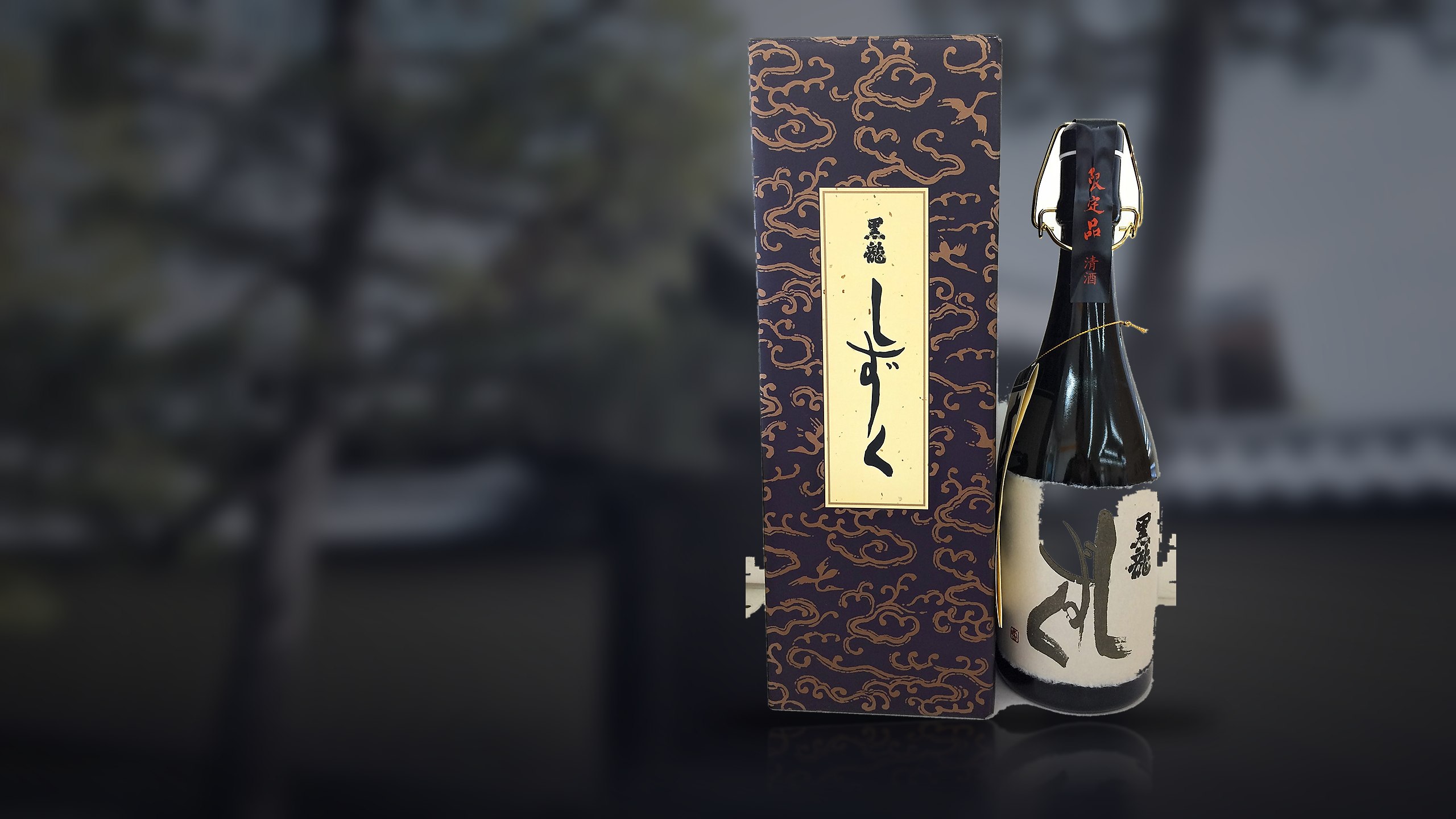
Kokuryu ShizukuDaiginjo, 35%, tobin-gakoiapprox. ¥5,500Drip-pressed transparency; a limited release. 10-12C
IshidayaJunmai Daiginjo, 35%, cold-agedapprox. ¥12,000 (resale runs several times higher)The summit, bearing the family trade name; silk born of maturation. November only. Around 12C
NizaemonJunmai Daiginjo, 35%, tobin-gakoi agedapprox. ¥12,000 (resale runs several times higher)Ishidaya's twin peak, with tauter architecture. Around 12C

Evolution After Opening (Day 1 → Day 7)

Day 1
The ginjo aroma rises softly; Kokuryu blooms beautifully in the glass
Day 3
Maturation's roundness comes forward and the flavor's center of gravity drops — unity with food peaks
Day 7
Pasteurized stability holds; try Icchorai or Jungin gently warmed for a new angle

Practical Buying & Storage Advice

Where to buy
Icchorai through Daiginjo are reliably stocked nationwide; Ishidaya and Nizaemon appear only in November via dealer lotteries
Storage
Built for maturation, Kokuryu keeps beautifully under refrigeration below 10C
The gift answer
With its wide price range and unwavering quality, Kokuryu is one of sake's safest luxury gifts
Abroad
Its affinity with stemware culture has earned Kokuryu a steady place in Western fine dining

What Kokuryu Teaches

What Kokuryu has demonstrated for 220 years is a brewery's pride in "delivering the finest quality to as many people as possible." Never leaning on the premium resale market, it keeps offering real value at fair prices. The innovation of Japan's first commercial daiginjo and the aging aesthetics of Ishidaya grow from the same root philosophy: never chase trends, yet always run ahead of the times. That is the dignity of heritage — and why Kokuryu is called the treasure of Hokuriku.

1,215 Breweries · 2,891 Labels · Neutral Archive
Linked from 1,215 Breweries · 2,891 Labels · 8,673 Reviews

Featured Breweries, Specs & Flavor Balance

Flagship LabelBrewery & RegionSignature Rice & WaterBrewery Profile
KokuryuKokuryu Sake Brewing Corporation (1-38 Matsuoka-Kasuga, Eiheiji-cho, Yoshida-gun, Fukui 910-1133, Japan)Hyogo Tojo Yamada Nishiki, Fukui Sakahomare, Gohyakumangoku, Koshinoshizuku · Mt. Hakusan Range & Kuzuryu River Subterranean Soft WaterBrewery Profile
Itteki SenzanNishioka Kawamura Sake Brewery (1-1 Koshikidani-cho, Fukui-shi, Fukui 910-3613, Japan)Fukui Gohyakumangoku, Yamada Nishiki · Western Echizen Mountain & Koshikidani Spring Soft WaterBrewery Profile
YagoOkamura Honke Co., Ltd. (100 Yoshida, Toyosato-cho, Inukami-gun, Shiga 529-1165, Japan)Shiga-grown Nihonbare, Tamasakae, Ginfubuki, Yamadanishiki, Sasa · Suzuka Mountain Range Subterranean Medium-Hard Water (Inukami & Echi River Basins)Brewery Profile
Kaika BlossomDaiichi Sake Brewery Co., Ltd. (488 Tajima-cho, Sano-shi, Tochigi 327-0031, Japan)Tochigi Yumesasara, Tochigishu 14, Gohyakumangoku, Hyogo Yamada Nishiki · Watarase River System & Izuruhara Benten Pond Aquifer Subterranean Soft WaterBrewery Profile
1-38 Matsuoka-Kasuga, Eiheiji-cho, Yoshida-gun, Fukui 910-1133, Japan · Kokuryu Sake Brewing Corporation (Est. 1804)
Kokuryuメロン旨味フルーティ
Mt. Hakusan Range & Kuzuryu River Subterranean Soft Water Hyogo Tojo Yamada Nishiki, Fukui Sakahomare, Gohyakumangoku, Koshinoshizuku Proprietary In-House Cultured Yeast

Founded in 1804 in Eiheiji, Fukui, Kokuryu pioneered commercial luxury Daiginjo in Japan, uniting soft Kuzuryu River water with prized Tojo Yamada Nishiki and local Sakahomare rice. Legendary bottlings like Ishidaya, Nizaemon, Shizuku, and Hachijuhachigo deliver crystalline elegance that elevates Echizen snow crab and haute kaiseki.

Flavor Balance (1–5 Rice Grains)Shows which flavor direction the balance leans toward (1 to 5 rice grains), never a quality rank or score.
Serving & Glassware:Recommended Temperature: 10–13°C (Chilled / Hanabie to Suzubie) / Recommended Glassware: Thin-rimmed, medium-bowled white wine glass (such as Riedel O Daiginjo). Avoid over-chilling below 6°C so the delicate esters are not muted. Upon pouring, experience crystalline purity from Mt. Hakusan Range & Kuzuryu River Subterranean Soft Water and lifted orchard-fruit aromatics; after 15 minutes as the glass warms to 14°C, silky Hyogo Tojo Yamada Nishiki, Fukui Sakahomare, Gohyakumangoku, Koshinoshizuku mid-palate umami opens gracefully.
Global Gastronomy Pairings
• Iced Echizen snow crab sashimi and kelp-cured Wakasa guji (tilefish)
• Dry-aged Korean wild sea bream hoe and chilled king prawn salad (daeha-naengchae) in pine-nut sauce
• Wild sea bream carpaccio with bergamot olive oil, shaved bottarga, and micro herbs
“Kokuryu Daiginjo Shizuku and Hachijuhachigo—collected drop by drop via shizuku bag-hanging—glide effortlessly across the palate with noble white peach and melon aromatics. Sublime with Echizen crab.”
Domestic Review · SAKETIME / 国内口コミ大吟醸の求道者
“Kokuryu Ishidaya and Nizaemon belong at the same table as Grand Cru Montrachet—defined by weightless silk texture, profound purity, and an aristocratic finish.”
Global Sommelier · Vivino / Global SakeSébastien Girard
“Even beyond the ultra-rare flagships, everyday bottles like Kokuryu Icchorai and Junmai Ginjo deliver astonishing value with the same unmistakable Kuzuryu clarity and poise.”
SNS Buzz · X (Twitter) / Instagram@fukui_eshikoto_fan
1-1 Koshikidani-cho, Fukui-shi, Fukui 910-3613, Japan · Nishioka Kawamura Sake Brewery (Est. 1869)
Itteki Senzanスッキリ
Western Echizen Mountain & Koshikidani Spring Soft Water Fukui Gohyakumangoku, Yamada Nishiki Kyokai Yeast, Fukui Prefectural Yeast

Handcrafted in Koshikidani, Fukui by 1869-founded Nishioka Kawamura Sake Brewery, 'Ishida' pairs soft mountain spring water with Fukui-grown Gohyakumangoku and Yamada Nishiki for honest grain depth and a brisk finish.

Flavor Balance (1–5 Rice Grains)Shows which flavor direction the balance leans toward (1 to 5 rice grains), never a quality rank or score.
Serving & Glassware:Recommended Temperature: 8–12°C (Crisp Chilled) or 45–48°C (Jokan Warmed) / Recommended Glassware: Narrow-tulip white wine stem, thin porcelain hirahai cup, or tin (suzu) vessel. Chilled to 9°C, Western Echizen Mountain & Koshikidani Spring Soft Water delivers razor-sharp mineral precision and a bone-dry finish; as it warms to 13°C—or when heated in a tin carafe to 45°C—savory Fukui Gohyakumangoku, Yamada Nishiki grain character emerges to frame coastal cuisine.
Global Gastronomy Pairings
• Iced Echizen snow crab sashimi and kelp-cured Wakasa guji (tilefish)
• Seasonal Korean croaker sashimi & warm pan-seared min-eo jeon with tangy minari salad
• Mediterranean-style Acqua Pazza of line-caught white fish poached with clams, capers, and olives
“Tasted 'Ishida' by Nishioka Kawamura Sake Brewery: opening with the pure touch of Western Echizen Mountain & Koshikidani Spring Soft Water, it reveals savory layers from Fukui Gohyakumangoku, Yamada Nishiki and clean, uncluttered clarity before finishing with crisp precision.”
Domestic Review · SAKETIME / 国内口コミ地酒専門店バイヤー評
“Highly rated on global sake platforms for its poised structure shaped by Western Echizen Mountain & Koshikidani Spring Soft Water in Fukui, offering clean, uncluttered clarity that pairs seamlessly with sushi, sashimi, and contemporary cuisine.”
Global Sommelier · Vivino / Global SakeGlobal Sake Sommelier
“Loved on X and Instagram for its dynamic temperature evolution—showing crisp mineral clarity when chilled and generous Fukui Gohyakumangoku, Yamada Nishiki umami as it warms.”
SNS Buzz · X (Twitter) / Instagram@craft_sake_journal
100 Yoshida, Toyosato-cho, Inukami-gun, Shiga 529-1165, Japan · Okamura Honke Co., Ltd. (Est. 1854)
Yago薄い濃厚
Suzuka Mountain Range Subterranean Medium-Hard Water (Inukami & Echi River Basins) Shiga-grown Nihonbare, Tamasakae, Ginfubuki, Yamadanishiki, Sasa Kyokai No. 7, No. 9, and No. 10

A heritage limited series honoring the brewery's founding merchant house name, offering deep, traditional savoriness.

Flavor Balance (1–5 Rice Grains)Shows which flavor direction the balance leans toward (1 to 5 rice grains), never a quality rank or score.
Serving & Glassware:Recommended Temperature: 13–16°C (Cool Cellar) & 40–48°C (Nurukan to Jokan Warmth) / Recommended Glassware: Medium Burgundy bowl or artisanal Mino/Bizen ceramic guinomi (warmed via tin chirori in a water bath). Starting at 13°C allows Suzuka Mountain Range Subterranean Medium-Hard Water (Inukami & Echi River Basins) and Shiga-grown Nihonbare, Tamasakae, Ginfubuki, Yamadanishiki, Sasa to express generous grain umami without astringency; warming to 42–45°C unlocks plush savory depth ideal for grilled Wagyu and rich dashis.
Global Gastronomy Pairings
• Lake Biwa wild Biwa-masu trout sashimi & nigiri with pickled Omi turnip
• Pan-seared Hanwoo beef jeon and tender Jeju black pork bossam with fermented oyster condiment
• Roasted Bresse poularde with porcini mushroom & cultured butter jus alongside 18-month Comté
“Savored Okamura Honke's limited 'Yago' series from Toyosato, Shiga at room temperature and nurukan. Pressed on a historic wooden fune press using medium-hard Suzuka mountain water and local Shiga rice, it offers rich, chewy cereal umami that pairs wonderfully with Omi wagyu sukiyaki.”
Domestic Review · SAKETIME / 国内口コミ近江商人発祥の地の酒徒
“Rooted in the Omi merchant heritage of Toyosato, this traditional fune-pressed bottling delivers full-bodied cereal warmth ideal for miso- and soy-braised dishes.”
Global Sommelier · Vivino / Fine Wine & Sakeedward_M_Sake
“Warming up Okamura Honke's 'Yago'! Deep, traditional wooden-press rice richness from the makers of Kinkame.”
SNS Buzz · X (Twitter) / Instagram@shiga_kinkame_yago
488 Tajima-cho, Sano-shi, Tochigi 327-0031, Japan · Daiichi Sake Brewery Co., Ltd. (Est. 1673)
Kaika Blossomカルピス
Watarase River System & Izuruhara Benten Pond Aquifer Subterranean Soft Water Tochigi Yumesasara, Tochigishu 14, Gohyakumangoku, Hyogo Yamada Nishiki Tochigi Prefectural Yeast (T-ND, T-S), Kyokai Yeast

A celebratory seasonal label evoking spring blossoms with bright, uplifting Ginjo aromatics. Brewed by Daiichi Sake Brewery Co., Ltd. in Tochigi using Watarase River System & Izuruhara Benten Pond Aquifer Subterranean Soft Water and Tochigi Yumesasara, Tochigi-shu 14, Gohyakumangoku, and Hyogo Yamada Nishiki, it brings together tangy, yogurt-soda lactic sweetness with memorable poise.

Flavor Balance (1–5 Rice Grains)Shows which flavor direction the balance leans toward (1 to 5 rice grains), never a quality rank or score.
Serving & Glassware:Recommended Temperature: 10–14°C (Cool Chilled / Hanabie to Suzubie) / Recommended Glassware: Thin-rimmed white wine stem (Riedel O Daiginjo) or stemmed porcelain cup. At 10°C upon opening, enjoy the crystalline poise of Watarase River System & Izuruhara Benten Pond Aquifer Subterranean Soft Water and refined aromatics; after 15 minutes as it warms toward 14°C, three-dimensional Tochigi Yumesasara, Tochigishu 14, Gohyakumangoku, Hyogo Yamada Nishiki umami and balanced acidity expand to bridge sashimi and roasted main courses.
Global Gastronomy Pairings
• Fresh Nikko yuba (tofu skin) sashimi crowned with uni and salt-grilled wild Nakagawa sweetfish
• Charcoal-grilled Hanwoo beef tongue and Wando abalone butter-seared with crisp white kimchi
• Crispy-skinned sea bass poêlé in a delicate clam, saffron, and citrus nage broth
“Tasted 'Kaika Blossom' by Daiichi Sake Brewery Co., Ltd.: opening with the pure touch of Watarase River System & Izuruhara Benten Pond Aquifer Subterranean Soft Water, it reveals savory layers from Tochigi Yumesasara, Tochigi-shu 14, Gohyakumangoku, and Hyogo Yamada Nishiki and tangy, yogurt-soda lactic sweetness before finishing with crisp precision.”
Domestic Review · SAKETIME / 国内口コミ地酒専門店バイヤー評
“Highly rated on global sake platforms for its poised structure shaped by Watarase River System & Izuruhara Benten Pond Aquifer Subterranean Soft Water in Tochigi, offering tangy, yogurt-soda lactic sweetness that pairs seamlessly with sushi, sashimi, and contemporary cuisine.”
Global Sommelier · Vivino / Global SakeGlobal Sake Sommelier
“Loved on X and Instagram for its dynamic temperature evolution—showing crisp mineral clarity when chilled and generous Tochigi Yumesasara, Tochigi-shu 14, Gohyakumangoku, and Hyogo Yamada Nishiki umami as it warms.”
SNS Buzz · X (Twitter) / Instagram@craft_sake_journal

Recommended Pairing

Echizen Crab
Fukui’s winter king: crab sweetness and Kokuryu’s clarity, married by terroir.
Wakasa-Grilled Tilefish
Crisped skin meets Shizuku’s poise — Hokuriku aesthetics made complete.
Aged Mimolette
Ishidaya’s aged bouquet converses with the cheese’s bottarga-like density.
SakeStream
A neutral global sake editorial archive and database documenting 1,215 breweries, 2,891 labels, brewing water & rice provenance, and 8,673 verified tasting records without proprietary ranking tiers.
Weekly Sake Dispatch

Weekly Sake & Tasting Dispatch

Curated seasonal releases, sub-zero arrivals, and tasting city guides across global editions.
ArticlesBreweries