Ochoko, guinomi, wine glass... The science of how vessels change taste.
The Science of How Vessels Change Flavor
The same sake tastes dramatically different depending on the vessel — and this is not mere mood, but demonstrable science. Glass shape governs how aromas present themselves, material governs temperature behavior, and size governs the volume of each sip. The wine world has long treated stemware as an obvious discipline; in the sake world, the idea that "the vessel is the second brewer" has spread rapidly in recent years. A flavor profile a brewery spent months engineering can lose half its voice in the final few inches of its journey — from bottle to glass, from glass to mouth. This guide works systematically through the personalities of traditional vessels, the science behind the wine-glass revolution, and practical recommendations by sake type.
Quick Specs & 2026 Rating Summary
Traditional Sake Vessels
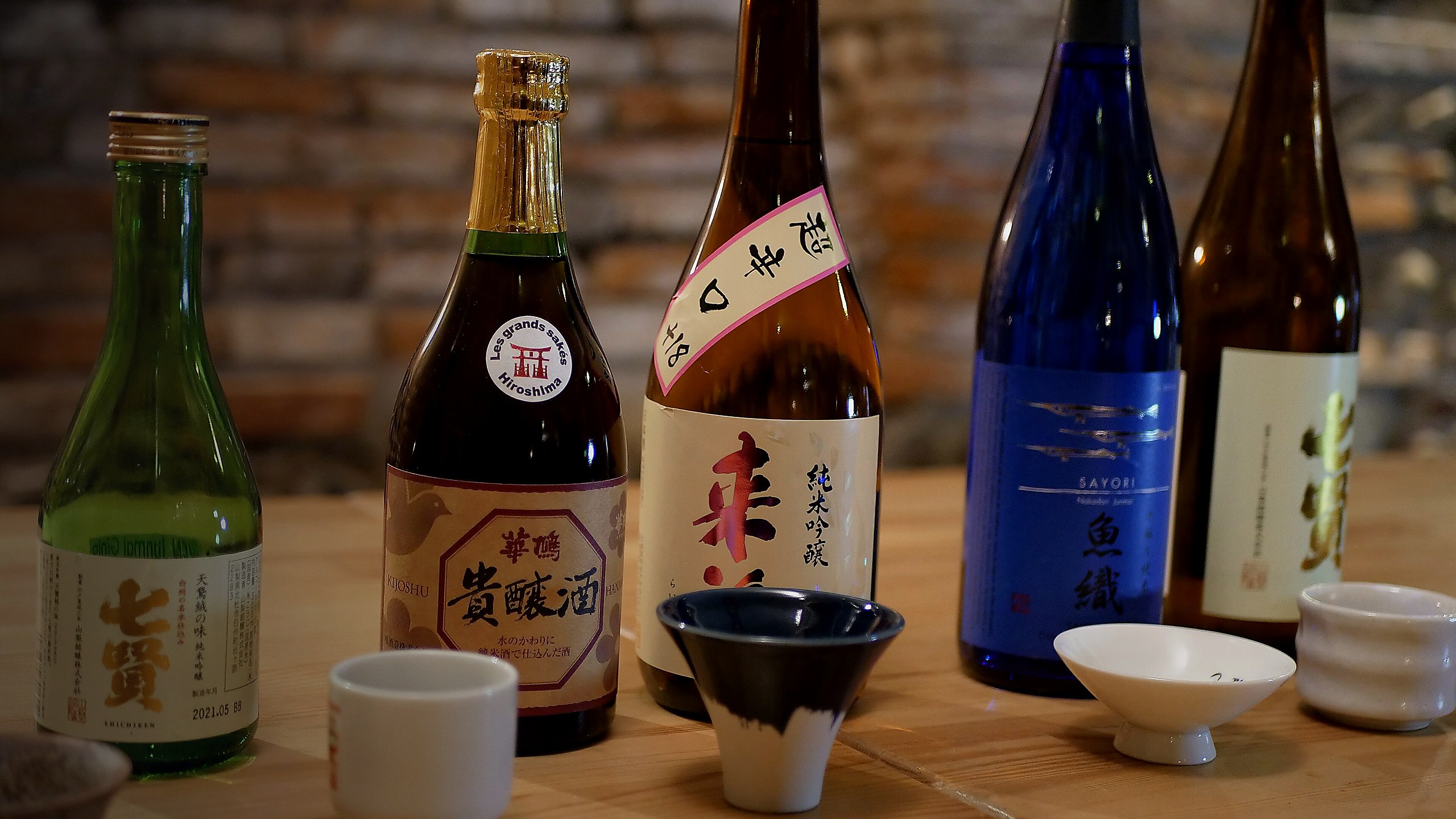
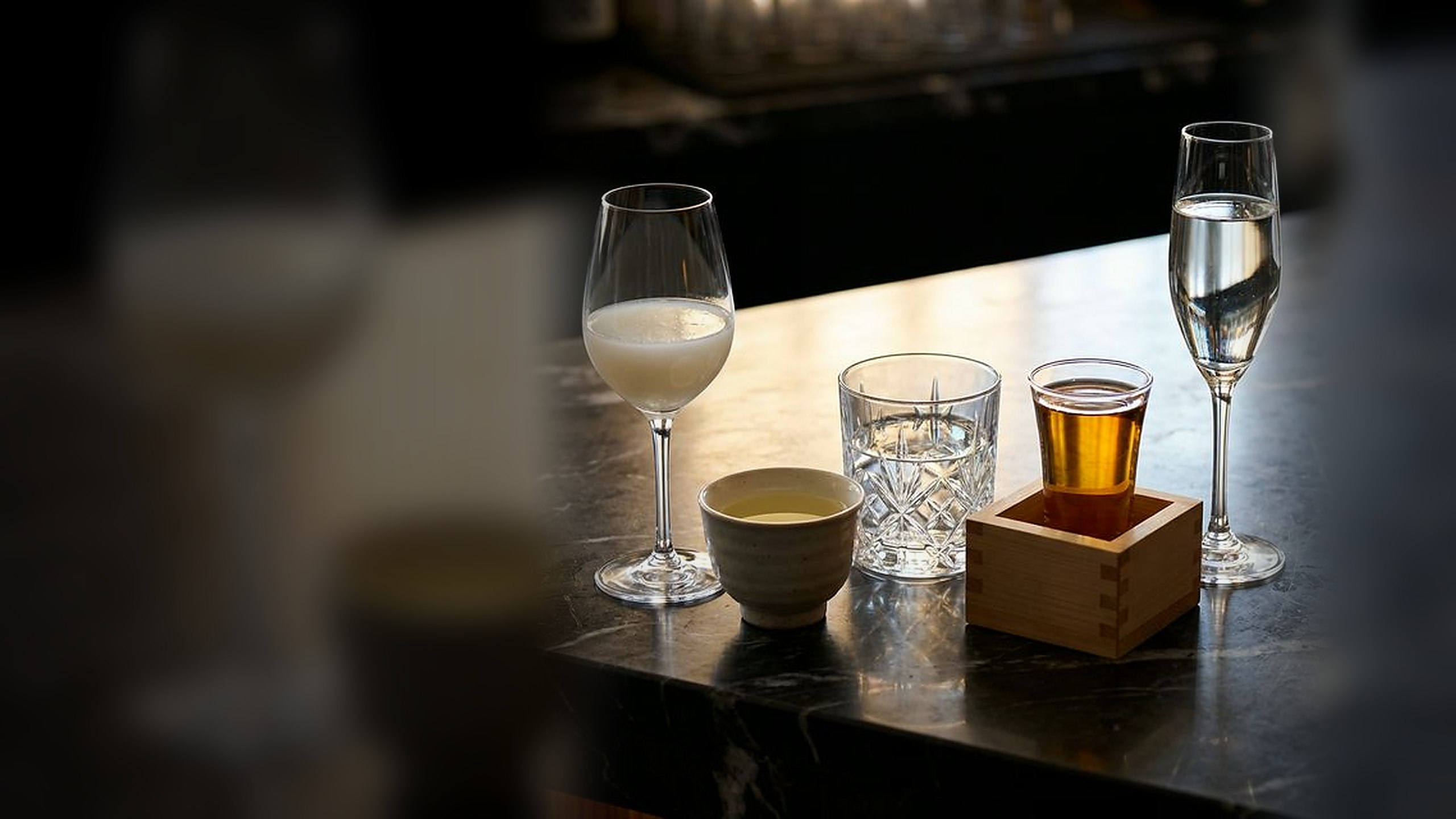
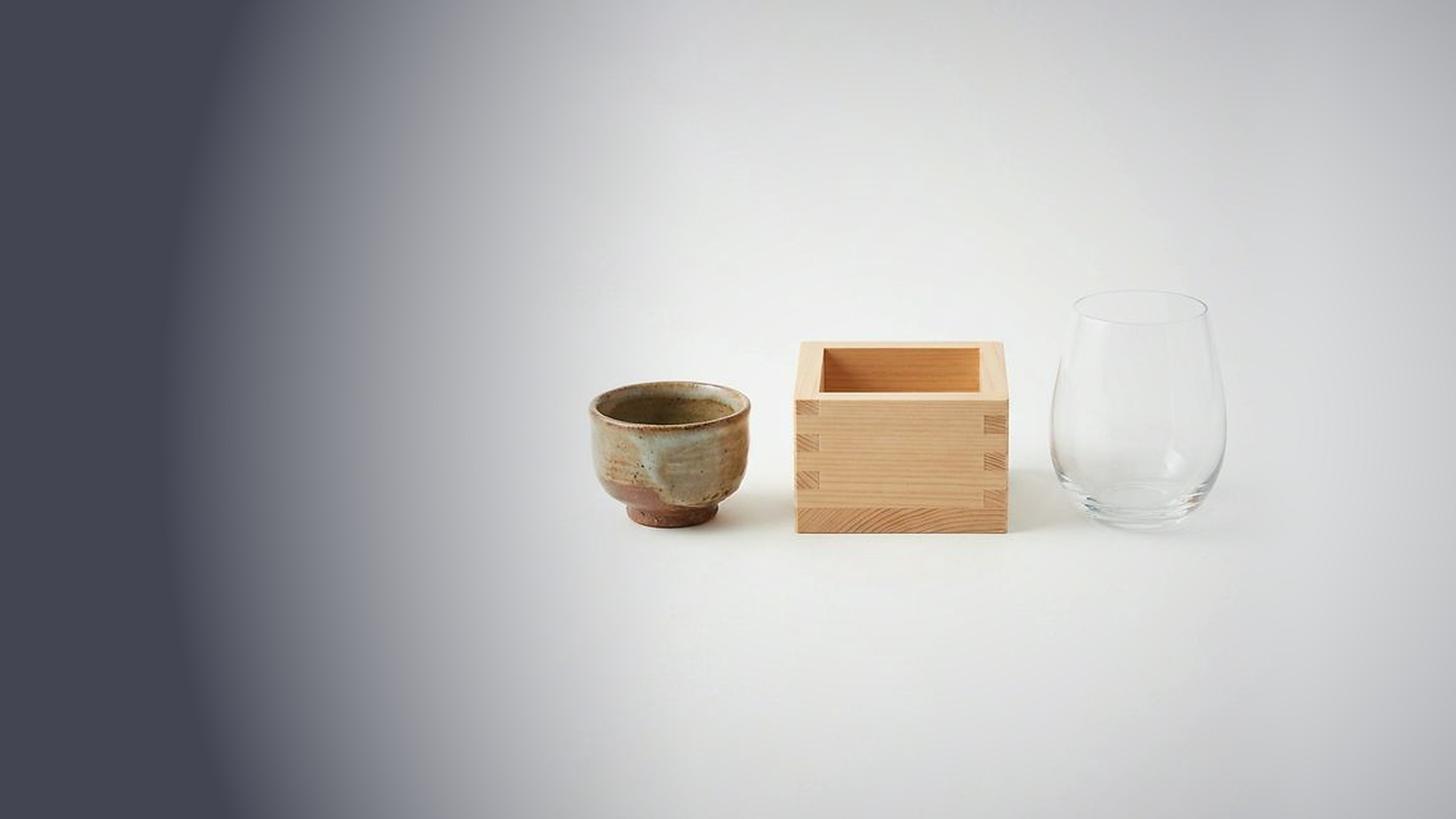
Ochoko — The most popular sake cup. At 30-50ml it is perfectly matched to warm sake: the small capacity is rational design, ensuring you finish before the sake cools, and it is inseparable from the culture of pouring for one another. Thinner walls deliver more delicate flavors. Regional pottery traditions (Arita, Kutani) add character, and the double blue circle on the base — the janome, or snake's eye — was originally a working tool for judging a sake's clarity and luster.
Guinomi — Larger than ochoko at around 100ml, sized to the palm. Artisan-made guinomi are collector items. Unglazed stoneware from Bizen or Shigaraki changes how sake spreads across the mouth, softening the edges of rich junmai and yamahai styles. Choosing the cup becomes part of the evening's ritual.
Masu — A cedar box whose wood aroma transfers to the sake. Used in ceremonies, but everyday use offers forest-bathing calm; when cedar terpenes overlap with sake's sweetness, you get an experience entirely apart from ginjo aromatics — a sake of the woods.
Tokkuri — The classic narrow-necked flask, ideal for warming sake. Heated slowly in a water bath, the sake convects and rounds out, its edges softened — and the toku-toku gurgle as you pour is part of the pleasure.
Katakuchi — A small spouted vessel used in place of a tokkuri. Its wide mouth doubles as a miniature decanter, opening the aromas of chilled sake. Beautiful on the table and ideal for solo drinking.
The Wine Glass Revolution
Since the 2010s, drinking sake from wine glasses has spread rapidly. Brewers themselves now declare that ginjo aromatics only truly open in stemware, and wine glasses have become standard at competitions and brewery tasting rooms. In Seoul especially, wine-glass service is becoming the default — reinforcing sake's claim to the same fine-dining stage as wine.
The advantage is clear: the bowl concentrates aromas, maximizing ginjo's fruity character. Riedel and Schott Zwiesel now make sake-specific stemware, and the daiginjo glass developed through exhaustive tastings with breweries is especially acclaimed. Pour the same sake into an ochoko and a wine glass side by side, and any nose can tell the difference.
The Science of Shape, Material, and Temperature
The lead actors of ginjo aroma — ethyl caproate (apple-like) and isoamyl acetate (banana-like) — are highly volatile and pool in the headspace above the liquid. A narrowed rim guides that aromatic layer intact to the nose; a flared rim disperses it, pushing rice umami forward instead. Rim diameter also decides where sake first lands: a narrow glass channels it to the tip of the tongue, while an open cup floods the whole palate at once. Whether sweetness, acidity, or umami speaks first is something vessel design can change.
Material conductivity matters just as much. Thin porcelain and glass transmit the sake's temperature directly to the lips; thick stoneware insulates, holding warm sake at temperature. Sensory panels repeatedly confirm that a mere 5°C shift changes how ginjo aromas express — which temperature and which vessel are one inseparable design decision.
The warm-sake tradition even names its temperature bands — yukibie (5°C), hanabie (10°C), suzubie (15°C), nurukan (40°C), atsukan (50°C). The same junmai blooms with umami from a thick guinomi at nurukan, yet turns sharply defined when served chilled in thin glass. Pairing vessel with temperature draws a whole repertoire of expressions from a single bottle — a luxury that costs nothing.
Recommended Glasses by Type
Daiginjo/Ginjo → Wine glass (tulip shape). Maximizes aroma. Serve at ~10°C.
Junmai → Guinomi (ceramic). Full-mouth umami reception. Room temp to warm.
Warm sake → Ochoko (porcelain). Thin walls transmit warmth gently.
Koshu (aged sake) → Brandy snifter. Complex aroma appreciation. Room temp.
Sparkling → Flute glass. Beautiful bubble presentation.
The Vessel × Sake Matrix
Whenever vessel choice stumps you, return to this chart. Once you grasp what each material and shape amplifies or suppresses, the applications are endless.
| Vessel | Material & Shape | Best For | What It Does |
|---|---|---|---|
| White-wine glass | Thin glass, tapered rim | Ginjo and daiginjo (Kokuryu, Dassai) | Gathers aroma; maximizes chilled fruit notes |
| Janome choko | Porcelain, blue double-ring | All types (judging) | Reads color and clarity precisely |
| Hirasakazuki | Wide, shallow bowl | Ambient junmai and kimoto | Opens the aroma; spreads rice umami across the tongue |
| Guinomi (stoneware) | Thick walls, earthen touch | Warmed sake, yamahai, nigori | Holds heat; earthiness underpins umami |
| Tin chirori & choko | High conductivity | All warmed sake | Heats fast and evenly; said to round the flavor |
| Masu (hinoki) | Cypress wood | Taruzake, celebrations | Lends hinoki fragrance; sets a festive stage |
| Kiriko cut glass | Ornament and coolness | Summer sake, on the rocks | Visual coolness amplifying the palate's |
If You Buy Only Three
A white-wine glass for chilled sake, a stoneware guinomi for warmed, a flat hirasakazuki for ambient. These three cover sake's entire temperature range, and ¥3,000 is enough to start.
The Two-Line Rule
For aroma, choose thin, tapered glass; for umami, choose wide-mouthed ceramics. The warmer the sake, the thicker the vessel; the cooler, the thinner. Memorize those two lines and you will never miss.
The Three-Vessel Experiment
Pour one ginjo into a wine glass, a choko, and a hirasakazuki, and drink them side by side. The aromatic lift, the perceived sweetness, even your drinking pace will change — a vessel is a device for discovering your own taste.
Featured Breweries, Specs & Flavor Balance
| Flagship Label | Brewery & Region | Signature Rice & Water | Brewery Profile |
|---|---|---|---|
| Juyondai | Takagi Shuzo Co., Ltd. (1826 Oaza Tominami, Murayama-shi, Yamagata 995-0111, Japan) | Tatsu no Otoshigo, Sakemirai, Ushu Homare, Aiyama, Yamada Nishiki · Mount Hayama Subterranean Spring Water 'Sakura-Shimizu' (Soft Water) | Brewery Profile |
| Aramasa | Aramasa Co., Ltd. (6-2-35 Omachi, Akita-shi, Akita 010-0921, Japan) | Pesticide-Free & Estate-Grown Akita Rice (Kairyo Shinko, Rikuu No. 132, Misato Nishiki, Akita Sakekomachi) · Mount Taihei Subterranean Soft Water (Akita City) | Brewery Profile |
| Jikon | Kiyasho Sake Brewery Co., Ltd. (314-1 Honmachi, Nabari-shi, Mie 518-0726, Japan) | Yamadanishiki, Aiyama, Omachi, Hattannishiki, Senbonnishiki · Subsurface water from the Nunobiki mountain range (brewery well water, soft water) | Brewery Profile |
| Kokuryu | Kokuryu Sake Brewing Corporation (1-38 Matsuoka-Kasuga, Eiheiji-cho, Yoshida-gun, Fukui 910-1133, Japan) | Hyogo Tojo Yamada Nishiki, Fukui Sakahomare, Gohyakumangoku, Koshinoshizuku · Mt. Hakusan Range & Kuzuryu River Subterranean Soft Water | Brewery Profile |
| Dassai | Dassai Inc. (Asahi Shuzo Co., Ltd.) (2167-4 Osogoe, Shuto-cho, Iwakuni-shi, Yamaguchi 742-0422, Japan) | Yamada Nishiki (100% Exclusive Use) · Osogoe Natural Subterranean Soft Water (Shuto-cho, Iwakuni) | Brewery Profile |
Pioneered by 15th-generation master brewer Akitsuna Takagi, Juyondai revolutionized modern sake by shifting the paradigm from dry austerity to lush, nectar-like aromatics of ripe musk melon and white peach. Crafted with proprietary rice strains like Sakemirai, Ryuno-otoshigo, and Ushuhomare alongside Special A-grade Yamadanishiki using the prized Shichitare Nijikkan drip technique, its velvety umami and crystalline finish elevate omakase sushi and Wagyu kaiseki.
As the birthplace of Kyokai No. 6 yeast, Aramasa represents the pinnacle of modern sake brewing through 100% kimoto fermentation in cedar vats using exclusively Akita-grown rice. Its vibrant citrus acidity, low-alcohol elegance, and silky sweetness evoke fine white Burgundy, pairing effortlessly with sashimi, crudo, and modern gastronomy.
Named after the Zen phrase 'living fully in the present moment,' Jikon by 6th-generation brewer Tadakatsu Onishi in Nabari, Mie stands at the absolute summit of modern sake. Radiant muscat and white peach aromatics, crystalline Nunobiki mountain soft-water sweetness, and electric acidity achieve a golden-ratio balance that enchants on its own or alongside Matsusaka Wagyu and fine sushi.
Founded in 1804 in Eiheiji, Fukui, Kokuryu pioneered commercial luxury Daiginjo in Japan, uniting soft Kuzuryu River water with prized Tojo Yamada Nishiki and local Sakahomare rice. Legendary bottlings like Ishidaya, Nizaemon, Shizuku, and Hachijuhachigo deliver crystalline elegance that elevates Echizen snow crab and haute kaiseki.
From the mountain valleys of Iwakuni, Yamaguchi, Dassai revolutionized global sake through data-driven precision brewing and ultra-polished Yamada Nishiki rice. Led by the iconic Dassai 23, its opulent aromas of white peach and Poire Williams, silky-smooth mid-palate, and crystalline finish pair effortlessly with fine Edomae sushi and Michelin-starred French cuisine.
Recommended Pairing
Weekly Sake & Tasting Dispatch
Curated seasonal releases, sub-zero arrivals, and tasting city guides across global editions.