[The 2026BY Sake Rice Crisis & Tech Counter-Revolution] 1.6x Gohyakumangoku Surge, Heat-Tolerant Rice "Niji no Kirameki" & "Shunyo", and Flat Polishing Science
Culture & Trends

[The 2026BY Sake Rice Crisis & Tech Counter-Revolution] 1.6x Gohyakumangoku Surge, Heat-Tolerant Rice "Niji no Kirameki" & "Shunyo", and Flat Polishing Science

2026-11-128min readSakeStream
Back
EXECUTIVE SUMMARY & KEY TAKEAWAYS

As Gohyakumangoku surges 1.5–1.66x to ¥24,200–27,300 per 60kg bale and Yamada Nishiki hits ~¥33,200, Japan’s breweries face an unprecedented rice crisis. Yet pioneers are flipping the script with heat-tolerant "Niji no Kirameki" (2nd place at SAKE COMPETITION 2026), thiol-rich "Shunyo", and Satake’s flat-polishing geometry.

Key Sections in This Report:

Inside the 2026BY "Reiwa Sake Rice Crisis" — Gohyakumangoku Up 1.6x and the Table-Rice Price Inversion

Entering the 2025–2026 brewing year (2026BY), Japan’s 1,215 sake breweries confront the most severe raw-material shock since the postwar era: what industry insiders call the Reiwa Sake Rice Crisis.

The catalyst began outside the sake cellar, with a historic surge in domestic table rice (shushokuyo-mai such as Koshihikari). Historically, dedicated sake-brewing rice varieties (shuzo kotekimai)—which grow tall, lodge easily in autumn typhoons, and demand labor-intensive cultivation—commanded a substantial price premium over table rice to compensate contract growers. Between 2025 and 2026, however, skyrocketing table-rice wholesale prices triggered an alarming price inversion and convergence: farmers suddenly stood to earn more per hectare growing high-yield table rice than finicky sake rice.

To prevent mass grower defection, 2026 sake-rice cooperative and contract prices surged at unprecedented rates. Benchmark Gohyakumangoku jumped from the ¥16,000s per 60kg bale (hyo) to roughly ¥24,200–¥27,300 (a 1.5x to 1.66x year-over-year leap), while king Yamada Nishiki climbed to approximately ¥33,200 per 60kg. Compounding the cost shock, record summer heat waves produced widespread chalky immature kernels (shiromijukuryu) and long-chain amylopectin starch hardening—causing steamed grains to resist enzymatic dissolution in the mash.

Yet out of this twin crisis of hyper-inflation and climate stress, Japanese brewing scientists and visionary kuramoto have ignited a technological counter-revolution.
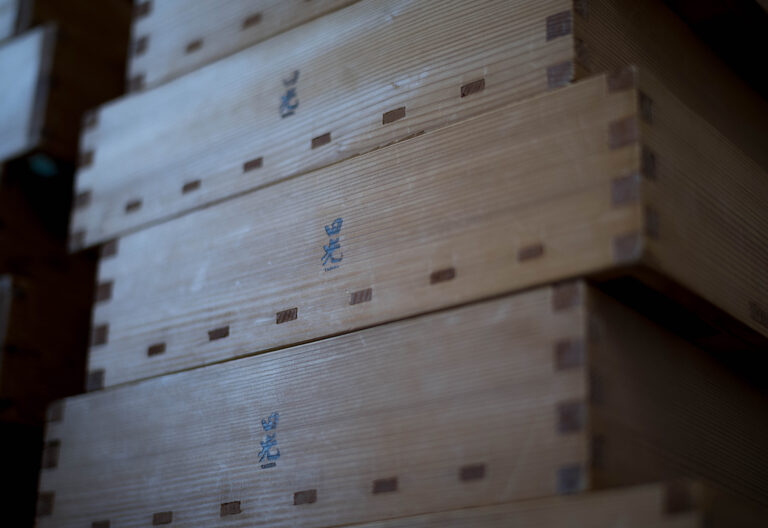
Delicate temperature and moisture control inside the koji room unlocks hard and heat-stressed rice

Traditional Sake Rice vs. Heat-Tolerant & Table Rice × Flat Polishing

The structural shift reshaping 2026BY sake production becomes unmistakable when comparing traditional brewing rice against next-generation cultivars paired with modern milling geometry:

Cultivar & Category2026 Est. Price / 60kgHeat Tolerance & AgronomyMilling & Fermentation TechBenchmark Bottling (720ml JP Retail)
Yamada Nishiki (Classic Sake Rice)~¥33,200Late-ripening, tall stalks prone to lodgingLarge shinpaku; spherical 35–50% polishClassic Competition Daiginjo (¥3,300–¥11,000)
Gohyakumangoku (Classic Sake Rice)~¥24,200–¥27,300Early-ripening; prone to heat-hardened starchStopwatch soaking & high-enzyme kojiNiigata/Hokuriku Junmai Ginjo (¥1,870–¥2,750)
Niji no Kirameki (Heat-Tolerant)Table-rice parity; high yieldNARO-bred extreme heat tolerance & short stalkFlat milling + cold fermentation unlocks clarity*Katsuyama KIRA KIRA* (¥2,420)
Shunyo (Low-Glutelin Rice)Contract-grown mid-tierUltra-low digestible glutelin = zero off-flavorsGenerates 4MMP (Sauvignon Blanc thiols)*Gakki Masamune Shunyo* (¥1,980)
Nikomaru / Koshihikari (Table Rice)Local circular valueThrives in warm Kyushu/western Japanese summersSatake *Shingin* flat 60% = Daiginjo purity*Hiran Nikomaru* (¥1,925)

Four Next-Generation Rice Bottlings Rewriting the Rules in 2026

Any lingering prejudice that sake brewed from heat-tolerant or culinary rice is inferior to pedigree Yamada Nishiki was decisively demolished in 2026’s blind tasting competitions.

#1

Katsuyama KIRA KIRA Junmai Ginjo (Sendai Izawake Katsuyama Shuzo, Miyagi)

2026 Distinction
2nd Place Nationally (GOLD), Junmai Ginjo Division — SAKE COMPETITION 2026 (June 2026)
Rice & Polish Architecture
100% *Niji no Kirameki* (heat-tolerant cultivar developed by Japan’s NARO), polished to 50%
720ml Pricing (JP / Global)
~¥2,420 tax incl. in Japan / ₩68,000–₩95,000 in Seoul; ~$48–$65 USD overseas
Optimal Service
8–12°C in a flute or white wine glass

No bottle sent bigger shockwaves through the brewing world in 2026. Bred by Japan’s National Agriculture and Food Research Organization (NARO) to resist grain chalkiness under extreme summer heat while standing shorter than Koshihikari against typhoons, Niji no Kirameki is technically a high-yield culinary rice. By custom-tailoring water absorption and koji enzyme kinetics, Katsuyama Shuzo’s KIRA KIRA beat hundreds of Yamada Nishiki and Aiyama entries blind to finish #2 in all of Japan at SAKE COMPETITION 2026—delivering radiant crystal sweetness and satin poise.

#2

Gakki Masamune Shunyo (Daiki Daikichi Honten, Fukushima)

2026 Distinction
Public Choice Award Winner — VIENNA SAKE AWARD 2026 (October 2026, Austria)
Rice & Aroma Chemistry
Low-glutelin cultivar *Shunyo / Rich in volatile thiol 4MMP* (muscat & pink grapefruit)
720ml Pricing (JP / Global)
~¥1,980 tax incl. in Japan / ₩52,000–₩68,000 in Seoul; ~$42–$55 USD overseas
Optimal Service
8–10°C in a Sauvignon Blanc glass

Originally bred as a low-protein medical diet rice for kidney patients, Shunyo contains minimal digestible glutelin—the exact protein fraction that breaks down into heavy amino off-flavors during fermentation. Better still, sake yeast fermenting Shunyo liberates high concentrations of 4-mercapto-4-methylpentan-2-one (4MMP), the exact aromatic thiol responsible for Sauvignon Blanc’s electric muscat, lychee, and citrus-zest bouquet. Cult leaders including Aramasa (No.6 S-type / X-type special lots), Kankiku, and Senkin have all embraced Shunyo, and Gakki Masamune’s triumph in Vienna proves its immediate appeal to European wine palates.

#3

Hiran Nikomaru Kimoto (Mori Shuzojo, Nagasaki)

Rice & Fermentation
80% Hirado-grown *Nikomaru* culinary rice (*kakemai*) × 20% Yamada Nishiki (kojimai) / Kimoto starter, undiluted 14% ABV
Toji Philosophy
Fifth-generation brewer-owner Yutaro Mori’s coastal-terroir expression of Hirado Island’s terraced paddies
720ml Pricing (JP / Global)
~¥1,925 tax incl. in Japan / ₩55,000–₩75,000 in Seoul natural wine bars; ~$42–$56 USD
Optimal Service
10–14°C in a universal white wine stem

Bred to thrive in Kyushu’s sweltering summers, plump Nikomaru table rice gives Hiran lush, juicy generosity. Framed by creamy kimoto lactic acidity and a brisk coastal salinity at just 14% ABV, it is one of Japan’s greatest under-¥2,000 gastronomic bargains.

#4

Shirakiku BLACK LABEL (Shirasugi Shuzo, Kyotango, Kyoto)

Rice & Koji Design
100% Kyotango-grown *Koshihikari* & local culinary rice × Black koji (kuro-koji citric acid)
Brewery Distinction
Japan’s pioneering 100%-edible-rice brewery ("If it cooks into extraordinary rice, it brews extraordinary sake")
720ml Pricing (JP / Global)
¥1,870–¥2,200 tax incl. in Japan / ₩52,000–₩68,000 in Seoul; ~$40–$54 USD
Optimal Service
8–12°C in a tulip glass

By pairing Koshihikari’s natural mid-palate sweetness with vibrant citric acid generated by kuro-koji, Kyotango’s Shirasugi Shuzo crafts a bright, berry-inflected modern sake without using a single grain of traditional shuzo kotekimai.


How Satake’s "Shingin (Flat) Polishing" Turns a 60% Polish into 40% Daiginjo Purity

The mechanical breakthrough enabling culinary and heat-tolerant rice to rival high-polish Yamada Nishiki is three-dimensional flat polishing—pioneered by Daishichi Shuzo’s Cho-Henpei Seimai and scaled nationwide by milling giant Satake’s *Shingin Seimai* (*Henpei Seimai*), as extensively chronicled by specialist trade journal SAKE Street.

Conventional spherical milling grinds down the two ends of an elongated rice kernel first, leaving stubborn outer layers of crude protein (which causes harsh amino notes) and lipids (unsaturated fatty acids that suppress fruity ester synthesis) clinging to the flat sides and dorsal grooves unless the brewer grinds away 60% of the grain down to a 40% polish ratio.

Flat polishing (*Henpei Seimai*) instead shaves the kernel uniformly along its natural length-width-thickness geometry. As a result, a 60% flat-polished rice grain achieves the same protein and lipid removal as a conventional 40% spherically polished Daiginjo grain, while saving 20 percentage points of precious starch from becoming bran waste. In an era of ¥33,000 Yamada Nishiki and hotter summers, combining 60% flat polishing with heat-resilient cultivars is smart, sustainable, and delicious.

1,215 Breweries · 2,891 Labels · Neutral Archive
Linked from 1,215 Breweries · 2,891 Labels · 8,673 Reviews

Featured Breweries, Specs & Flavor Balance

Flagship LabelBrewery & RegionSignature Rice & WaterBrewery Profile
KatsuyamaSendai Izawake Katsuyama Sake Brewery Co., Ltd. (25-1 Futamata, Fukuoka, Izumi-ku, Sendai-shi, Miyagi 981-3225, Japan)Yamada Nishiki, Hitomebore, Omachi · Mt. Izumigatake Subterranean Soft WaterBrewery Profile
Gakki MasamuneOki Daikichi Honten Co., Ltd. (9 Honcho, Yabuki-machi, Nishishirakawa-gun, Fukushima 969-0213, Japan)Yumenoka, Fukunoka, Dewasansan, Omachi, Gohyakumangoku · Subsurface soft water from the Kumado River system and Abukuma HighlandsBrewery Profile
HiranMori Shuzojo Co., Ltd. (31-2 Shinmachi, Hirado City, Nagasaki 859-5115, Japan)Hirado-Grown Nikomaru, Yamada Nishiki, Omachi, Asahi · Hirado Saikyoji Temple Foot Natural Soft Spring WaterBrewery Profile
ShirakikuShirasugi Shuzo Co., Ltd. (1062 Sugitani, Mineyamacho, Kyotango-shi, Kyoto 627-0012, Japan)Tango-grown Koshihikari, Sasanishiki, Milky Queen, Yumegokochi (100% edible table rice) · Mt. Isanago Range Natural Spring Water on the Tango Peninsula (soft water)Brewery Profile
FusanokankikuKankiku Meijo Co., Ltd. (11 Takenosato, Matsuo-machi, Sammu-shi, Chiba 289-1532, Japan)Chiba Fusanomai, Chiba Fusakogane, Yamada Nishiki, Omachi, Ushuhomare · Kujukuri Plain Subterranean Soft Spring Water from the Ancient Persimmon Tree WellBrewery Profile
SenkinSenkin Co., Ltd. (106 Baba, Sakura-shi, Tochigi 329-1321, Japan)Domaine Sakura Estate-Grown Rice (Kamenoo, Yamada Nishiki, Omachi) · Kinugawa River System Subterranean Ultra-Soft Water (Domaine Aquifer)Brewery Profile
Kaika BlossomDaiichi Sake Brewery Co., Ltd. (488 Tajima-cho, Sano-shi, Tochigi 327-0031, Japan)Tochigi Yumesasara, Tochigishu 14, Gohyakumangoku, Hyogo Yamada Nishiki · Watarase River System & Izuruhara Benten Pond Aquifer Subterranean Soft WaterBrewery Profile
AramasaAramasa Co., Ltd. (6-2-35 Omachi, Akita-shi, Akita 010-0921, Japan)Pesticide-Free & Estate-Grown Akita Rice (Kairyo Shinko, Rikuu No. 132, Misato Nishiki, Akita Sakekomachi) · Mount Taihei Subterranean Soft Water (Akita City)Brewery Profile
DaishichiDaishichi Sake Brewery Co., Ltd. (1-66 Takeda, Nihonmatsu-shi, Fukushima 964-0904, Japan)Yamadanishiki, Gohyakumangoku, Yumenoka (100% Super-Flat Rice Polishing) · Mt. Adatara subterranean spring water and Hikage well water (medium-hard water)Brewery Profile
25-1 Futamata, Fukuoka, Izumi-ku, Sendai-shi, Miyagi 981-3225, Japan · Sendai Izawake Katsuyama Sake Brewery Co., Ltd. (Est. 1688)
Katsuyamaメロン甘味旨味
Mt. Izumigatake Subterranean Soft Water Yamada Nishiki, Hitomebore, Omachi Miyagi Yeast

Founded in 1688 as the official purveyor to the feudal Date samurai clan of Sendai, Katsuyama crafts ultra-luxury sake by brewing just a single small tank per week and pioneering high-speed centrifugal extraction. Flagship expressions like Diamond Akatsuki, Den, and Ken use Special A-grade Yamadanishiki to achieve diamond-like purity and opulent umami that shine alongside truffle-infused French cuisine and fine sushi.

Flavor Balance (1–5 Rice Grains)Shows which flavor direction the balance leans toward (1 to 5 rice grains), never a quality rank or score.
Serving & Glassware:Recommended Temperature: 10–13°C (Chilled / Hanabie to Suzubie) / Recommended Glassware: Thin-rimmed, medium-bowled white wine glass (such as Riedel O Daiginjo). Avoid over-chilling below 6°C so the delicate esters are not muted. Upon pouring, experience crystalline purity from Mt. Izumigatake Subterranean Soft Water and lifted orchard-fruit aromatics; after 15 minutes as the glass warms to 14°C, silky Yamada Nishiki, Hitomebore, Omachi mid-palate umami opens gracefully.
Global Gastronomy Pairings
• Shiogama 'Higashimono' bigeye tuna nigiri and Matsushima Bay oyster poached in sea brine
• Jeju silver belt-fish sashimi and delicate pan-fried scallop & cod jeon with citrus soy
• Poached lobster tail and white asparagus warm salad with yuzu-infused citrus hollandaise
“Tasted Katsuyama Junmai Ginjo Ken, winner of 1st place at SAKE COMPETITION. Noble melon aromatics meet a glamorous, zero-impurity palate that embodies the aristocratic aesthetic of feudal Sendai.”
Domestic Review · SAKETIME / SAKE COMPETITION 1位受賞歴Date_Masamune_Sake
“Katsuyama Diamond Akatsuki, famously awarded 95 points by Robert Parker's Wine Advocate, showcases the magic of zero-pressure centrifugal extraction—delivering weightless silkiness and extraordinary aromatic precision.”
Global Sommelier · IWC Champion Sake / Parker Wine AdvocateAntoine Lefevre, DipWSET
“From the expressive Lei to the classic Den, Katsuyama's commitment to fermenting just one tank per week shines through in every sip's razor-clean definition and lingering finish.”
SNS Buzz · X (Twitter) / Instagram@luxury_sake_notes
9 Honcho, Yabuki-machi, Nishishirakawa-gun, Fukushima 969-0213, Japan · Oki Daikichi Honten Co., Ltd. (Est. 1865)
Gakki Masamuneガスマスカットフルーティ
Subsurface soft water from the Kumado River system and Abukuma Highlands Yumenoka, Fukunoka, Dewasansan, Omachi, Gohyakumangoku Utsukushima Yume Yeast (F7-01), Utsukushima Kirameki Yeast, Kyokai No. 1801

Revived by 5th-generation brewer Yuta Oki from a Taisho-era brand praised by the Imperial Household for 'playing harmony like a musical instrument,' Gakki Masamune has become a nationwide phenomenon from Yabuki Town. Bursting with vibrant green apple and Muscat aromatics, lively nakadori (middle-run) juiciness, and a whisper of natural spritz, it pairs effortlessly with prosciutto, crudo, and salt-grilled yakitori.

Flavor Balance (1–5 Rice Grains)Shows which flavor direction the balance leans toward (1 to 5 rice grains), never a quality rank or score.
Serving & Glassware:Recommended Temperature: 10–13°C (Chilled / Hanabie to Suzubie) / Recommended Glassware: Thin-rimmed, medium-bowled white wine glass (such as Riedel O Daiginjo). Avoid over-chilling below 6°C so the delicate esters are not muted. Upon pouring, experience crystalline purity from Subsurface soft water from the Kumado River system and Abukuma Highlands and lifted orchard-fruit aromatics; after 15 minutes as the glass warms to 14°C, silky Yumenoka, Fukunoka, Dewasansan, Omachi, Gohyakumangoku mid-palate umami opens gracefully.
Global Gastronomy Pairings
• Aged Joban coastal flounder sashimi and Aizu white asparagus & kuruma prawn tempura with mountain salt
• Dry-aged Korean wild sea bream hoe and chilled king prawn salad (daeha-naengchae) in pine-nut sauce
• Poached lobster tail and white asparagus warm salad with yuzu-infused citrus hollandaise
“Gakki Masamune Honjozo Nakadori completely shatters every preconception of the Honjozo category. Tasted blind, its juicy Muscat aromatics, crystalline purity, and snappy finish rival bottles three times its price.”
Domestic Review · SAKETIME 福島県ランキング 上位・急上昇1位Modern_Sake_Hunter
“Whenever we pour Gakki Masamune for natural wine bars and modern Asian restaurants abroad, sommeliers immediately light up at its vibrant acidity, bright orchard fruit, and zippy, low-ABV drinkability.”
Global Sommelier · Vivino / Reddit r/SakeSamir Patel
“Tasted Gakki Masamune Junjo alongside their Kijoshu! From its crisp, chilled attack to the way melon-like umami swells as it warms in the glass, the progression feels like a musical crescendo.”
SNS Buzz · X (Twitter) / Instagram@sake_melody_jp
31-2 Shinmachi, Hirado City, Nagasaki 859-5115, Japan · Mori Shuzojo Co., Ltd. (Est. 1895)
Hiranガス酸味甘味
Hirado Saikyoji Temple Foot Natural Soft Spring Water Hirado-Grown Nikomaru, Yamada Nishiki, Omachi, Asahi Kyokai No. 6, No. 7, No. 9 & Indigenous Kimoto Culture

Helmed by 5th-generation brewmaster Yutaro Mori on historic Hirado Island, Hiran has become one of Japan's most sought-after modern craft sakes. Brewed with soft natural spring water from the foot of Mt. Saikyoji and local Hirado-grown Nikomaru table rice alongside Yamadanishiki and Omachi—often via vibrant kimoto fermentation—it explodes with pink grapefruit and Muscat aromatics, lively micro-effervescence, and silky sweet-tart tension. Pair it with Hirado flounder sashimi, crispy Nagasaki aji-fry, or seared Hirado Wagyu.

Flavor Balance (1–5 Rice Grains)Shows which flavor direction the balance leans toward (1 to 5 rice grains), never a quality rank or score.
Serving & Glassware:Recommended Temperature: 10–14°C (Cool Cellar) & 42–45°C (Bain-Marie Warmed / Nurukan) / Recommended Glassware: Thin-rimmed white Burgundy or Riedel O Daiginjo wine glass. Right after opening at 10°C, savor the vibrant micro-effervescence and taut lactic/citric tension shaped by Hirado Saikyoji Temple Foot Natural Soft Spring Water; after 15 minutes as it reaches 14°C, multi-dimensional Hirado-Grown Nikomaru, Yamada Nishiki, Omachi, Asahi umami and savory kimoto complexity blossom.
Global Gastronomy Pairings
• Nagasaki Shippoku braised pork belly (kakuni) and charcoal-seared Nagasaki Wagyu
• Charcoal-seared Hanwoo 1++ brisket point (chadolbagi) paired with aromatic minari and chilled dongchimi radish
• Dover sole meunière with cultured hazelnut brown butter, Meyer lemon, and capers
“Hiran Nikomaru Kimoto Muroka Nama Genshu is mind-blowing: turning 65%-polished local Nikomaru table rice via kimoto fermentation into an elegant, fizzy burst of ruby grapefruit, white peach, and pleasant citrus-pith bitterness. Instant love at first sip.”
Domestic Review · SAKETIME平戸の風と美酒
“Yutaro Mori's Hiran 'Heaven' and 'Reborn' possess the electric acid architecture and textural purity that instantly captivate natural wine lovers. Soft Mt. Saikyoji spring water balances its bright citrus tension—unreal with ceviche and raw oysters.”
Global Sommelier · Vivino / Next-Gen Sake AwardsElena S.
“Opened Hiran 'Happy New Born' from Hirado, Nagasaki—an automatic buy whenever you spot a bottle! Silky origarami lees sweetness balanced by electric citrus acidity and lively fizz. Easily one of the most exciting breweries in Japan right now.”
SNS Buzz · X (Twitter)@sake_freak_tokyo
1062 Sugitani, Mineyamacho, Kyotango-shi, Kyoto 627-0012, Japan · Shirasugi Shuzo Co., Ltd. (Est. 1777)
Shirakiku甘酸っぱいガス酸味
Mt. Isanago Range Natural Spring Water on the Tango Peninsula (soft water) Tango-grown Koshihikari, Sasanishiki, Milky Queen, Yumegokochi (100% edible table rice) Kyokai Yeast (paired with white, black, and yellow koji)

Founded in 1777 at the foot of Mount Isanago in Kyotango, Kyoto, Shirasugi Shuzo is the only brewery in Japan that brews 100% with delicious edible table rice—such as prized Tango Koshihikari, Sasanishiki, and Milky Queen—using zero sake-specific rice. Combining soft Mount Isanago spring water with innovative black koji, white koji, and yellow koji fermentations, Shirakiku bursts with electric citric-acid brightness, pink-grapefruit and green-apple juiciness, and plush table-rice umami. Pair it with sweet Taiza snow crab, traditional Tango bara-zushi, or roasted duck breast.

Flavor Balance (1–5 Rice Grains)Shows which flavor direction the balance leans toward (1 to 5 rice grains), never a quality rank or score.
Serving & Glassware:Recommended Temperature: 10–14°C (Cool Cellar) & 42–45°C (Bain-Marie Warmed / Nurukan) / Recommended Glassware: Thin-rimmed white Burgundy or Riedel O Daiginjo wine glass. Right after opening at 10°C, savor the vibrant micro-effervescence and taut lactic/citric tension shaped by Mt. Isanago Range Natural Spring Water on the Tango Peninsula (soft water); after 15 minutes as it reaches 14°C, multi-dimensional Tango-grown Koshihikari, Sasanishiki umami and savory kimoto complexity blossom.
Global Gastronomy Pairings
• Charcoal-roasted Kyoto duck breast with Saikyo white miso & Kujo negi and simmered Horikawa burdock
• Charcoal-seared Hanwoo 1++ brisket point (chadolbagi) paired with aromatic minari and chilled dongchimi radish
• Dover sole meunière with cultured hazelnut brown butter, Meyer lemon, and capers
“Opened Shirakiku Black Label Muroka Nama-Genshu (Tango Koshihikari + black koji) and the triple-koji Chimera! Zesty citric-acid lemonade brightness collides with plush Koshihikari table-rice sweetness in a stroke of pure brewing genius.”
Domestic Review · SAKETIME / 国内口コミ京丹後の米革命
“A fearless innovator that shattered the dogma that fine sake requires sake-specific rice. The vibrant citric tension from white and black koji places Shirakiku right alongside Loire and Austrian natural wines on modern tasting menus.”
Global Sommelier · Vivino / Fine Wine & SakeKasper N.
“Shirakiku brewed with Milky Queen table rice is mind-blowingly good! All that plush, sweet grain richness turns into juicy nectar lifted by bright white-koji citrus acidity—pairs insanely well with caprese, spring rolls, and sweet-and-sour pork.”
SNS Buzz · X (Twitter) / Instagram@tango_sake_vibes
11 Takenosato, Matsuo-machi, Sammu-shi, Chiba 289-1532, Japan · Kankiku Meijo Co., Ltd. (Est. 1883)
Fusanokankikuガス甘味ジューシー
Kujukuri Plain Subterranean Soft Spring Water from the Ancient Persimmon Tree Well Chiba Fusanomai, Chiba Fusakogane, Yamada Nishiki, Omachi, Ushuhomare Kyokai Yeasts (No. 1801, No. 901, and Custom-Selected Strains)

Brewed near Chiba's Kujukuri Coast since 1883, Fusa no Kankiku harnesses soft coastal subterranean water to create ultra-fresh, expressive unpasteurized sake. Celebrated for its seasonal 'OCEAN99' and 'Denshogiku' Discovery series, it delivers lively micro-effervescence, translucent melon-like sweetness, and afeather-light finish that pairs wonderfully with fresh Pacific sashimi, acqua pazza, and grilled poultry.

Flavor Balance (1–5 Rice Grains)Shows which flavor direction the balance leans toward (1 to 5 rice grains), never a quality rank or score.
Serving & Glassware:Recommended Temperature: 10–13°C (Chilled / Hanabie to Suzubie) / Recommended Glassware: Thin-rimmed, medium-bowled white wine glass (such as Riedel O Daiginjo). Avoid over-chilling below 6°C so the delicate esters are not muted. Upon pouring, experience crystalline purity from Kujukuri Plain Subterranean Soft Spring Water from the Ancient Persimmon Tree Well and lifted orchard-fruit aromatics; after 15 minutes as the glass warms to 14°C, silky Chiba Fusanomai, Chiba Fusakogane, Yamada Nishiki, Omachi, Ushuhomare mid-palate umami opens gracefully.
Global Gastronomy Pairings
• Scalded-skin Katsuura golden eye snapper sashimi and sake-steamed Kujukuri wild clams
• Dry-aged Korean wild sea bream hoe and chilled king prawn salad (daeha-naengchae) in pine-nut sauce
• Poached lobster tail and white asparagus warm salad with yuzu-infused citrus hollandaise
“Kankiku's Denshogiku and OCEAN99 series epitomize Chiba's modern sake renaissance. Lively spritz on the tongue meets lychee and white-peach juiciness, while the lower-ABV featherlight body makes it dangerously drinkable.”
Domestic Review · SAKETIME / 国内口コミ千葉地酒アンバサダー
“Immense popularity among younger sake drinkers in Taipei and Seoul. Its coastal-inspired labels and bright, tropical aromatics served chilled in wine glasses make it a showstopper alongside grilled shellfish.”
Global Sommelier · Vivino / Overseas Craft Sake ReviewDerek L., Taipei
“Picked up Kankiku Haruhi and Denshogiku today! The balance of juicy stone-fruit sweetness and zippy effervescence on the first sip is pure genius—unbeatable quality-to-price ratio in modern Junmai Daiginjo.”
SNS Buzz · X (Twitter) / Instagram@kankiku_lover
106 Baba, Sakura-shi, Tochigi 329-1321, Japan · Senkin Co., Ltd. (Est. 1806)
Senkinガス酸味甘酸っぱい
Kinugawa River System Subterranean Ultra-Soft Water (Domaine Aquifer) Domaine Sakura Estate-Grown Rice (Kamenoo, Yamada Nishiki, Omachi) Ambient Brewery Yeast (No Added Yeast), Tochigi Prefectural Yeast

Pioneering the 'Domaine' terroir concept in Tochigi using estate-grown Kamenoo, Yamada Nishiki, and Omachi rice irrigated by the same ultra-soft Kinugawa aquifer as its brewing water, Senkin crafts natural sake through 100% kimoto fermentation in cedar vats with minimal rice polishing. Vibrant green apple and muscat tartness intertwines with savory wood-aged minerality, making it an extraordinary match for French seafood dishes, soft bloomy-rind cheeses, and herb-driven appetizers.

Flavor Balance (1–5 Rice Grains)Shows which flavor direction the balance leans toward (1 to 5 rice grains), never a quality rank or score.
Serving & Glassware:Recommended Temperature: 10–14°C (Cool Cellar) & 42–45°C (Bain-Marie Warmed / Nurukan) / Recommended Glassware: Thin-rimmed white Burgundy or Riedel O Daiginjo wine glass. Right after opening at 10°C, savor the vibrant micro-effervescence and taut lactic/citric tension shaped by Kinugawa River System Subterranean Ultra-Soft Water (Domaine Aquifer); after 15 minutes as it reaches 14°C, multi-dimensional Domaine Sakura Estate-Grown Rice (Kamenoo, Yamada Nishiki, Omachi) umami and savory kimoto complexity blossom.
Global Gastronomy Pairings
• Charcoal-grilled Tochigi Wagyu tenderloin with tamari-sansho glaze and dashi-simmered kanpyo
• Crispy-scaled Jeju tilefish (okdom) and creamy abalone liver (geu) rice porridge risotto
• Pan-roasted Breton blue lobster with Champagne, tarragon, and cultured butter beurre blanc
“Beyond the signature juicy malic-acid brightness that made Modern Senkin famous, the recent return to Edo-era kimoto and cedar-vat methods has added remarkable mid-palate depth and structural grip. As it warms from chilled to cellar temperature, the wild, earthy umami of local Kamenoo rice blossoms beautifully.”
Domestic Review · SAKETIME / 国内口コミ東京・日本酒ペアリング研究家
“The single easiest sake to introduce to French natural wine collectors. With genuine single-aquifer Domaine terroir and electric Riesling-like acidity balanced by gentle lactic creaminess, it pairs effortlessly with pan-seared scallops and lobster.”
Global Sommelier · Vivino / Wine & Sake SommelierJulien M., Paris Sommelier
“Did a side-by-side tasting of Senkin Organic Nature and Classic Kame-no-O—unbelievable how a 90%+ rice polishing ratio can taste this luminous, brisk, and silky. The sweet-tart citrus snap and minimalist bottle design make it an instant favorite.”
SNS Buzz · X (Twitter) / Instagram@nat_sake_tokyo
488 Tajima-cho, Sano-shi, Tochigi 327-0031, Japan · Daiichi Sake Brewery Co., Ltd. (Est. 1673)
Kaika Blossomカルピス
Watarase River System & Izuruhara Benten Pond Aquifer Subterranean Soft Water Tochigi Yumesasara, Tochigishu 14, Gohyakumangoku, Hyogo Yamada Nishiki Tochigi Prefectural Yeast (T-ND, T-S), Kyokai Yeast

A celebratory seasonal label evoking spring blossoms with bright, uplifting Ginjo aromatics. Brewed by Daiichi Sake Brewery Co., Ltd. in Tochigi using Watarase River System & Izuruhara Benten Pond Aquifer Subterranean Soft Water and Tochigi Yumesasara, Tochigi-shu 14, Gohyakumangoku, and Hyogo Yamada Nishiki, it brings together tangy, yogurt-soda lactic sweetness with memorable poise.

Flavor Balance (1–5 Rice Grains)Shows which flavor direction the balance leans toward (1 to 5 rice grains), never a quality rank or score.
Serving & Glassware:Recommended Temperature: 10–14°C (Cool Chilled / Hanabie to Suzubie) / Recommended Glassware: Thin-rimmed white wine stem (Riedel O Daiginjo) or stemmed porcelain cup. At 10°C upon opening, enjoy the crystalline poise of Watarase River System & Izuruhara Benten Pond Aquifer Subterranean Soft Water and refined aromatics; after 15 minutes as it warms toward 14°C, three-dimensional Tochigi Yumesasara, Tochigishu 14, Gohyakumangoku, Hyogo Yamada Nishiki umami and balanced acidity expand to bridge sashimi and roasted main courses.
Global Gastronomy Pairings
• Fresh Nikko yuba (tofu skin) sashimi crowned with uni and salt-grilled wild Nakagawa sweetfish
• Charcoal-grilled Hanwoo beef tongue and Wando abalone butter-seared with crisp white kimchi
• Crispy-skinned sea bass poêlé in a delicate clam, saffron, and citrus nage broth
“Tasted 'Kaika Blossom' by Daiichi Sake Brewery Co., Ltd.: opening with the pure touch of Watarase River System & Izuruhara Benten Pond Aquifer Subterranean Soft Water, it reveals savory layers from Tochigi Yumesasara, Tochigi-shu 14, Gohyakumangoku, and Hyogo Yamada Nishiki and tangy, yogurt-soda lactic sweetness before finishing with crisp precision.”
Domestic Review · SAKETIME / 国内口コミ地酒専門店バイヤー評
“Highly rated on global sake platforms for its poised structure shaped by Watarase River System & Izuruhara Benten Pond Aquifer Subterranean Soft Water in Tochigi, offering tangy, yogurt-soda lactic sweetness that pairs seamlessly with sushi, sashimi, and contemporary cuisine.”
Global Sommelier · Vivino / Global SakeGlobal Sake Sommelier
“Loved on X and Instagram for its dynamic temperature evolution—showing crisp mineral clarity when chilled and generous Tochigi Yumesasara, Tochigi-shu 14, Gohyakumangoku, and Hyogo Yamada Nishiki umami as it warms.”
SNS Buzz · X (Twitter) / Instagram@craft_sake_journal
6-2-35 Omachi, Akita-shi, Akita 010-0921, Japan · Aramasa Co., Ltd. (Est. 1852)
Aramasaガス酸味ワイン
Mount Taihei Subterranean Soft Water (Akita City) Pesticide-Free & Estate-Grown Akita Rice (Kairyo Shinko, Rikuu No. 132, Misato Nishiki, Akita Sakekomachi) Kyokai No. 6 Yeast (Birthplace Brewery, 100% Exclusive Use)

As the birthplace of Kyokai No. 6 yeast, Aramasa represents the pinnacle of modern sake brewing through 100% kimoto fermentation in cedar vats using exclusively Akita-grown rice. Its vibrant citrus acidity, low-alcohol elegance, and silky sweetness evoke fine white Burgundy, pairing effortlessly with sashimi, crudo, and modern gastronomy.

Flavor Balance (1–5 Rice Grains)Shows which flavor direction the balance leans toward (1 to 5 rice grains), never a quality rank or score.
Serving & Glassware:Recommended Temperature: 10–14°C (Cool Cellar) & 42–45°C (Bain-Marie Warmed / Nurukan) / Recommended Glassware: Thin-rimmed white Burgundy or Riedel O Daiginjo wine glass. Right after opening at 10°C, savor the vibrant micro-effervescence and taut lactic/citric tension shaped by Mount Taihei Subterranean Soft Water (Akita City); after 15 minutes as it reaches 14°C, multi-dimensional Pesticide-Free & Estate-Grown Akita Rice (Kairyo Shinko, Rikuu No. 132) umami and savory kimoto complexity blossom.
Global Gastronomy Pairings
• Charcoal-grilled Hinai-jidori chicken kiritanpo hotpot and smoked iburigakko with sake-lees cream cheese
• Charcoal-seared Hanwoo 1++ brisket point (chadolbagi) paired with aromatic minari and chilled dongchimi radish
• Pan-roasted Breton blue lobster with Champagne, tarragon, and cultured butter beurre blanc
“Opened a bottle of No. 6 X-type and was floored by the burst of Shine Muscat and white peach aromatics, backed by multi-dimensional kimoto acidity and crystalline purity from cedar vat fermentation. An absolute masterpiece of contemporary Japanese brewing.”
Domestic Review · SAKETIME / 国内口コミ六号酵母の求道者
“A revelation for Burgundy and Champagne lovers: laser-focused lactic and malic tension, delicate wooden-vat complexity, and incredible concentration at just 13% ABV. Pairs brilliantly with Dover sole and shellfish.”
Global Sommelier · Vivino / Fine Wine & SakeMarc L.
“Finally scored Amaneko and Ecru through a bottle shop lottery! That lively micro-effervescence on opening and bright, juicy sweet-tart balance is unmatched—turned my wine-drinking friends into instant sake fanatics.”
SNS Buzz · X (Twitter) / Reddit r/Sake@tokyo_sake_hunter
1-66 Takeda, Nihonmatsu-shi, Fukushima 964-0904, Japan · Daishichi Sake Brewery Co., Ltd. (Est. 1752)
Daishichi燗酒熱燗旨味
Mt. Adatara subterranean spring water and Hikage well water (medium-hard water) Yamadanishiki, Gohyakumangoku, Yumenoka (100% Super-Flat Rice Polishing) Kyokai No. 7 & No. 9 strain yeasts (Traditional Kimoto fermentation)

Dedicated exclusively to traditional Kimoto-method brewing since 1752 in Nihonmatsu, Daishichi revolutionized the craft with its proprietary 'ultra-flat rice polishing' (cho-henpei seimai) technology. Offering rich, creamy lactic depth, velvety texture, and complex savory resonance that blossoms from chilled to gentle warm (nurukan), its sakes pair majestically with grilled unagi, Wagyu steak, and aged Comté cheese.

Flavor Balance (1–5 Rice Grains)Shows which flavor direction the balance leans toward (1 to 5 rice grains), never a quality rank or score.
Serving & Glassware:Recommended Temperature: 15–18°C (Cellar Temp) or 40–43°C (Gentle Warmth / Nurukan) / Recommended Glassware: Wide-bowled Burgundy stem or artisanal Bizen/Karatsu stoneware cup. Cellar temperature (16°C) unlocks complex notes of toasted hazelnut, dried fig, and caramel matured from Mt. Adatara subterranean spring water and Hikage well water (medium-hard water) and Yamadanishiki, Gohyakumangoku, Yumenoka (100% Super-Flat Rice Polishing). Warming gently to 40°C seamlessly integrates its savory umami and velvety acidity alongside rich meats or aged cheeses.
Global Gastronomy Pairings
• Charcoal-seared Aizu heritage chicken and rich Fukushima monkfish dobujiru liver-miso stew
• Soy-marinated West Sea female blue crab (ganjang-gejang) rich in roe served with gamtae seaweed rice
• Roasted venison loin with cacao-peppercorn sauce Grand Veneur and black Perigord truffle risotto
“Tasted Daishichi Junmai Daiginjo Minowamon alongside the classic Daishichi Junmai Kimoto. Thanks to ultra-flat rice polishing, there is zero roughness—offering silky clarity when chilled and enveloping umami when gently warmed.”
Domestic Review · SAKETIME 生もと部門・福島県名門レビューKimoto_Kanzake_Master
“Daishichi Myoka Rangyoku possesses the complexity and persistence of aged Grand Cru white Burgundy or vintage Champagne. No other sake in the world stands up so effortlessly to game birds, black truffle, and foie gras.”
Global Sommelier · Kura Master / European Royal & Summit BanquetsJean-Luc Bernard, MOF Sommelier
“Few pleasures rival warming Daishichi Junmai Kimoto to 42°C on a winter evening alongside oden or simmered yellowtail. That such profound traditional craftsmanship remains an accessible daily bottle is a national treasure.”
SNS Buzz · X (Twitter) / Reddit r/Sake@kanzake_philosophy

Recommended Pairing

Sea Bream Citrus Carpaccio with Dill
Echoes the 4MMP thiol citrus notes of Gakki Masamune Shunyo
Seasonal Vegetable & White Fish Tempura
Cleansed by the crystal poise of Katsuyama KIRA KIRA
Charcoal-Grilled Chicken Thigh with Sudachi
Cut effortlessly by Hiran Nikomaru’s kimoto lactic snap
SakeStream
A neutral global sake editorial archive and database documenting 1,215 breweries, 2,891 labels, brewing water & rice provenance, and 8,673 verified tasting records without proprietary ranking tiers.
Weekly Sake Dispatch

Weekly Sake & Tasting Dispatch

Curated seasonal releases, sub-zero arrivals, and tasting city guides across global editions.
ArticlesBreweries