Asahi Shuzo in Yamaguchi. Abolishing the toji system and aiming for the world's best through data.
From Near-Bankruptcy to Revolution
The history of Asahi Shuzo (Iwakuni, Yamaguchi Prefecture), brewers of Dassai (獺祭), was far from glamorous. When Hiroshi Sakurai became the third-generation president in 1984, he inherited a dying brewery with declining sales that had missed the craft beer boom. In the small kura in the mountain hamlet of Osogoe, every problem facing Japan's breweries—an aging toji and no successors—was concentrated in one place.
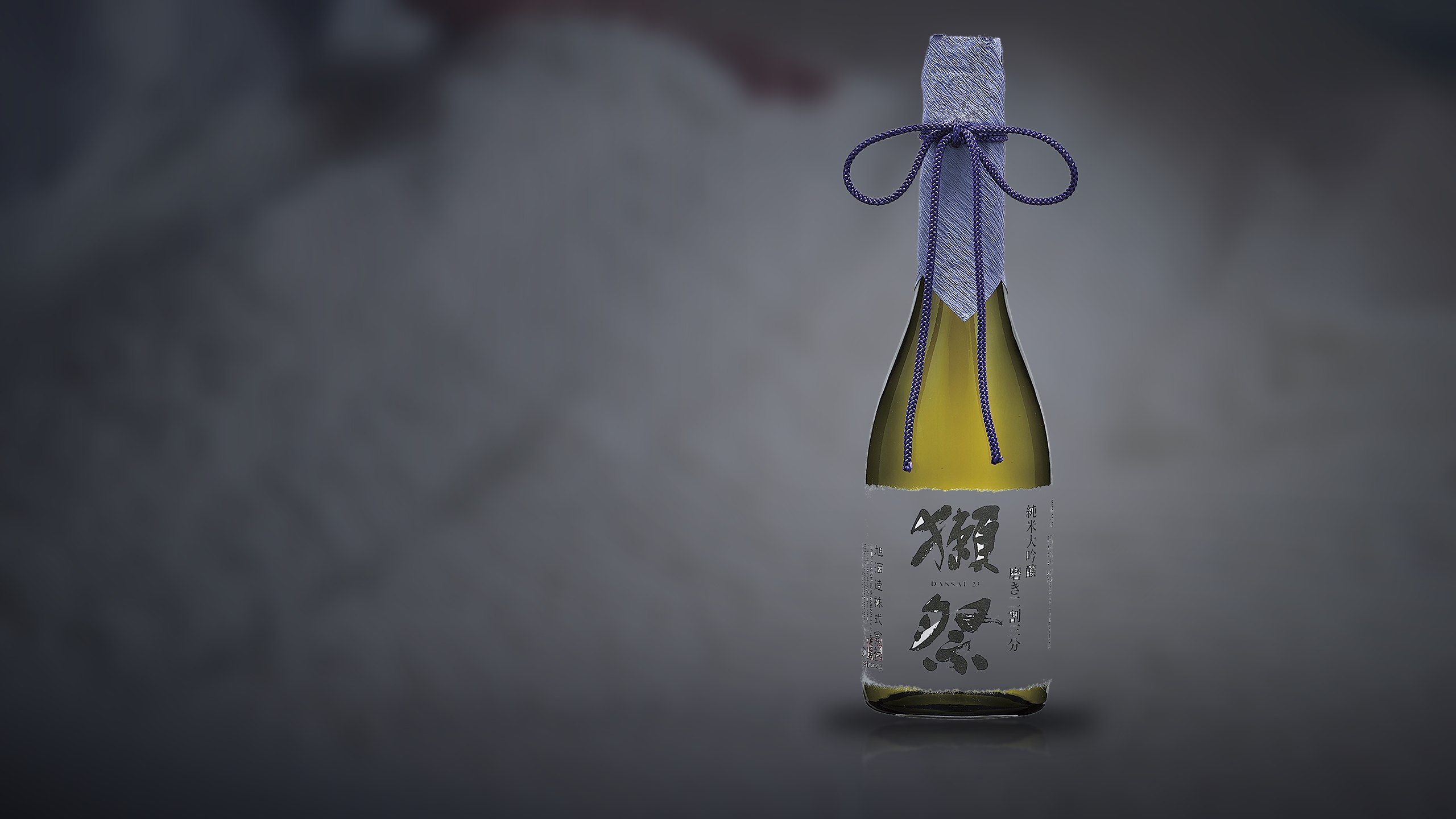
The name "Dassai" (獺祭) derives from Osogoe, the hamlet where the kura stands—its characters mean "otter festival," from the image of an otter laying out its catch along the bank, which came to describe a poet spreading books around while composing; the haiku master Masaoka Shiki famously styled himself "Master of the Otter-Festival Study." A traditional word, loaded with the will to innovate.
The turning point came in the 1990s. Sakurai made the radical decision to pivot from "volume to quality"—discontinuing all ordinary sake and specializing exclusively in junmai daiginjo. At the time, junmai daiginjo was considered "luxury sake for special occasions," and no brewery produced it as an everyday product.
Quick Specs & 2026 Rating Summary
Abolishing the Toji System — A Forbidden Decision
The biggest shockwave Dassai sent through the industry was abolishing the traditional toji (master brewer) system. For centuries, sake brewing had been entrusted to the toji's experience and intuition.
Sakurai aimed to transform this "person-dependent craft" into "reproducible data." Temperature, humidity, fermentation progress, koji condition—every process was quantified, building a system where all employees could make data-driven decisions. Rice-washing absorption rates are managed to the second; the fermenting mash is analyzed and logged daily. He did not reject intuition—he translated it into numbers anyone could verify. The headquarters grew into a twelve-story building where climate control enables year-round brewing—even the common sense that sake can only be made in winter was consigned to the past by data and equipment.
Criticism was fierce. "They've abandoned the toji's soul." "It's factory sake." "It's blasphemy against sake." But Sakurai was unwavering: "Consistently producing excellent sake—that's true professionalism." In time, quality delivered the verdict: data-brewed Dassai earned evaluations rivaling the famed competition-winning houses, and the criticism faded into silence.
The Meaning of 23% Polish
Dassai's flagship "Migaki Niwari Sanbu" uses Yamada Nishiki polished to 23%—meaning 77% of each grain is removed. This extreme polishing eliminates the proteins and lipids that cause off-flavors, brewing sake from only the pure starch at each grain's core. Reaching that number takes days of continuous milling, and handling the now-fragile grains through washing and steaming demands both data and craftsmanship.
Dassai's growth has also changed the future of rice farmers. Needing vast quantities of top-grade Yamada Nishiki, Asahi Shuzo raised its purchase prices to support growers and even hosts a contest seeking "Yamada Nishiki beyond the best." A brewery's revolution is reshaping the landscape of the rice paddies themselves.
The resulting flavor is one of overwhelming transparency and delicacy. Elegant aromas of pear, melon, and white flowers unfold, with a finish as smooth as silk.
Even higher in the lineup, "Beyond the Beyond" leaves its polish ratio undisclosed—embodying a distinct aesthetic that steps away from numerical competition. The brewery that once raced to the lowest number ultimately let go of numbers altogether; that paradox tells the story of a brand's maturity.
New York Expansion and Global Strategy
In 2018, Asahi Shuzo made the bold move of opening a brewery in New York. Local water, local staff, Dassai's recipe. It was also an experiment challenging the very concept of sake "terroir." Because the brewing process had been converted into data, quality could be reproduced across an ocean—the logical conclusion of the philosophy that began with abolishing the toji system.
By 2024, "DASSAI BLUE"—American-made Dassai—entered full distribution. The name comes from the proverb "blue dye emerges from indigo yet surpasses it," a declaration of intent to raise a sake abroad that outgrows the original. Collaborations with starred chefs in Paris and limited editions tailored to local food cultures show the challenge extending beyond brewing itself, as Dassai continues to run at the front line of sake's globalization.
The Dassai Polish Ladder: Telling 45, 39, and 23 Apart
Dassai's true value reveals itself when you climb the "polish ladder" in order. Same Yamada Nishiki, same brewing — only the polishing ratio changes, making Dassai the world's clearest textbook on what rice polishing does to flavor.
| Cuvée | Class & Polish | Ref. Price in Japan (720ml) | Character & Serving Temp |
|---|---|---|---|
| Dassai Junmai Daiginjo 45 | Junmai Daiginjo, 45% | approx. ¥1,800 ($40-60 abroad) | Fruity, balanced gateway bottle; the summit of everyday sake. 10-12C |
| Dassai 39 (Migaki Sanwari Kyubu) | Junmai Daiginjo, 39% | approx. ¥2,600 | The golden ratio of florality and clarity; the classic gift. 10-12C |
| Dassai 23 (Migaki Niwari Sanbu) | Junmai Daiginjo, 23% | approx. ¥5,800 (around $120 abroad) | Honeyed aroma, silken texture; the icon itself. Around 12C |
| Dassai Beyond (Sono Saki e) | Junmai Daiginjo, polish undisclosed | approx. ¥34,000 | The bottle that asks what lies beyond 23%. For the milestone night. 12-14C |
| DASSAI BLUE Type 23 | Junmai Daiginjo, 23% | mainly US market (around $100) | Brewed in Hyde Park, New York; a new Dassai born of local water. 10-12C |
Evolution After Opening (Day 1 → Day 7)
Practical Buying & Storage Advice
What Dassai Changed
Dassai's greatest achievement was transforming sake from "special occasion luxury" to "everyday indulgence"—and proving that data-driven brewing doesn't contradict tradition. Abolishing the toji system was not a rejection of craftsmen but the invention of a structure that passes technique from individuals to an organization; an environment where young employees can anchor brewing within a few years is itself an answer to an industry starved of successors. Tradition is not something to be guarded but something to be continuously renewed; Dassai's revolution was the rewriting of that definition.
Featured Breweries, Specs & Flavor Balance
| Flagship Label | Brewery & Region | Signature Rice & Water | Brewery Profile |
|---|---|---|---|
| Dassai | Dassai Inc. (Asahi Shuzo Co., Ltd.) (2167-4 Osogoe, Shuto-cho, Iwakuni-shi, Yamaguchi 742-0422, Japan) | Yamada Nishiki (100% Exclusive Use) · Osogoe Natural Subterranean Soft Water (Shuto-cho, Iwakuni) | Brewery Profile |
| Ise Asahi | Asahi Sake Brewery Co., Ltd. (3032 Yamaoyodo, Meiwa-cho, Taki-gun, Mie 515-0303, Japan) | Kaminoho, Yamadanishiki, Gohyakumangoku · Subsurface water from the pristine Kushida River (soft water) | Brewery Profile |
| Meimon | Meimon Sakai Co., Ltd. (2-1045 Takagushi, Uwajima-shi, Ehime 798-0020, Japan) | Ehime Matsuyama Mii & Shizukuhime · Mt. Onigajo Range Subterranean Soft Water | Brewery Profile |
| Mirai | Uehara Shuzo Co., Ltd. (1524 Ota, Shin-Asahi-cho, Takashima-shi, Shiga 520-1502, Japan) | Wataribune No. 2, Tamasakae, Ginfubuki, Yamadanishiki, Omachi, Kamenoo · Hira Mountain Range Artesian Subterranean Soft Water (Harie Spring Vein) | Brewery Profile |
| Kaika Blossom | Daiichi Sake Brewery Co., Ltd. (488 Tajima-cho, Sano-shi, Tochigi 327-0031, Japan) | Tochigi Yumesasara, Tochigishu 14, Gohyakumangoku, Hyogo Yamada Nishiki · Watarase River System & Izuruhara Benten Pond Aquifer Subterranean Soft Water | Brewery Profile |
From the mountain valleys of Iwakuni, Yamaguchi, Dassai revolutionized global sake through data-driven precision brewing and ultra-polished Yamada Nishiki rice. Led by the iconic Dassai 23, its opulent aromas of white peach and Poire Williams, silky-smooth mid-palate, and crystalline finish pair effortlessly with fine Edomae sushi and Michelin-starred French cuisine.
Founded in 1875 in Meiwa Town, Mie Prefecture—site of the ancient Saiku imperial palace that served Ise Grand Shrine—Asahi Shuzo brews its flagship 'Ise Asahi' ('Rising Sun of Ise') using pure soft subterranean water from the clear Kushida River and Mie-grown Kami no Ho, Yamada Nishiki, and Gohyakumangoku rice. Named for the morning sun rising over Ise Bay, it combines a velvety soft-water entry with rounded, noble rice umami and a poised finish. It pairs wonderfully with sake-steamed Ise Bay clams, spiny lobster and sea bream sashimi, and Matsusaka Wagyu sukiyaki.
The heritage house brand honoring the company's 1592 origins, offering a rounded, savory profile. Brewed by Meimon Sakai Co., Ltd. in Ehime using Mt. Onigajo Range Subterranean Soft Water and Ehime Matsuyama Mii & Shizukuhime, it brings together versatile, cuisine-elevating table-sake poise, savory, resonant rice umami, harmonious balance of umami, acidity, and finish with memorable poise.
A special-edition junmai sake brewed with pesticide-free organic rice and indigenous yeast, embodying a sustainable vision for the future of sake brewing.
A celebratory seasonal label evoking spring blossoms with bright, uplifting Ginjo aromatics. Brewed by Daiichi Sake Brewery Co., Ltd. in Tochigi using Watarase River System & Izuruhara Benten Pond Aquifer Subterranean Soft Water and Tochigi Yumesasara, Tochigi-shu 14, Gohyakumangoku, and Hyogo Yamada Nishiki, it brings together tangy, yogurt-soda lactic sweetness with memorable poise.
Recommended Pairing
Weekly Sake & Tasting Dispatch
Curated seasonal releases, sub-zero arrivals, and tasting city guides across global editions.