[Korean Fine Dining × Sake Pairing Bible] The Sommelier’s Matrix for Hanwoo Beef, Aged Sashimi, Abalone Liver Sauce & Fermented Tapas
Pairing

[Korean Fine Dining × Sake Pairing Bible] The Sommelier’s Matrix for Hanwoo Beef, Aged Sashimi, Abalone Liver Sauce & Fermented Tapas

2026-10-0210min readSakeStream
Back
EXECUTIVE SUMMARY & KEY TAKEAWAYS

Why Seoul’s Michelin-starred Contemporary Korean dining rooms and luxury Hanwoo beef omakase counters are turning to craft sake over wine—complete with our 4-Dish Sommelier Pairing Matrix.

Key Sections in This Report:

Why Seoul’s Top Sommeliers Are Choosing Craft Sake Over Full-Bodied Red Wine

Walk into a Michelin-starred Contemporary Korean dining room or an ultra-exclusive Hanwoo beef omakase counter in Seoul’s Cheongdam-dong, Sinsa, or Hannam-dong in 2026, and you will witness a striking shift. Where heavy Bordeaux and Napa Cabernets once monopolized the table, head sommeliers are increasingly building their signature pairings around artisanal Japanese sake.

Two scientific realities drive this revolution:

1
Zero Tannin Clash Across Raw Crustaceans & Fermented Courses: Modern Korean tasting menus seamlessly weave together aged raw white fish, soy-marinated raw blue crab (ganjang-gejang), Jeju abalone, fermented bean paste (doenjang), and toasted sesame oil before arriving at charcoal-grilled beef. While red-wine tannins and iron ions react with raw seafood lipids to trigger metallic fishiness, sake’s amino and organic acids bridge marine and terrestrial courses effortlessly.
2
Respecting the Low Melting Point of 1++ Hanwoo Marbling: Korea’s prized 1++ Hanwoo beef contains over 50% monounsaturated oleic acid, allowing its marbling to melt near human body temperature with delicate, nutty sweetness. Astringent oak tannins can bury that delicacy, whereas structured Tokubetsu Junmai, Yamahai, and 14% ABV genshu slice cleanly through the fat while multiplying savory glutamic and inosinic umami.

The Master Sommelier Matrix: 5 Signature Korean Fine Dining Dishes × Craft Sake

Below is the definitive pairing matrix deployed across Seoul’s top Michelin dining rooms and luxury Hanwoo omakase counters:

Korean Fine Dining DishLipid & Umami ScienceOptimal Sake ArchitectureServing Temp & GlasswareBenchmark Labels & 720ml Japan MSRP
Charcoal-Grilled 1++ Hanwoo Chateaubriand (*Ansim*)Concentrated lean inosinic acid & iron × gossamer marbling × white-charcoal Maillard crustUltra-soft-water prestige Daiginjo or modern Kimoto Junmai Ginjo14–16°C (Burgundy stem)[Suehiro Shuzo](https://www.sake-suehiro.jp/) *Daiginjo Gensai (¥6,270) / Aramasa No.6 S-type* (~¥2,500)
Heavily Marbled 1++ Hanwoo Sirloin / Striploin (*Chaekkeut*)Abundant oleic-acid fat melting at ~25–30°C × sweet beef jus × fresh wasabi & sea saltLactic-structured Yamahai / Kimoto Junmai or juicy Omachi-rice Junmai40–42°C *Nurukan (ceramic cup) / 15°C* (large stem)*Suehiro Densho Yamahai / Gensai Tokubetsu Junmai (¥1,760–¥3,300) / Jikon Tokubetsu Junmai* (~¥2,200)
Hanwoo Beef Tartare (*Yukhoe*) with Egg Yolk & Sesame OilRaw beef glycogen sweetness × emulsified egg-yolk lecithin × roasted sesame oil lipidsLow-ABV (13%) malic-acid-driven modern Junmai Ginjo10–12°C (tulip white-wine glass)[Imanishi Shuzo](https://imanishisyuzou.com/) *Mimurosugi Dio Abita (¥1,980) / [Choshu Shuzo](https://choshusake.com/) Tenbi Hotaten*** (¥1,980)
*Ganjang-gejang* (Soy-Fermented Raw Blue Crab)Silky raw crab glycine & betaine sweetness × aged soy glutamic acid & oceanic salinityUltra-soft-water, 100% funa-shibori box-pressed Junmai Ginjo (zero tannin = zero metallic clash)8–12°C (fine-rimmed white wine stem)*Tabika Koyama PB Junmai Ginjo (~¥2,310–¥2,530) / Kankiku Seijitsu Koyama PB* (~¥2,200)
Steamed Jeju Abalone with Liver Butter Sauce (*Geu Sauce*)Marine iodine & succinic acid × bittersweet hepatopancreas (liver) & emulsified butterfatUndiluted 14% genshu rice density or micro-effervescent wooden-vat terroir sake12–15°C (white wine glass)[Yamazaki Goshi Kaisha](https://www.sonnoh.co.jp/) *Ki-oku KI-OKU/01 Genshu (¥2,145) / Ubusuna Yamada Nishiki / Homase* (~¥2,200–¥2,970)

Course-by-Course Pairing Breakdown

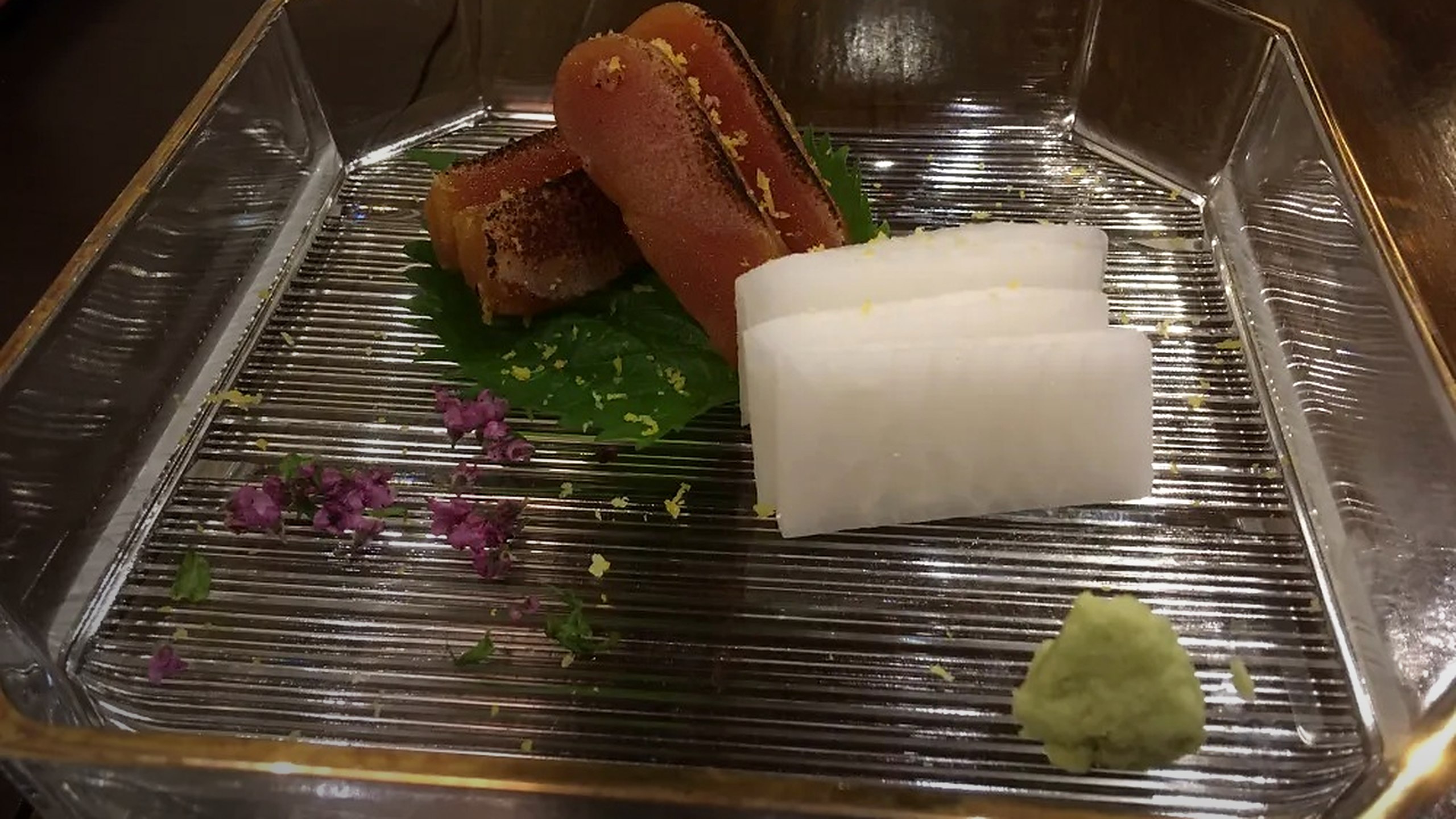
[Course 1] Dry-Aged Sashimi (Sukseong-hoe), Ganjang-gejang & Hanwoo Yukhoe

●
Culinary Architecture: Concentrated inosinic acid from dry-aged flounder, sweet glycine from soy-cured raw blue crab, and rich egg-yolk and sesame-oil emulsions in raw Hanwoo yukhoe. Red wine’s tannins turn metallic here; sake thrives.
●
Optimal Sake Style: Ultra-Soft Water *Funa-Shibori* Junmai Ginjo & 13% ABV Malic Modern Junmai (8–12°C)
●
Notable Pairing Examples:
●
*Tabika Koyama PB Junmai Ginjo* (Hayakawa Shuzo): Ultra-soft Suzuka Mountain snowmelt and gentle two-day box pressing create a silk-like texture that cradles raw soy-marinated crab and aged sashimi without a hint of bitterness.
●
*Mimurosugi Dio Abita* (Imanishi Shuzo) & *Tenbi Junmai Ginjo Hotaten* (Choshu Shuzo): Bright malic acidity and featherlight sweetness slice cleanly through roasted sesame oil and rich egg yolk on Hanwoo yukhoe.

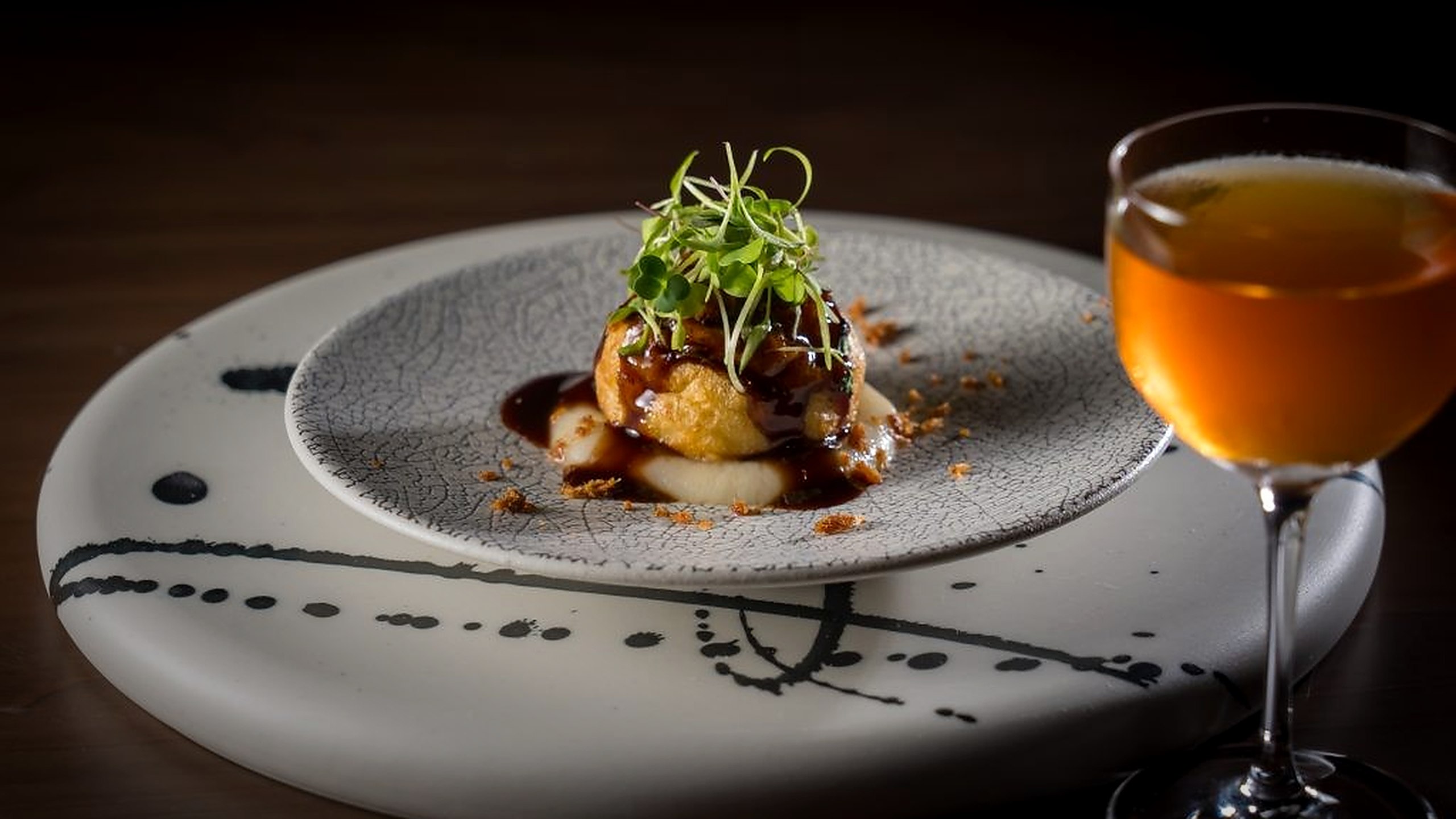
[Course 2] Steamed Jeju Abalone with Rich Liver Butter Emulsion (Jeonbok & Geu Sauce)

●
Culinary Architecture: Intense marine minerality, iodine, and the bittersweet richness of emulsified abalone hepatopancreas (liver) and butter—notoriously difficult for traditional grape wines.
●
Optimal Sake Style: Undiluted 14% ABV *Genshu* & Wooden-Vat Terroir Sake (12–15°C)
●
Notable Pairing Examples:
●
*Ki-oku (記奥 KI-OKU/01) Junmai Ginjo Genshu* (Yamazaki Goshi Kaisha): Brewed with soft Mikawa Bay water and 100% Aichi Yumesansui rice at an undiluted 14% ABV (¥2,145 / 720ml in Japan). Its dense mid-palate matches the weight of abalone liver sauce head-on, while brisk malic acid cleanses the finish.
●
*Ubusuna Homase / Yamada Nishiki* (Hananoka Shuzo): Lively micro-effervescence and savory wooden-vat complexity turn rich liver emulsions into pure magic.

[Course 3] Charcoal-Grilled 1++ Hanwoo Beef — Chateaubriand (Ansim) & Marbled Sirloin (Chaekkeut)

●
Culinary Architecture: Smoky Maillard crust, gossamer tenderloin juiciness in Chateaubriand, followed by low-melting-point oleic marbling in prime sirloin/striploin.
●
Optimal Sake Style: Dual-Temperature Progression — 15°C Daiginjo in Stems to 42°C *Nurukan* *Yamahai*
●
Notable Pairing Examples:
●
*Gensai Daiginjo & Densho Yamahai Junmai* (Suehiro Shuzo): Open the beef course by pairing lean Hanwoo Chateaubriand with Daiginjo Gensai at 15°C in a Burgundy stem. Then, as heavily marbled sirloin arrives off the charcoal grill, pour Suehiro’s signature Yamahai warmed to 40–42°C *nurukan*—at 42°C, the warm lactic sake literally melts the Hanwoo marbling on the tongue into liquid umami.
●
*Jikon Tokuto Omachi / Tokubetsu Junmai* (Kiyasho Shuzo): Wild Omachi rice depth and vibrant acidity lock into smoky charcoal aromatics.

[Course 4] Seasonal Namul, Fermented Tapas & Black Truffle Claypot Rice (Sotbap)

●
Culinary Architecture: Toasted perilla and sesame oils, earthy mountain greens, and aromatic truffle steam.
●
Optimal Sake Style: Modern Natural Junmai (14–18°C)
●
Notable Pairing Examples:
●
*Mimurosugi Yamada Nishiki* (Imanishi Shuzo) & *Tachibanaya Junmai Ginjo Kura no Hana* (Kawakei Shoten)
"On November 4, 2026, Seoul’s acclaimed Asoto (朝人) hosted the sold-out 2nd Seoul Tasting (Asoto × Syuen × Koyama)—vividly demonstrating in the glass this exact culinary alchemy between Korean gastronomy and Japan’s master breweries (Gensai, Tabika, and Ki-oku)." — SakeStream Seoul Editorial Desk
1,215 Breweries · 2,891 Labels · Neutral Archive
Linked from 1,215 Breweries · 2,891 Labels · 8,673 Reviews

Featured Breweries, Specs & Flavor Balance

Flagship LabelBrewery & RegionSignature Rice & WaterBrewery Profile
AramasaAramasa Co., Ltd. (6-2-35 Omachi, Akita-shi, Akita 010-0921, Japan)Pesticide-Free & Estate-Grown Akita Rice (Kairyo Shinko, Rikuu No. 132, Misato Nishiki, Akita Sakekomachi) · Mount Taihei Subterranean Soft Water (Akita City)Brewery Profile
SuehiroSuehiro Sake Brewery Co., Ltd. (12-38 Nisshin-machi, Aizuwakamatsu-shi, Fukushima 965-0861, Japan)Yumenoka, Fukunoka, Yamadanishiki, Gohyakumangoku, Kamenoo · Subsurface snowmelt soft water from Mt. Hakase and the Aizu BasinBrewery Profile
JikonKiyasho Sake Brewery Co., Ltd. (314-1 Honmachi, Nabari-shi, Mie 518-0726, Japan)Yamadanishiki, Aiyama, Omachi, Hattannishiki, Senbonnishiki · Subsurface water from the Nunobiki mountain range (brewery well water, soft water)Brewery Profile
TENBUNishi Shuzo Co., Ltd. (4970-17 Yokura, Fukiage-cho, Hioki City, Kagoshima 899-3309, Japan (Tenbu Sake Kura: 3142-10 Yokura, Fukiage-cho, Hioki City))Yamada Nishiki (Tojo Special A District, Hyogo), Aiyama, Akaiwa Omachi · Satsuma Peninsula Deep Subterranean Natural Soft Water ('HOUMEI')Brewery Profile
MimurosugiImanishi Sake Brewery Co., Ltd. (510 Miwa, Sakurai-shi, Nara 633-0001, Japan)Tsuyuhakaze, Yamadanishiki, Omachi · Subsurface water from sacred Mt. Miwa (medium-soft water)Brewery Profile
TenbiChoshu Brewery Co., Ltd. (72 Yoshika, Kikugawa-cho, Shimonoseki-shi, Yamaguchi 750-0316, Japan)Yamada Nishiki, Saito no Shizuku · Koya River System & Kikugawa Natural Subterranean Medium-Soft WaterBrewery Profile
TabikaHayakawa Sake Brewery Co. (468 Ojima, Komono-cho, Mie-gun, Mie 510-1323, Japan)Kaminoho, Yamadanishiki, Omachi, Gohyakumangoku · Subsurface water from Mount Shakagatake in the Suzuka Mountains (soft water)Brewery Profile
UbusunaHananoka Shuzo Co., Ltd. (2226-2 Nishiyoshiji, Nagomi-machi, Tamana-gun, Kumamoto 861-0906, Japan)Nagomi-machi Natural-Farmed Homase, Higo Kabashiko, Yamada Nishiki · Brewery Shrine Spring Water (Kikuchi River Basin Subterranean Water from the Former Bairin Tenmangu Well)Brewery Profile
KoganesawaKawakei Shoten Co. (6-7 Takatama, Nigo, Misato-machi, Toda-gun, Miyagi 989-4206, Japan)Yamada Nishiki, Omachi, Sasanishiki, Miyama Nishiki · Ou Mountains Subterranean Well Water (Medium-Soft Water)Brewery Profile
KiokeshikomiTerada Honke Co., Ltd. (1964 Kozaki-Honjuku, Kozaki-machi, Katori-gun, Chiba 289-0221, Japan)Pesticide-Free Organic Rice (Miyama Nishiki, Gohyakumangoku, Koshihikari, Kamenoo) · Sacred Forest Subterranean Well Water from Kozaki Shrine GroundsBrewery Profile
6-2-35 Omachi, Akita-shi, Akita 010-0921, Japan · Aramasa Co., Ltd. (Est. 1852)
Aramasaガス酸味ワイン
Mount Taihei Subterranean Soft Water (Akita City) Pesticide-Free & Estate-Grown Akita Rice (Kairyo Shinko, Rikuu No. 132, Misato Nishiki, Akita Sakekomachi) Kyokai No. 6 Yeast (Birthplace Brewery, 100% Exclusive Use)

As the birthplace of Kyokai No. 6 yeast, Aramasa represents the pinnacle of modern sake brewing through 100% kimoto fermentation in cedar vats using exclusively Akita-grown rice. Its vibrant citrus acidity, low-alcohol elegance, and silky sweetness evoke fine white Burgundy, pairing effortlessly with sashimi, crudo, and modern gastronomy.

Flavor Balance (1–5 Rice Grains)Shows which flavor direction the balance leans toward (1 to 5 rice grains), never a quality rank or score.
Serving & Glassware:Recommended Temperature: 10–14°C (Cool Cellar) & 42–45°C (Bain-Marie Warmed / Nurukan) / Recommended Glassware: Thin-rimmed white Burgundy or Riedel O Daiginjo wine glass. Right after opening at 10°C, savor the vibrant micro-effervescence and taut lactic/citric tension shaped by Mount Taihei Subterranean Soft Water (Akita City); after 15 minutes as it reaches 14°C, multi-dimensional Pesticide-Free & Estate-Grown Akita Rice (Kairyo Shinko, Rikuu No. 132) umami and savory kimoto complexity blossom.
Global Gastronomy Pairings
• Charcoal-grilled Hinai-jidori chicken kiritanpo hotpot and smoked iburigakko with sake-lees cream cheese
• Charcoal-seared Hanwoo 1++ brisket point (chadolbagi) paired with aromatic minari and chilled dongchimi radish
• Pan-roasted Breton blue lobster with Champagne, tarragon, and cultured butter beurre blanc
“Opened a bottle of No. 6 X-type and was floored by the burst of Shine Muscat and white peach aromatics, backed by multi-dimensional kimoto acidity and crystalline purity from cedar vat fermentation. An absolute masterpiece of contemporary Japanese brewing.”
Domestic Review · SAKETIME / 国内口コミ六号酵母の求道者
“A revelation for Burgundy and Champagne lovers: laser-focused lactic and malic tension, delicate wooden-vat complexity, and incredible concentration at just 13% ABV. Pairs brilliantly with Dover sole and shellfish.”
Global Sommelier · Vivino / Fine Wine & SakeMarc L.
“Finally scored Amaneko and Ecru through a bottle shop lottery! That lively micro-effervescence on opening and bright, juicy sweet-tart balance is unmatched—turned my wine-drinking friends into instant sake fanatics.”
SNS Buzz · X (Twitter) / Reddit r/Sake@tokyo_sake_hunter
12-38 Nisshin-machi, Aizuwakamatsu-shi, Fukushima 965-0861, Japan · Suehiro Sake Brewery Co., Ltd. (Est. 1850)
Suehiro燗酒甘味旨味
Subsurface snowmelt soft water from Mt. Hakase and the Aizu Basin Yumenoka, Fukunoka, Yamadanishiki, Gohyakumangoku, Kamenoo Suehiro Proprietary Yeast (M310 strain & Kaeigura Yeast), Utsukushima Yume Yeast (F7-01)

Founded in 1850 in Aizuwakamatsu, Suehiro Shuzo is hallowed ground in Japanese brewing history as the very brewery where the experimental 'Yamahai' starter method was developed in the Meiji era. From its iconic 'Densho Yamahai Junmai' brimming with savory lactic depth to its silky Daiginjo 'Gensai,' Suehiro shines both chilled and warmed alongside Aizu heritage cuisine and sukiyaki.

Flavor Balance (1–5 Rice Grains)Shows which flavor direction the balance leans toward (1 to 5 rice grains), never a quality rank or score.
Serving & Glassware:Recommended Temperature: 10–14°C (Cool Cellar) & 42–45°C (Bain-Marie Warmed / Nurukan) / Recommended Glassware: Thin-rimmed white Burgundy or Riedel O Daiginjo wine glass. Right after opening at 10°C, savor the vibrant micro-effervescence and taut lactic/citric tension shaped by Subsurface snowmelt soft water from Mt. Hakase and the Aizu Basin; after 15 minutes as it reaches 14°C, multi-dimensional Yumenoka, Fukunoka, Yamadanishiki, Gohyakumangoku, Kamenoo umami and savory kimoto complexity blossom.
Global Gastronomy Pairings
• Charcoal-seared Aizu heritage chicken and rich Fukushima monkfish dobujiru liver-miso stew
• Crispy-scaled Jeju tilefish (okdom) and creamy abalone liver (geu) rice porridge risotto
• Dover sole meunière with cultured hazelnut brown butter, Meyer lemon, and capers
“Tasted Suehiro Densho Yamahai Junmai at room temperature and gently warmed. Unlike overly funky Yamahai styles, soft Aizu water yields a remarkably smooth entry backed by deep savory richness and clean acidity.”
Domestic Review · SAKETIME 福島県名門・山廃発祥蔵レビューYamahai_Origin_Aizu
“As the site of the historic 1909 Yamahai brewing trials, Suehiro Shuzo is a legend in global sake education—and its Densho Yamahai delivers a savory culinary structure that still excels in modern dining rooms.”
Global Sommelier · IWC / Historic Sake Heritage ReviewArthur Pendelton, DipWSET
“Toured Suehiro Shuzo's historic Kaeigura in Aizuwakamatsu and brought home their Junmai Daiginjo and Densho Yamahai—an inspiring visit to a brewery once loved by Dr. Hideyo Noguchi.”
SNS Buzz · X (Twitter) / Instagram@aizu_kanko_sake
314-1 Honmachi, Nabari-shi, Mie 518-0726, Japan · Kiyasho Sake Brewery Co., Ltd. (Est. 1818)
Jikonバランスガス旨味
Subsurface water from the Nunobiki mountain range (brewery well water, soft water) Yamadanishiki, Aiyama, Omachi, Hattannishiki, Senbonnishiki In-house cultured yeast (Kyokai No. 9 lineage)

Named after the Zen phrase 'living fully in the present moment,' Jikon by 6th-generation brewer Tadakatsu Onishi in Nabari, Mie stands at the absolute summit of modern sake. Radiant muscat and white peach aromatics, crystalline Nunobiki mountain soft-water sweetness, and electric acidity achieve a golden-ratio balance that enchants on its own or alongside Matsusaka Wagyu and fine sushi.

Flavor Balance (1–5 Rice Grains)Shows which flavor direction the balance leans toward (1 to 5 rice grains), never a quality rank or score.
Serving & Glassware:Recommended Temperature: 10–13°C (Chilled / Hanabie to Suzubie) / Recommended Glassware: Thin-rimmed, medium-bowled white wine glass (such as Riedel O Daiginjo). Avoid over-chilling below 6°C so the delicate esters are not muted. Upon pouring, experience crystalline purity from Subsurface water from the Nunobiki mountain range (brewery well water, soft water) and lifted orchard-fruit aromatics; after 15 minutes as the glass warms to 14°C, silky Yamadanishiki, Aiyama, Omachi, Hattannishiki, Senbonnishiki mid-palate umami opens gracefully.
Global Gastronomy Pairings
• Ise-Shima spiny lobster sashimi and chilled ginjo-steamed Matoya oysters
• Jeju silver belt-fish sashimi and delicate pan-fried scallop & cod jeon with citrus soy
• Poached lobster tail and white asparagus warm salad with yuzu-infused citrus hollandaise
“Jikon Tokubetsu Junmai Muroka Nama and Junmai Ginjo Aiyama deliver bursting freshness, translucent juicy sweetness, and a laser-precise acid line—the Platonic ideal of modern Japanese sake.”
Domestic Review · SAKETIME / 国内口コミ日本酒マイスター
“One of the most coveted cult sakes among global sommeliers; the contrast between silky Nunobiki soft-water texture and vibrant acidity commands the spotlight at any Michelin table.”
Global Sommelier · Vivino / Global SakeAlexander Sterling
“How Toji Tadakatsu Onishi translates every rice variety—from Iga Yamada Nishiki to Sakemirai and Hakutsuru Nishiki—through Jikon's golden balance is pure wizardry.”
SNS Buzz · X (Twitter) / Instagram@jikon_chronicles
4970-17 Yokura, Fukiage-cho, Hioki City, Kagoshima 899-3309, Japan (Tenbu Sake Kura: 3142-10 Yokura, Fukiage-cho, Hioki City) · Nishi Shuzo Co., Ltd. (Est. 1845)
TENBUフルーティ甘味旨味
Satsuma Peninsula Deep Subterranean Natural Soft Water ('HOUMEI') Yamada Nishiki (Tojo Special A District, Hyogo), Aiyama, Akaiwa Omachi Nishi Shuzo Proprietary Cultured Yeast

Created in 2020 by Nishi Shuzo—the legendary Kagoshima distillery behind Tomino Hozan shochu—Tenbu brings world-class precision to Japan's southernmost mainland prefecture. Crafted with ultra-soft Satsuma mountain water and elite Yamada Nishiki and Aiyama rice, its lush lychee-and-white-peach aromatics, velvety sweetness, and crystal-clear finish pair magnificently with Kagoshima black Wagyu, Kurobuta pork shabu-shabu, and silver-stripe round herring sashimi.

Flavor Balance (1–5 Rice Grains)Shows which flavor direction the balance leans toward (1 to 5 rice grains), never a quality rank or score.
Serving & Glassware:Recommended Temperature: 10–13°C (Chilled / Hanabie to Suzubie) / Recommended Glassware: Thin-rimmed, medium-bowled white wine glass (such as Riedel O Daiginjo). Avoid over-chilling below 6°C so the delicate esters are not muted. Upon pouring, experience crystalline purity from Satsuma Peninsula Deep Subterranean Natural Soft Water ('HOUMEI') and lifted orchard-fruit aromatics; after 15 minutes as the glass warms to 14°C, silky Yamada Nishiki (Tojo Special A District, Hyogo), Aiyama, Akaiwa Omachi mid-palate umami opens gracefully.
Global Gastronomy Pairings
• Kinko Bay amberjack & silver-stripe round herring (kibinago) sashimi with salt-grilled kuruma prawn
• Jeju silver belt-fish sashimi and delicate pan-fried scallop & cod jeon with citrus soy
• Poached lobster tail and white asparagus warm salad with yuzu-infused citrus hollandaise
“Tasted Tenbu Junmai Daiginjo alongside the Junmai Ginjo Aiyama. Any preconceptions about southern Kyushu sake vanish on the first sip—breathtaking clarity, white-peach perfume, and velvet texture born of Nishi Shuzo's fermentation mastery.”
Domestic Review · SAKETIME / 国内口コミ薩摩の美酒探訪家
“Drawing on Nishi Shuzo's global experience in both luxury shochu and New Zealand biodynamic winemaking, Tenbu achieves a modern, satin-textured elegance that dazzles international sommeliers.”
Global Sommelier · Vivino / Global SakeVictor Sterling
“Had Tenbu Junmai Ginjo with Kagoshima Kurobuta pork shabu-shabu on a trip south and was blown away! Its dewy aromatics and soft sweetness wrapped around the sweet pork fat in pure harmony.”
SNS Buzz · X (Twitter) / Instagram@kagoshima_gourmet_club
510 Miwa, Sakurai-shi, Nara 633-0001, Japan · Imanishi Sake Brewery Co., Ltd. (Est. 1660)
Mimurosugiラムネガス華やか
Subsurface water from sacred Mt. Miwa (medium-soft water) Tsuyuhakaze, Yamadanishiki, Omachi Kyokai No. 9 strain, Miwa Heritage Yeast and Bodaimoto

Founded in 1660 at the foot of sacred Mount Miwa and Omiwa Shrine—revered as the ancestral deity of Japanese sake brewing—Imanishi Shuzo crafts Mimurosugi using shrine-mountain subterranean water and locally grown Yamadanishiki and Tsuyuhakaze rice. Luminous lychee, white peach, and Muscat aromas flow into a crystal-clear, juicy palate with a brisk finish that pairs effortlessly with sushi, sashimi, and delicate crudo.

Flavor Balance (1–5 Rice Grains)Shows which flavor direction the balance leans toward (1 to 5 rice grains), never a quality rank or score.
Serving & Glassware:Recommended Temperature: 10–14°C (Cool Cellar) & 42–45°C (Bain-Marie Warmed / Nurukan) / Recommended Glassware: Thin-rimmed white Burgundy or Riedel O Daiginjo wine glass. Right after opening at 10°C, savor the vibrant micro-effervescence and taut lactic/citric tension shaped by Subsurface water from sacred Mt. Miwa (medium-soft water); after 15 minutes as it reaches 14°C, multi-dimensional Tsuyuhakaze, Yamadanishiki, Omachi umami and savory kimoto complexity blossom.
Global Gastronomy Pairings
• Charcoal-grilled Yamato heritage chicken with narazuke sake-lees glaze and Yamato Wagyu shabu-shabu
• Crispy-scaled Jeju tilefish (okdom) and creamy abalone liver (geu) rice porridge risotto
• Dover sole meunière with cultured hazelnut brown butter, Meyer lemon, and capers
“Mimurosugi Roman Junmai Ginjo Yamadanishiki and Dio Abita open with morning-dew clarity and delicate lychee and white peach notes—juicy on the mid-palate yet vanishing effortlessly thanks to soft Mount Miwa water. The absolute pinnacle of the 'clean and juicy' style.”
Domestic Review · SAKETIME三輪の酒神礼賛
“Mimurosugi Kioke Bodaimoto—fermented in vats coopered from sacred Mount Miwa cedar using ambient lactic bacteria and brewery yeast—is true terroir sake, weaving silky acidity with white peach and cedar-herb nuances for Michelin-level pairings.”
Global Sommelier · Vivino / Michelin Guide Sommelier SelectionCamille L.
“Stopped by Imanishi Shuzo after visiting Omiwa Shrine and picked up Mimurosugi 'Hanakyun' Origarami and Junmai Ginjo Tsuyuhakaze—the Tsuyuhakaze's pink-grapefruit acidity and subtle bitterness are addictive at the dinner table.”
SNS Buzz · X (Twitter)@nara_sake_pilgrim
72 Yoshika, Kikugawa-cho, Shimonoseki-shi, Yamaguchi 750-0316, Japan · Choshu Brewery Co., Ltd. (Est. 1871)
Tenbiガスフレッシュ甘味
Koya River System & Kikugawa Natural Subterranean Medium-Soft Water Yamada Nishiki, Saito no Shizuku Kyokai No. 901 & Kyokai No. 701 Yeast

Launched in late 2020 in Shimonoseki, Yamaguchi by Choshu Shuzo, Tenbi skyrocketed to national stardom with its bright, uplifting house style. Bearing sun-and-moon labels for day and night expressions, it offers crisp green apple and white grape aromatics, delicate pinpoint effervescence, and vibrant malic acidity that pair beautifully with seafood ceviche, seasonal vegetable tempura, and modern izakaya fare.

Flavor Balance (1–5 Rice Grains)Shows which flavor direction the balance leans toward (1 to 5 rice grains), never a quality rank or score.
Serving & Glassware:Recommended Temperature: 10–13°C (Chilled / Hanabie to Suzubie) / Recommended Glassware: Thin-rimmed, medium-bowled white wine glass (such as Riedel O Daiginjo). Avoid over-chilling below 6°C so the delicate esters are not muted. Upon pouring, experience crystalline purity from Koya River System & Kikugawa Natural Subterranean Medium-Soft Water and lifted orchard-fruit aromatics; after 15 minutes as the glass warms to 14°C, silky Yamada Nishiki, Saito no Shizuku mid-palate umami opens gracefully.
Global Gastronomy Pairings
• Shimonoseki wild tiger pufferfish tessa wrapped around Yasuoka green onion and kelp-cured Hagi tilefish
• Jeju silver belt-fish sashimi and delicate pan-fried scallop & cod jeon with citrus soy
• Poached lobster tail and white asparagus warm salad with yuzu-infused citrus hollandaise
“Opened Tenbi Junmai Ginjo Usunigori Nama (Momoten). Silky lees-touched sweetness meets a lively tingle and a grapefruit-pith finish so refreshing the 720ml bottle vanished in an evening.”
Domestic Review · SAKETIME / 国内口コミ令和の地酒ウォッチャー
“Reminiscent of Basque Txakoli or young Loire Chenin Blanc with its lively spritz and bright acidity—an absolute dream pairing at oyster bars and seafood tapas counters.”
Global Sommelier · Vivino / Global SakeSophia Lin
“Chilled white-label Tenbi Junmai Ginjo tonight. Beyond the gorgeous mizuhiki-inspired label, that crystalline purity and bright malic lift on the palate are simply one of a kind.”
SNS Buzz · X (Twitter) / Instagram@sake_palette
468 Ojima, Komono-cho, Mie-gun, Mie 510-1323, Japan · Hayakawa Sake Brewery Co. (Est. 1915)
Tabika旨味甘味酸味
Subsurface water from Mount Shakagatake in the Suzuka Mountains (soft water) Kaminoho, Yamadanishiki, Omachi, Gohyakumangoku Mie Prefectural Yeast (MK-1, MK-3), Kyokai Yeast

Handcrafted by a tiny family team in Komono, Mie using ultra-soft Mt. Shakagatake snowmelt water and 100% gentle fune (box) pressing, Tabika is celebrated for its pillowy, rounded sweetness. Brewed with local Kaminoho, Omachi, and Yamada Nishiki, its soothing umami and gentle acidity pair beautifully with dashi-steamed clams and seasonal washoku.

Flavor Balance (1–5 Rice Grains)Shows which flavor direction the balance leans toward (1 to 5 rice grains), never a quality rank or score.
Serving & Glassware:Recommended Temperature: 10–13°C (Chilled / Hanabie to Suzubie) / Recommended Glassware: Thin-rimmed, medium-bowled white wine glass (such as Riedel O Daiginjo). Avoid over-chilling below 6°C so the delicate esters are not muted. Upon pouring, experience crystalline purity from Subsurface water from Mount Shakagatake in the Suzuka Mountains (soft water) and lifted orchard-fruit aromatics; after 15 minutes as the glass warms to 14°C, silky Kaminoho, Yamadanishiki, Omachi, Gohyakumangoku mid-palate umami opens gracefully.
Global Gastronomy Pairings
• Ise-Shima spiny lobster sashimi and chilled ginjo-steamed Matoya oysters
• Jeju silver belt-fish sashimi and delicate pan-fried scallop & cod jeon with citrus soy
• Poached lobster tail and white asparagus warm salad with yuzu-infused citrus hollandaise
“Tabika Junmai Ginjo Kaminoho and Omachi Muroka Nama caress the palate like feathers thanks to ultra-soft mountain water and gentle fune pressing, unfolding into warm orchard fruit and sweet rice notes.”
Domestic Review · SAKETIME / 国内口コミ三重地酒コンプリート
“A triumph of small-batch family craftsmanship using 100% traditional fune pressing; its seamless, stress-free texture shines alongside steamed shellfish and white-fish sashimi.”
Global Sommelier · Vivino / Global SakeDaniel Kim
“Across every rice variety, Tabika maintains an unmistakable thread of softness and clarity—especially the seasonal nama releases and boutique shop collaborations.”
SNS Buzz · X (Twitter) / Instagram@suzuka_water_sake
2226-2 Nishiyoshiji, Nagomi-machi, Tamana-gun, Kumamoto 861-0906, Japan · Hananoka Shuzo Co., Ltd. (Est. 1902)
Ubusunaガスシャンパン酸味
Brewery Shrine Spring Water (Kikuchi River Basin Subterranean Water from the Former Bairin Tenmangu Well) Nagomi-machi Natural-Farmed Homase, Higo Kabashiko, Yamada Nishiki Kyokai No. 9 (Kumamoto Yeast) & Indigenous Brewery Yeast

Created in Nagomi, Kumamoto by Kiyotaka Kanda of Hananoka Shuzo to embody 'earth, native ecosystem, and ancestral regenerative agriculture,' Ubusuna stands at the absolute pinnacle of contemporary craft sake. Brewed with pesticide-free local Yamada Nishiki and revived Edo-era heirloom rices (Homase and Kabashiko) using kimoto and wooden vats, its Champagne-like pinpoint mousse and electric orchard-and-yuzu complexity transfix fine-dining tables worldwide.

Flavor Balance (1–5 Rice Grains)Shows which flavor direction the balance leans toward (1 to 5 rice grains), never a quality rank or score.
Serving & Glassware:Recommended Temperature: 10–14°C (Cool Cellar) & 42–45°C (Bain-Marie Warmed / Nurukan) / Recommended Glassware: Thin-rimmed white Burgundy or Riedel O Daiginjo wine glass. Right after opening at 10°C, savor the vibrant micro-effervescence and taut lactic/citric tension shaped by Brewery Shrine Spring Water (Kikuchi River Basin Subterranean Water from the Former Bairin Tenmangu Well); after 15 minutes as it reaches 14°C, multi-dimensional Nagomi-machi Natural-Farmed Homase, Higo Kabashiko, Yamada Nishiki umami and savory kimoto complexity blossom.
Global Gastronomy Pairings
• Charcoal-grilled Kumamoto Akaushi beef steak and Binchotan-roasted Amakusa Daio giant heritage chicken
• Charcoal-seared Hanwoo 1++ brisket point (chadolbagi) paired with aromatic minari and chilled dongchimi radish
• Pan-roasted Breton blue lobster with Champagne, tarragon, and cultured butter beurre blanc
“Miraculously secured Ubusuna Homase 5-Nojo and Yamada Nishiki 2-Nojo. Fine, persistent bubbles carry waves of Japanese citrus, white peach, wild herbs, and living earth minerality—one of the most spine-tingling bottles of my life.”
Domestic Review · SAKETIME / 国内口コミテロワール日本酒探求家
“Encountering Ubusuna gave me the same electric shock as my first glass of Jacques Selosse. The vibrating energy born from regenerative paddies, native microbes, and wooden vats stands shoulder to shoulder with the greatest wines on earth.”
Global Sommelier · Vivino / Global SakeGuillaume Delacroix
“Popped Ubusuna Kabashiko 4-Nojo! To think an heirloom Edo-era Kumamoto rice once praised as the finest in the realm has been revived into something so dewy, aromatic, and transcendent—pure genius from Hananoka Shuzo.”
SNS Buzz · X (Twitter) / Instagram@craft_sake_chronicle
6-7 Takatama, Nigo, Misato-machi, Toda-gun, Miyagi 989-4206, Japan · Kawakei Shoten Co. (Est. 1902)
Koganesawa酸味旨味甘味
Ou Mountains Subterranean Well Water (Medium-Soft Water) Yamada Nishiki, Omachi, Sasanishiki, Miyama Nishiki Yamahai In-House Cultured Yeast, Miyagi Yeast, Kyokai No. 12 Yeast

Brewed since 1902 in Misato Town by 5th-generation president Masanao Kawana and his daughter, head brewer Yuri Kawana, Koganezawa pioneered the pairing of traditional Yamahai starter fermentation with Miyagi's fragrant Kyokai No. 12 yeast. This signature combination yields bright banana-and-Muscat aromatics, a silky lactic mid-palate free of heavy funk, and a crisp finish backed by a historic 17-year streak of National Gold Medals.

Flavor Balance (1–5 Rice Grains)Shows which flavor direction the balance leans toward (1 to 5 rice grains), never a quality rank or score.
Serving & Glassware:Recommended Temperature: 10–14°C (Cool Cellar) & 42–45°C (Bain-Marie Warmed / Nurukan) / Recommended Glassware: Thin-rimmed white Burgundy or Riedel O Daiginjo wine glass. Right after opening at 10°C, savor the vibrant micro-effervescence and taut lactic/citric tension shaped by Ou Mountains Subterranean Well Water (Medium-Soft Water); after 15 minutes as it reaches 14°C, multi-dimensional Yamada Nishiki, Omachi, Sasanishiki, Miyama Nishiki umami and savory kimoto complexity blossom.
Global Gastronomy Pairings
• Thick-cut charcoal-grilled Sendai beef tongue with nanban miso and simmered Kinka mackerel
• Charcoal-seared Hanwoo 1++ brisket point (chadolbagi) paired with aromatic minari and chilled dongchimi radish
• Dover sole meunière with cultured hazelnut brown butter, Meyer lemon, and capers
“Tasted Koganezawa Yamahai Junmai No. 12 Genshu. It marries deep Yamahai lactic structure with the bright orchard aromatics of Kyokai No. 12 yeast, drinking with the refreshing poise of a fine white wine.”
Domestic Review · SAKETIME 宮城県ランキング 上位常連Modern_Yamahai_Club
“Crafted by head brewer Yuri Kawana, Koganezawa brilliantly fuses heritage technique with modern elegance—its clean Yamahai acidity pairs effortlessly with chicken fricassee, goat cheese, and grilled seafood.”
Global Sommelier · IWC / Kura Master Gold ReviewHelena Vance
“Compared summer's Koganezawa Junmai Ginjo HITOMEBORE with their winter Yamahai Junmai Usunigori Nama! Both shine with crisp apple-and-Muscat acidity and luminous clarity.”
SNS Buzz · X (Twitter) / Instagram@sake_discovery_jp
1964 Kozaki-Honjuku, Kozaki-machi, Katori-gun, Chiba 289-0221, Japan · Terada Honke Co., Ltd. (Est. 1673)
Kiokeshikomi熱燗スモーキー燗酒
Sacred Forest Subterranean Well Water from Kozaki Shrine Grounds Pesticide-Free Organic Rice (Miyama Nishiki, Gohyakumangoku, Koshihikari, Kamenoo) Ambient House Wild Yeast & Natural Lactic Acid Bacteria (Zero Added Yeast)

Fermented in traditional cedar vats by natural-sake pioneer Terada Honke, 'Kiokeshikomi' delivers profound earthy depth, smoky wooden-vat complexity, and transcendent warmth when heated. Supported by Sacred Forest Subterranean Well Water from Kozaki Shrine Grounds, it layers firm structure that shines even at hot atsukan temperatures, subtle smoky, earthy complexity, savory richness that blossoms when warmed to reflect the unmistakable terroir of Chiba.

Flavor Balance (1–5 Rice Grains)Shows which flavor direction the balance leans toward (1 to 5 rice grains), never a quality rank or score.
Serving & Glassware:Recommended Temperature: 10–14°C (Cool Cellar) & 42–45°C (Bain-Marie Warmed / Nurukan) / Recommended Glassware: Thin-rimmed white Burgundy or Riedel O Daiginjo wine glass. Right after opening at 10°C, savor the vibrant micro-effervescence and taut lactic/citric tension shaped by Sacred Forest Subterranean Well Water from Kozaki Shrine Grounds; after 15 minutes as it reaches 14°C, multi-dimensional Pesticide-Free Organic Rice (Miyama Nishiki, Gohyakumangoku) umami and savory kimoto complexity blossom.
Global Gastronomy Pairings
• Whole Choshi line-caught kinmedai simmered in soy-mirin and Boso abalone with liver-butter soy
• Charcoal-seared Hanwoo 1++ brisket point (chadolbagi) paired with aromatic minari and chilled dongchimi radish
• Pan-roasted Breton blue lobster with Champagne, tarragon, and cultured butter beurre blanc
“Savored 'Kiokeshikomi' by Terada Honke Co., Ltd. from room temperature up to gentle nurukan: deep umami from pesticide-free Chiba-grown Miyamanishiki, Gohyakumangoku, Koshihikari, Kamenoo, and Asahi and Sacred Forest Subterranean Well Water from Kozaki Shrine Grounds unfolds into firm structure that shines even at hot atsukan temperatures, subtle smoky, earthy complexity, savory richness that blossoms when warmed with remarkable warmth.”
Domestic Review · SAKETIME / 国内口コミ地酒専門店バイヤー評
“Acclaimed by global gastronomy sommeliers for its temperature-versatile depth and firm structure that shines even at hot atsukan temperatures, subtle smoky, earthy complexity, savory richness that blossoms when warmed, pairing beautifully with roasted meats, wild mushrooms, and umami-rich sauces.”
Global Sommelier · Vivino / Global SakeGlobal Sake Sommelier
“Celebrated on Reddit r/Sake and X for its soulful composure in a warm ceramic tokkuri—maintaining impeccable balance even as it cools in the cup.”
SNS Buzz · X (Twitter) / Instagram@craft_sake_journal

Recommended Pairing

1++ Hanwoo Striploin over White Charcoal
Dual-temperature pairing with Suehiro Gensai (15°C & 42°C)
Jeju Abalone with Liver Butter Emulsion
Resonates with Ki-oku 14% undiluted genshu
Dry-Aged Flounder & Soy-Cured Prawns
Cradled by Tabika Koyama PB’s ultra-soft silkiness
SakeStream
A neutral global sake editorial archive and database documenting 1,215 breweries, 2,891 labels, brewing water & rice provenance, and 8,673 verified tasting records without proprietary ranking tiers.
Weekly Sake Dispatch

Weekly Sake & Tasting Dispatch

Curated seasonal releases, sub-zero arrivals, and tasting city guides across global editions.
ArticlesBreweries