[Sake Ordering & Dining Etiquette in Tokyo and Seoul] Ichigo, Tokkuri, Choosing Your Ochoko, Mokkiri, Yawaragi-Mizu & BYOB Corkage Guide
Culture & Trends

[Sake Ordering & Dining Etiquette in Tokyo and Seoul] Ichigo, Tokkuri, Choosing Your Ochoko, Mokkiri, Yawaragi-Mizu & BYOB Corkage Guide

2026-10-168min readSakeStream
Back
EXECUTIVE SUMMARY & KEY TAKEAWAYS

How much sake is in an "ichigo"? When the server brings a tray of handmade ceramic and tin cups (ochoko), which shape should you pick for your bottle? And how do you actually drink an overflowing "mokkiri" box glass without spilling? The insider’s etiquette guide for Tokyo and Seoul.

Key Sections in This Report:

How to Drink Like an Insider in Tokyo and Seoul’s Finest Sake Rooms

Knowing the names of rare breweries is only half the journey; knowing how to order, choose your vessel, and navigate the rituals of the counter is what turns a good meal into an unforgettable night. When a chef in Tokyo or a sommelier in Seoul sees a guest handle a tokkuri gracefully or select the exact right ochoko cup for a bottle, the hidden cellar list (ura-menu) miraculously opens up.


Part I: The Four Essential Sake Volume Units

Even in the sleekest modern bars in Ginza or Gangnam, sake is still ordered using traditional Japanese volumetric units based on the Go (合 = 180 mL):

Hango (半合 / Half-Go = 90 mL)
Roughly one standard wine-glass pour. Ideal for solo diners or when ordering a tasting flight of 5 to 8 different bottles across an evening.
Ichigo (一合 / One Go = 180 mL)
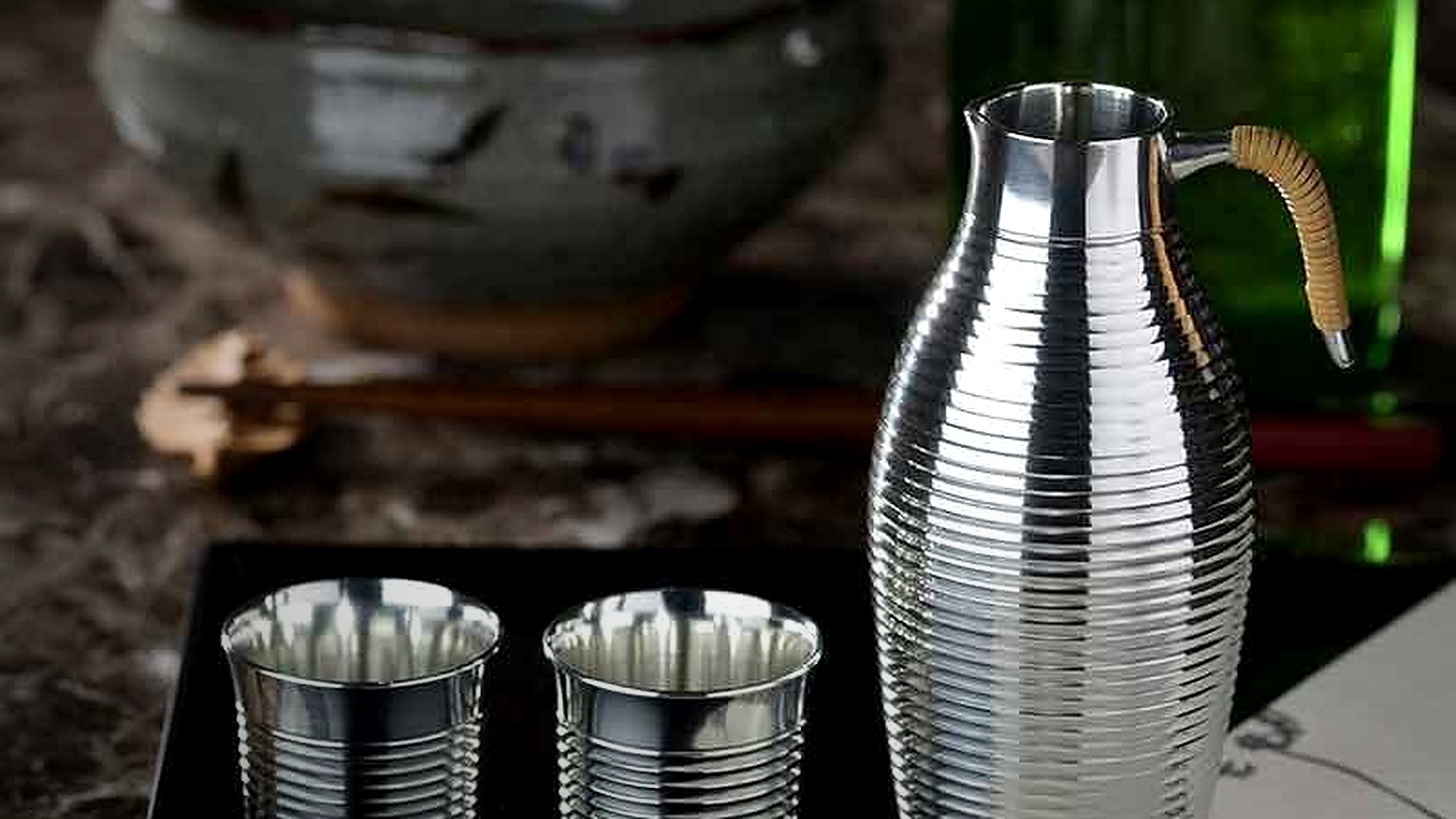
Served in a ceramic flask (tokkuri) or spouted vessel (katakuchi). Pouring 5 to 6 small ochoko cups, an ichigo is the classic unit for two people to share before moving to the next bottle.
Yongobin (四合瓶 / 4-Go Bottle = 720 mL)
Equivalent in size to a standard 750 mL wine bottle. Perfect for a table of three or four, or for home refrigeration.
Isshobin (一升瓶 / 10-Go "Magnum" = 1,800 mL)
The iconic 1.8-liter bottle that lines every Japanese izakaya refrigerator—holding 2.5 times a 720 mL bottle.

Part II: The Science of Choosing Your Ochoko (When Offered the Tray of Cups)

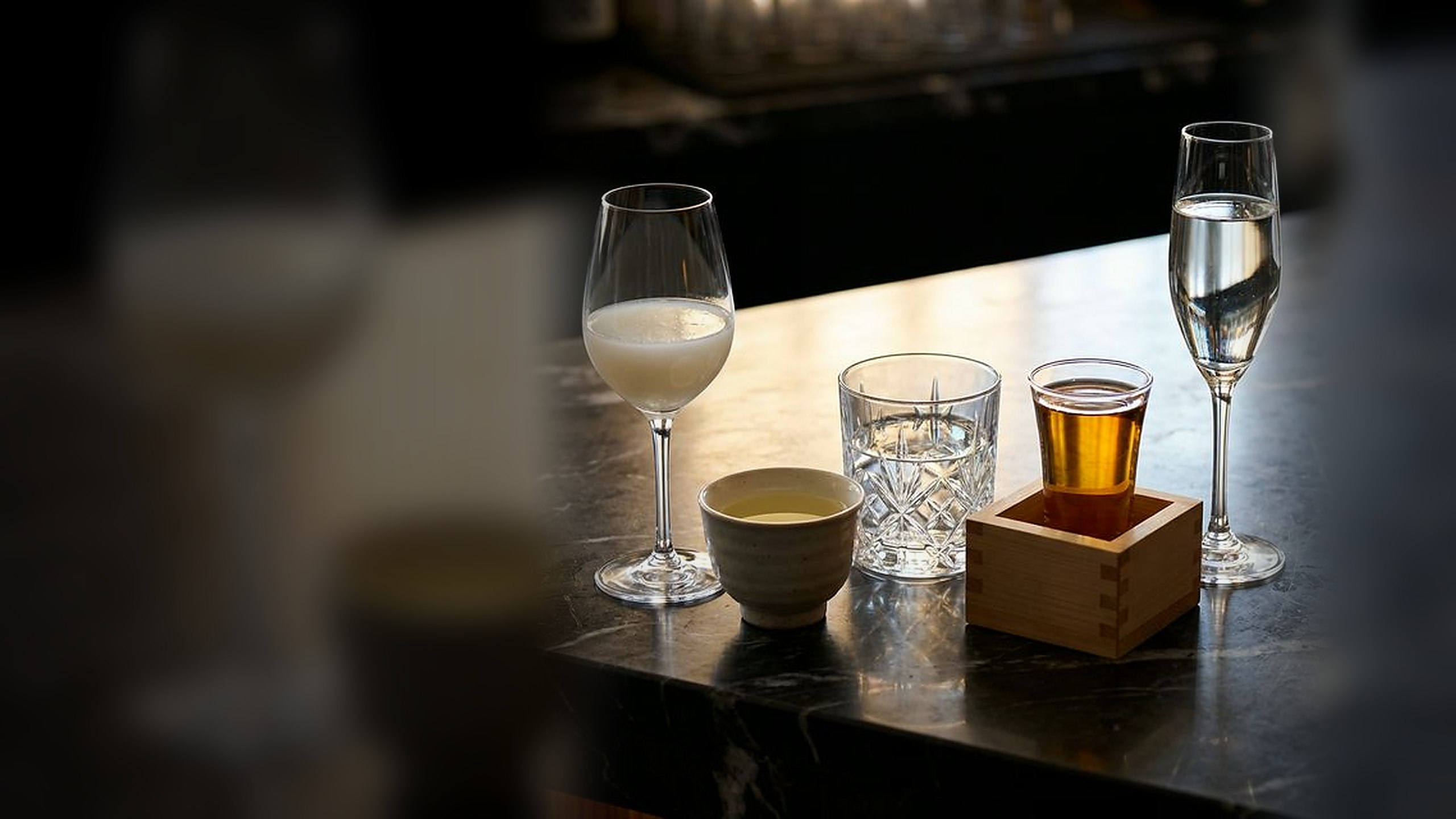
In many traditional sake bars, your server will present a wooden tray holding a dozen handmade cups (ochoko or guinomi) and invite you to pick your favorite. As sommelier guides and publications like SAKE Street emphasize, instead of choosing by color alone, match the shape and material of the cup to the style of sake you ordered:

How glassware and traditional vessel geometry dramatically transform sake aroma and temperature expression
#1

Wide, Shallow Saucer Cups (Hirahai / 平盃)

The Physics
Maximizes surface area exposure to air and spreads the liquid thinly across the entire tongue at once—stimulating the lateral umami receptors.
Best For
Silky Junmai and Junmai Ginjo (Tabika, Mimurosugi, Gensai) and gently warmed sake.
#2

Tall, Narrow Cylinder or Tulip Cups (Tsutsu-gata)

The Physics
Traps volatile aromatic esters inside the chimney of the cup and channels the liquid in a narrow stream directly to the tip of the tongue, heightening crispness and acidity.
Best For
Aromatic Ginjo/Daiginjo and micro-carbonated nama sakes (Kankiku, Tenbi Hotaten, Ubusuna).
#3

100% Pure Tin / Pewter Cups (Hon-Suzu / 能作 Nousaku)

The Physics
Tin conducts thermal energy roughly 50 times faster than ceramic—turning frost-cold the instant chilled sake is poured in. Moreover, tin ions subtly soften harsh alcohol edges, making water and sake feel remarkably round.
Best For
Crystalline chilled Junmai Ginjo and Junmai Daiginjo (Shinshu Kirei, Tabika, Shichiken) served at 8–10°C.
#4

Unglazed Earthy Stoneware (Bizen, Karatsu, Hagi)

The Physics
Microscopic surface pores create fine micro-convection currents that aerate the liquid and soften alcohol volatility when warmed.
Best For
Warmed Yamahai and Tokubetsu Junmai (Gensai, Shinkame, Tachibanaya at 40–45°C), turning savory lactic and succinic acids into pure velvet.

Part III: Mastering Oshaku & Overflowing Mokkiri Box Glasses

#1

Pouring from a Katakuchi & Oshaku Etiquette

Spouted Katakuchi Vessels
Always pour from the beak-like spout side, never across the back rim.
Round Ceramic Tokkuri
Hold the body with your right hand while resting the fingertips of your left hand lightly against the lower body—a timeless gesture of respect in both Japan and Korea.
#2

How to Drink an Overflowing Mokkiri (盛り切り / Masu-zake) Without Spilling

●
What to Avoid: Bending down with your face to slurp directly from the table looks awkward; follow the three-step counter method instead.
●
The Proper Move:
1
Either lean in slightly to sip the convex meniscus off the top of the glass, or lift the glass slightly to let the top splash intentionally into the wooden masu below.
2
Wipe the bottom rim of the glass lightly against the edge of the wooden box so it doesn’t drip onto your lap.
3
Once the glass is half empty, pour the sake from the wooden masu into the glass—or drink directly from the flat side edge (never the sharp corner) of the cypress box to enjoy its fragrant cedar aroma.

Part IV: Yawaragi-Mizu (Water Chaser) & Seoul’s BYOB Corkage Culture

1
Drink 1.5× Your Sake Volume in *Yawaragi-Mizu* (和らぎ水): Alternating every cup of sake with pure spring water prevents dehydration and resets your taste receptors, keeping every bite of sashimi and every new bottle as vivid as the first.
2
Speak the 10-Step Temperature Language: Instead of simply asking for "cold" or "hot," ask for Suzubie (涼冷え — 15°C cool cellar) for complex Junmai Ginjo or Hitohada-kan (人肌燗 — 37°C body temperature) / Nurukan (ぬる燗 — 40°C) for Yamahai.
3
Seoul BYOB / Corkage (Kol-ki-ji) Etiquette: When bringing an allocation bottle to a Seoul Hanwoo or omakase restaurant (where corkage typically runs ₩30,000–₩50,000 per 720ml bottle), call ahead to confirm refrigerator space for unpasteurized nama bottles, request white-wine stems, and always offer a small taste to your sommelier and chef.
"Etiquette is never about stiff rules—it is physical gratitude toward the brewer who stayed awake in the winter cellar and the chef standing before you." — Tokyo & Seoul Sommelier Hospitality Guide
1,215 Breweries · 2,891 Labels · Neutral Archive
Linked from 1,215 Breweries · 2,891 Labels · 8,673 Reviews

Featured Breweries, Specs & Flavor Balance

Flagship LabelBrewery & RegionSignature Rice & WaterBrewery Profile
TabikaHayakawa Sake Brewery Co. (468 Ojima, Komono-cho, Mie-gun, Mie 510-1323, Japan)Kaminoho, Yamadanishiki, Omachi, Gohyakumangoku · Subsurface water from Mount Shakagatake in the Suzuka Mountains (soft water)Brewery Profile
MimurosugiImanishi Sake Brewery Co., Ltd. (510 Miwa, Sakurai-shi, Nara 633-0001, Japan)Tsuyuhakaze, Yamadanishiki, Omachi · Subsurface water from sacred Mt. Miwa (medium-soft water)Brewery Profile
GensaiSuehiro Sake Brewery Co., Ltd. (12-38 Nisshin-machi, Aizuwakamatsu-shi, Fukushima 965-0861, Japan)Yumenoka, Fukunoka, Yamadanishiki, Gohyakumangoku, Kamenoo · Subsurface snowmelt soft water from Mt. Hakase and the Aizu BasinBrewery Profile
TenbiChoshu Brewery Co., Ltd. (72 Yoshika, Kikugawa-cho, Shimonoseki-shi, Yamaguchi 750-0316, Japan)Yamada Nishiki, Saito no Shizuku · Koya River System & Kikugawa Natural Subterranean Medium-Soft WaterBrewery Profile
UbusunaHananoka Shuzo Co., Ltd. (2226-2 Nishiyoshiji, Nagomi-machi, Tamana-gun, Kumamoto 861-0906, Japan)Nagomi-machi Natural-Farmed Homase, Higo Kabashiko, Yamada Nishiki · Brewery Shrine Spring Water (Kikuchi River Basin Subterranean Water from the Former Bairin Tenmangu Well)Brewery Profile
Shinshu KireiOkazaki Sake Brewery Co., Ltd. (4-7-33 Chuo, Ueda-shi, Nagano 386-0012, Japan)Nagano-grown Miyama Nishiki, Hitogokochi, Sankei Nishiki, and Kinmon Nishiki · Sugadaira Mountain Underground Well Water (Soft Water)Brewery Profile
ShichikenYamanashi Meijo Co., Ltd. (2283 Daigahara, Hakushu-cho, Hokuto City, Yamanashi 408-0312, Japan)Hakushu-Grown Yumesansui, Yamada Nishiki, Hitogokochi (Estate & Contract-Farmed) · Mt. Kaikomagatake Subterranean Soft Water (Ojira River System, Top 100 Famous Waters)Brewery Profile
ShinkameShinkame Shuzo Co., Ltd. (3-74 Magome, Hasuda-shi, Saitama 349-0101, Japan)Yamada Nishiki, Gohyaku Mangoku, Miyama Nishiki, Awa Yamada Nishiki, Omachi · Chichibu Paleozoic Subterranean Well WaterBrewery Profile
468 Ojima, Komono-cho, Mie-gun, Mie 510-1323, Japan · Hayakawa Sake Brewery Co. (Est. 1915)
Tabika旨味甘味酸味
Subsurface water from Mount Shakagatake in the Suzuka Mountains (soft water) Kaminoho, Yamadanishiki, Omachi, Gohyakumangoku Mie Prefectural Yeast (MK-1, MK-3), Kyokai Yeast

Handcrafted by a tiny family team in Komono, Mie using ultra-soft Mt. Shakagatake snowmelt water and 100% gentle fune (box) pressing, Tabika is celebrated for its pillowy, rounded sweetness. Brewed with local Kaminoho, Omachi, and Yamada Nishiki, its soothing umami and gentle acidity pair beautifully with dashi-steamed clams and seasonal washoku.

Flavor Balance (1–5 Rice Grains)Shows which flavor direction the balance leans toward (1 to 5 rice grains), never a quality rank or score.
Serving & Glassware:Recommended Temperature: 10–13°C (Chilled / Hanabie to Suzubie) / Recommended Glassware: Thin-rimmed, medium-bowled white wine glass (such as Riedel O Daiginjo). Avoid over-chilling below 6°C so the delicate esters are not muted. Upon pouring, experience crystalline purity from Subsurface water from Mount Shakagatake in the Suzuka Mountains (soft water) and lifted orchard-fruit aromatics; after 15 minutes as the glass warms to 14°C, silky Kaminoho, Yamadanishiki, Omachi, Gohyakumangoku mid-palate umami opens gracefully.
Global Gastronomy Pairings
• Ise-Shima spiny lobster sashimi and chilled ginjo-steamed Matoya oysters
• Jeju silver belt-fish sashimi and delicate pan-fried scallop & cod jeon with citrus soy
• Poached lobster tail and white asparagus warm salad with yuzu-infused citrus hollandaise
“Tabika Junmai Ginjo Kaminoho and Omachi Muroka Nama caress the palate like feathers thanks to ultra-soft mountain water and gentle fune pressing, unfolding into warm orchard fruit and sweet rice notes.”
Domestic Review · SAKETIME / 国内口コミ三重地酒コンプリート
“A triumph of small-batch family craftsmanship using 100% traditional fune pressing; its seamless, stress-free texture shines alongside steamed shellfish and white-fish sashimi.”
Global Sommelier · Vivino / Global SakeDaniel Kim
“Across every rice variety, Tabika maintains an unmistakable thread of softness and clarity—especially the seasonal nama releases and boutique shop collaborations.”
SNS Buzz · X (Twitter) / Instagram@suzuka_water_sake
510 Miwa, Sakurai-shi, Nara 633-0001, Japan · Imanishi Sake Brewery Co., Ltd. (Est. 1660)
Mimurosugiラムネガス華やか
Subsurface water from sacred Mt. Miwa (medium-soft water) Tsuyuhakaze, Yamadanishiki, Omachi Kyokai No. 9 strain, Miwa Heritage Yeast and Bodaimoto

Founded in 1660 at the foot of sacred Mount Miwa and Omiwa Shrine—revered as the ancestral deity of Japanese sake brewing—Imanishi Shuzo crafts Mimurosugi using shrine-mountain subterranean water and locally grown Yamadanishiki and Tsuyuhakaze rice. Luminous lychee, white peach, and Muscat aromas flow into a crystal-clear, juicy palate with a brisk finish that pairs effortlessly with sushi, sashimi, and delicate crudo.

Flavor Balance (1–5 Rice Grains)Shows which flavor direction the balance leans toward (1 to 5 rice grains), never a quality rank or score.
Serving & Glassware:Recommended Temperature: 10–14°C (Cool Cellar) & 42–45°C (Bain-Marie Warmed / Nurukan) / Recommended Glassware: Thin-rimmed white Burgundy or Riedel O Daiginjo wine glass. Right after opening at 10°C, savor the vibrant micro-effervescence and taut lactic/citric tension shaped by Subsurface water from sacred Mt. Miwa (medium-soft water); after 15 minutes as it reaches 14°C, multi-dimensional Tsuyuhakaze, Yamadanishiki, Omachi umami and savory kimoto complexity blossom.
Global Gastronomy Pairings
• Charcoal-grilled Yamato heritage chicken with narazuke sake-lees glaze and Yamato Wagyu shabu-shabu
• Crispy-scaled Jeju tilefish (okdom) and creamy abalone liver (geu) rice porridge risotto
• Dover sole meunière with cultured hazelnut brown butter, Meyer lemon, and capers
“Mimurosugi Roman Junmai Ginjo Yamadanishiki and Dio Abita open with morning-dew clarity and delicate lychee and white peach notes—juicy on the mid-palate yet vanishing effortlessly thanks to soft Mount Miwa water. The absolute pinnacle of the 'clean and juicy' style.”
Domestic Review · SAKETIME三輪の酒神礼賛
“Mimurosugi Kioke Bodaimoto—fermented in vats coopered from sacred Mount Miwa cedar using ambient lactic bacteria and brewery yeast—is true terroir sake, weaving silky acidity with white peach and cedar-herb nuances for Michelin-level pairings.”
Global Sommelier · Vivino / Michelin Guide Sommelier SelectionCamille L.
“Stopped by Imanishi Shuzo after visiting Omiwa Shrine and picked up Mimurosugi 'Hanakyun' Origarami and Junmai Ginjo Tsuyuhakaze—the Tsuyuhakaze's pink-grapefruit acidity and subtle bitterness are addictive at the dinner table.”
SNS Buzz · X (Twitter)@nara_sake_pilgrim
12-38 Nisshin-machi, Aizuwakamatsu-shi, Fukushima 965-0861, Japan · Suehiro Sake Brewery Co., Ltd. (Est. 1850)
Gensaiガスフルーティ旨味
Subsurface snowmelt soft water from Mt. Hakase and the Aizu Basin Yumenoka, Fukunoka, Yamadanishiki, Gohyakumangoku, Kamenoo Suehiro Proprietary Yeast (M310 strain & Kaeigura Yeast), Utsukushima Yume Yeast (F7-01)

Named in honor of Harunaka (Gensai) Tanaka—the visionary Edo-period chief retainer who reformed the Aizu domain and elevated its brewing craft—Gensai represents the pinnacle of Suehiro Shuzo's Daiginjo artistry. Brewed with Special A-grade Yamadanishiki polished to 35%–40%, it delivers regal orchard-fruit aromatics, gossamer silkiness, and a poised finish worthy of celebratory kaiseki banquets.

Flavor Balance (1–5 Rice Grains)Shows which flavor direction the balance leans toward (1 to 5 rice grains), never a quality rank or score.
Serving & Glassware:Recommended Temperature: 10–13°C (Chilled / Hanabie to Suzubie) / Recommended Glassware: Thin-rimmed, medium-bowled white wine glass (such as Riedel O Daiginjo). Avoid over-chilling below 6°C so the delicate esters are not muted. Upon pouring, experience crystalline purity from Subsurface snowmelt soft water from Mt. Hakase and the Aizu Basin and lifted orchard-fruit aromatics; after 15 minutes as the glass warms to 14°C, silky Yumenoka, Fukunoka, Yamadanishiki, Gohyakumangoku, Kamenoo mid-palate umami opens gracefully.
Global Gastronomy Pairings
• Aged Joban coastal flounder sashimi and Aizu white asparagus & kuruma prawn tempura with mountain salt
• Jeju silver belt-fish sashimi and delicate pan-fried scallop & cod jeon with citrus soy
• Wild sea bream carpaccio with bergamot olive oil, shaved bottarga, and micro herbs
“Tasted Suehiro Daiginjo Gensai. Radiant melon and white-peach aromatics meet a crystal-clear, silky palate that showcases over 170 years of competition-level brewing mastery.”
Domestic Review · SAKETIME 福島県大吟醸・鑑評会受賞酒レビューAizu_Domain_Heritage
“Gensai Daiginjo embodies the timeless elegance of competition-grade Daiginjo—seamless, floral, and weightless on the palate alongside caviar and white-truffle hors d'oeuvres.”
Global Sommelier · IWC / Luxury Sake ConnoisseurVictoria Sterling
“Opened a paulownia-boxed bottle of Daiginjo Gensai for a family milestone celebration. Its regal presentation and effortlessly graceful, floral palate delighted every guest at the table.”
SNS Buzz · X (Twitter) / Instagram@celebration_sake
72 Yoshika, Kikugawa-cho, Shimonoseki-shi, Yamaguchi 750-0316, Japan · Choshu Brewery Co., Ltd. (Est. 1871)
Tenbiガスフレッシュ甘味
Koya River System & Kikugawa Natural Subterranean Medium-Soft Water Yamada Nishiki, Saito no Shizuku Kyokai No. 901 & Kyokai No. 701 Yeast

Launched in late 2020 in Shimonoseki, Yamaguchi by Choshu Shuzo, Tenbi skyrocketed to national stardom with its bright, uplifting house style. Bearing sun-and-moon labels for day and night expressions, it offers crisp green apple and white grape aromatics, delicate pinpoint effervescence, and vibrant malic acidity that pair beautifully with seafood ceviche, seasonal vegetable tempura, and modern izakaya fare.

Flavor Balance (1–5 Rice Grains)Shows which flavor direction the balance leans toward (1 to 5 rice grains), never a quality rank or score.
Serving & Glassware:Recommended Temperature: 10–13°C (Chilled / Hanabie to Suzubie) / Recommended Glassware: Thin-rimmed, medium-bowled white wine glass (such as Riedel O Daiginjo). Avoid over-chilling below 6°C so the delicate esters are not muted. Upon pouring, experience crystalline purity from Koya River System & Kikugawa Natural Subterranean Medium-Soft Water and lifted orchard-fruit aromatics; after 15 minutes as the glass warms to 14°C, silky Yamada Nishiki, Saito no Shizuku mid-palate umami opens gracefully.
Global Gastronomy Pairings
• Shimonoseki wild tiger pufferfish tessa wrapped around Yasuoka green onion and kelp-cured Hagi tilefish
• Jeju silver belt-fish sashimi and delicate pan-fried scallop & cod jeon with citrus soy
• Poached lobster tail and white asparagus warm salad with yuzu-infused citrus hollandaise
“Opened Tenbi Junmai Ginjo Usunigori Nama (Momoten). Silky lees-touched sweetness meets a lively tingle and a grapefruit-pith finish so refreshing the 720ml bottle vanished in an evening.”
Domestic Review · SAKETIME / 国内口コミ令和の地酒ウォッチャー
“Reminiscent of Basque Txakoli or young Loire Chenin Blanc with its lively spritz and bright acidity—an absolute dream pairing at oyster bars and seafood tapas counters.”
Global Sommelier · Vivino / Global SakeSophia Lin
“Chilled white-label Tenbi Junmai Ginjo tonight. Beyond the gorgeous mizuhiki-inspired label, that crystalline purity and bright malic lift on the palate are simply one of a kind.”
SNS Buzz · X (Twitter) / Instagram@sake_palette
2226-2 Nishiyoshiji, Nagomi-machi, Tamana-gun, Kumamoto 861-0906, Japan · Hananoka Shuzo Co., Ltd. (Est. 1902)
Ubusunaガスシャンパン酸味
Brewery Shrine Spring Water (Kikuchi River Basin Subterranean Water from the Former Bairin Tenmangu Well) Nagomi-machi Natural-Farmed Homase, Higo Kabashiko, Yamada Nishiki Kyokai No. 9 (Kumamoto Yeast) & Indigenous Brewery Yeast

Created in Nagomi, Kumamoto by Kiyotaka Kanda of Hananoka Shuzo to embody 'earth, native ecosystem, and ancestral regenerative agriculture,' Ubusuna stands at the absolute pinnacle of contemporary craft sake. Brewed with pesticide-free local Yamada Nishiki and revived Edo-era heirloom rices (Homase and Kabashiko) using kimoto and wooden vats, its Champagne-like pinpoint mousse and electric orchard-and-yuzu complexity transfix fine-dining tables worldwide.

Flavor Balance (1–5 Rice Grains)Shows which flavor direction the balance leans toward (1 to 5 rice grains), never a quality rank or score.
Serving & Glassware:Recommended Temperature: 10–14°C (Cool Cellar) & 42–45°C (Bain-Marie Warmed / Nurukan) / Recommended Glassware: Thin-rimmed white Burgundy or Riedel O Daiginjo wine glass. Right after opening at 10°C, savor the vibrant micro-effervescence and taut lactic/citric tension shaped by Brewery Shrine Spring Water (Kikuchi River Basin Subterranean Water from the Former Bairin Tenmangu Well); after 15 minutes as it reaches 14°C, multi-dimensional Nagomi-machi Natural-Farmed Homase, Higo Kabashiko, Yamada Nishiki umami and savory kimoto complexity blossom.
Global Gastronomy Pairings
• Charcoal-grilled Kumamoto Akaushi beef steak and Binchotan-roasted Amakusa Daio giant heritage chicken
• Charcoal-seared Hanwoo 1++ brisket point (chadolbagi) paired with aromatic minari and chilled dongchimi radish
• Pan-roasted Breton blue lobster with Champagne, tarragon, and cultured butter beurre blanc
“Miraculously secured Ubusuna Homase 5-Nojo and Yamada Nishiki 2-Nojo. Fine, persistent bubbles carry waves of Japanese citrus, white peach, wild herbs, and living earth minerality—one of the most spine-tingling bottles of my life.”
Domestic Review · SAKETIME / 国内口コミテロワール日本酒探求家
“Encountering Ubusuna gave me the same electric shock as my first glass of Jacques Selosse. The vibrating energy born from regenerative paddies, native microbes, and wooden vats stands shoulder to shoulder with the greatest wines on earth.”
Global Sommelier · Vivino / Global SakeGuillaume Delacroix
“Popped Ubusuna Kabashiko 4-Nojo! To think an heirloom Edo-era Kumamoto rice once praised as the finest in the realm has been revived into something so dewy, aromatic, and transcendent—pure genius from Hananoka Shuzo.”
SNS Buzz · X (Twitter) / Instagram@craft_sake_chronicle
4-7-33 Chuo, Ueda-shi, Nagano 386-0012, Japan · Okazaki Sake Brewery Co., Ltd. (Est. 1665)
Shinshu Kireiガスフレッシュ旨味
Sugadaira Mountain Underground Well Water (Soft Water) Nagano-grown Miyama Nishiki, Hitogokochi, Sankei Nishiki, and Kinmon Nishiki Nagano Prefectural Yeast (Alps Yeast, Nagano D Yeast) and Kyokai Yeast

Founded in 1665 in the historic castle town of Ueda, Nagano and led by female Master Brewer Midori Okazaki, Shinshu Kirei is crafted with ultra-soft Sugadaira mountain snowmelt and local Miyama Nishiki, Hitogokochi, and Kinmon Nishiki rice. Renowned for its crystalline transparency, delicate micro-effervescence, and poised orchard-fruit sweetness, it elevates Shinshu salmon sashimi, thinly sliced sea bream, and mountain-vegetable tempura.

Flavor Balance (1–5 Rice Grains)Shows which flavor direction the balance leans toward (1 to 5 rice grains), never a quality rank or score.
Serving & Glassware:Recommended Temperature: 10–13°C (Chilled / Hanabie to Suzubie) / Recommended Glassware: Thin-rimmed, medium-bowled white wine glass (such as Riedel O Daiginjo). Avoid over-chilling below 6°C so the delicate esters are not muted. Upon pouring, experience crystalline purity from Sugadaira Mountain Underground Well Water (Soft Water) and lifted orchard-fruit aromatics; after 15 minutes as the glass warms to 14°C, silky Nagano-grown Miyama Nishiki, Hitogokochi mid-palate umami opens gracefully.
Global Gastronomy Pairings
• Thinly sliced Shinshu salmon with fresh Azumino wasabi and crisp mountain foraged sansai tempura
• Dry-aged Korean wild sea bream hoe and chilled king prawn salad (daeha-naengchae) in pine-nut sauce
• Poached lobster tail and white asparagus warm salad with yuzu-infused citrus hollandaise
“Shinshu Kirei Junmai Ginjo Miyama Nishiki and Junmai Daiginjo Kinmon Nishiki represent the pinnacle of modern clear sake. Snowmelt-pure entry, pinpoint effervescence, and a weightless, zero-impurity finish.”
Domestic Review · SAKETIME / 国内口コミ信州銘酒コンシェルジュ
“Possessing an alpine purity reminiscent of glacier water and silk-spun sweetness, Midori Okazaki's sake stands shoulder to shoulder with the world's finest cool-climate white wines in sheer poise and clarity.”
Global Sommelier · Vivino / Alpine Fine Sake ReviewThomas V., Geneva
“Finally won the lottery for Shinshu Kirei Silver Label Junmai Daiginjo 39 Miyama Nishiki! From the dewy orchard nose to the breathtakingly pure, weightless sweet-tart balance, it lives up to every bit of the hype.”
SNS Buzz · X (Twitter) / Instagram@shinshu_sake_hunt
2283 Daigahara, Hakushu-cho, Hokuto City, Yamanashi 408-0312, Japan · Yamanashi Meijo Co., Ltd. (Est. 1750)
Shichikenガスフルーティさわやか
Mt. Kaikomagatake Subterranean Soft Water (Ojira River System, Top 100 Famous Waters) Hakushu-Grown Yumesansui, Yamada Nishiki, Hitogokochi (Estate & Contract-Farmed) Proprietary House Yeast & Kyokai No. 1801

Founded in 1750 in Hakushu at the foot of the Southern Japanese Alps in Yamanashi, Shichiken ('Seven Sages of the Bamboo Grove') harnesses crystal-clear Mount Kaikomagatake snowmelt water. Renowned globally for its bottle-fermented sparkling sakes—including 'Mori no Kanade' aged in Suntory Hakushu whisky barrels—as well as its crisp 'Furinbizan' Junmai and 'Onakaya' Junmai Daiginjo, it pairs seamlessly with French gastronomy, roast poultry, and sushi.

Flavor Balance (1–5 Rice Grains)Shows which flavor direction the balance leans toward (1 to 5 rice grains), never a quality rank or score.
Serving & Glassware:Recommended Temperature: 5–8°C (Well-Chilled / Yukibie) / Recommended Glassware: Tall flute or thin-rimmed tulip Champagne stem. Chill thoroughly before opening to preserve pinpoint effervescence shaped by Mt. Kaikomagatake Subterranean Soft Water (Ojira River System, Top 100 Famous Waters). Immediately upon pouring, enjoy the vibrant spritz and lifted aromatics; after 10–15 minutes as it warms toward 10°C, silky Hakushu-Grown Yumesansui, Yamada Nishiki umami and bright acid tension unfold across the mid-palate.
Global Gastronomy Pairings
• Kelp-cured Yatsugatake spring-water Kai salmon and traditional Koshu soy-simmered abalone (nigai)
• Aged Jeju flounder hoe (raw slices) dressed with cold-pressed perilla oil and crisp minari water dropwort
• Hokkaido scallop & Oscietra caviar crudo with finger lime and white truffle vinaigrette
“Every bottle of Shichiken radiates the pure, mineral-soft character of Hakushu mountain water. From the silky 'Kinu no Aji' Junmai Daiginjo to the pinpoint mousse of 'Hoshi no Kagayaki' and 'Mori no Kanade' sparkling sakes, the craftsmanship is world-class.”
Domestic Review · SAKETIME / 国内口コミ白州の名水ファン
“Through collaborations with Alain Ducasse and its Hakushu whisky-cask-aged sparkling expressions, Shichiken has redefined sake's role in haute gastronomy—offering notes of white peach, vanilla bean, and whisper-light forest smoke.”
Global Sommelier · Vivino / Alain Ducasse & Global GastronomyPierre-Luc G., Paris
“Visited Shichiken's historic brewery in Hakushu and brought home Mori no Kanade Sparkling! The marriage of Hakushu whisky-barrel oak and delicate ginjo fruitiness alongside smoked cheese is pure heaven.”
SNS Buzz · X (Twitter) / Instagram@yamanashi_terroir
3-74 Magome, Hasuda-shi, Saitama 349-0101, Japan · Shinkame Shuzo Co., Ltd. (Est. 1848)
Shinkame燗酒熱燗ガス
Chichibu Paleozoic Subterranean Well Water Yamada Nishiki, Gohyaku Mangoku, Miyama Nishiki, Awa Yamada Nishiki, Omachi Kyokai Yeasts (No. 7 & No. 9 Strains) & Ambient Brewery Yeast

Founded in 1848 in Hasuda, Saitama, Shinkame Shuzo made history in 1987 under visionary leader Yoshiyuki Ogawahara by becoming postwar Japan's very first 100% Junmai brewery. Fermented to full strength using Chichibu paleozoic subterranean water and prized Yamada Nishiki and Gohyakumangoku rice, every bottle of Shinkame is aged for at least two to five years before release. Golden-hued, nutty, and profoundly savory, it reaches nirvana when warmed in a tin chirori to 45–55°C alongside charcoal-grilled unagi eel, monkfish liver (ankimo), or aged beef.

Flavor Balance (1–5 Rice Grains)Shows which flavor direction the balance leans toward (1 to 5 rice grains), never a quality rank or score.
Serving & Glassware:Recommended Temperature: 13–16°C (Cool Cellar) & 40–48°C (Nurukan to Jokan Warmth) / Recommended Glassware: Medium Burgundy bowl or artisanal Mino/Bizen ceramic guinomi (warmed via tin chirori in a water bath). Starting at 13°C allows Chichibu Paleozoic Subterranean Well Water and Yamada Nishiki, Gohyaku Mangoku, Miyama Nishiki, Awa Yamada Nishiki, Omachi to express generous grain umami without astringency; warming to 42–45°C unlocks plush savory depth ideal for grilled Wagyu and rich dashis.
Global Gastronomy Pairings
• Binchotan-grilled Kawagoe unagi (kabayaki & shirayaki) and Fukaya sweet-leek duck hotpot
• Charcoal-grilled Hanwoo 1++ striploin with truffle salt and pickled mountain garlic leaf (myeongi-namul)
• Roasted Bresse poularde with porcini mushroom & cultured butter jus alongside 18-month Comté
“Warmed both the classic 'Shinkame Tezukuri Junmai' and three-year-aged 'Hikomago' to 50°C and served them in a flat hirahai cup. Firm and muscular at room temperature, heat unlocks waves of toasted hazelnut, honeycomb, and savory roasted grain that melt into a bone-dry finish—unbeatable with kabayaki eel.”
Domestic Review · SAKETIME / 国内口コミ全量純米の伝道師
“Possesses the savory, oxidative intrigue of Jura Vin Jaune or dry Amontillado while retaining razor-clean Japanese rice acidity. As postwar Japan's first 100% Junmai brewery, Shinkame offers a transcendent pairing for roasted game birds, black truffle, and aged Comté.”
Global Sommelier · Vivino / Master Sommelier PickAntoine D.
“Shinkame from Hasuda, Saitama is the bottle that forever changed how I think about warm sake! Even their active sparkling nigori nama turned into hot 'kan-nigori' is an explosion of creamy, savory umami and lively fizz.”
SNS Buzz · X (Twitter) / Reddit r/Sake@shinkame_kanzake

Recommended Pairing

Seasonal Sashimi Platter × Junmai Ginjo in a Pure Tin (Suzu) Cup
Pure tin chills the sake instantly and softens water molecules to elevate raw sashimi
Charcoal-Grilled Wagyu / Hanwoo × 40°C Nurukan in Bizen Stoneware
Micro-porous stoneware rounds out 40°C warm Junmai to melt rich grilled beef fat
SakeStream
A neutral global sake editorial archive and database documenting 1,215 breweries, 2,891 labels, brewing water & rice provenance, and 8,673 verified tasting records without proprietary ranking tiers.
Weekly Sake Dispatch

Weekly Sake & Tasting Dispatch

Curated seasonal releases, sub-zero arrivals, and tasting city guides across global editions.
ArticlesBreweries