[Inside the 2026 Champions] Decoding the Brewing Mastery of Mimurosugi (Double Crown), Tenbi (IWC Champion) & Shichiken (Kura Master President Prize)
Brewery Story

[Inside the 2026 Champions] Decoding the Brewing Mastery of Mimurosugi (Double Crown), Tenbi (IWC Champion) & Shichiken (Kura Master President Prize)

2026-10-1410min readSakeStream
Back
EXECUTIVE SUMMARY & KEY TAKEAWAYS

An inside look at the three breweries that swept the top trophies of 2026: Imanishi Shuzo’s Mimurosugi, Choshu Shuzo’s Tenbi, and Yamanashi Meijo’s Shichiken—and the shared philosophy uniting them.

Key Sections in This Report:

The Three Visionaries Who Swept the 2026 Global Sake Trophies

The 2026 international sake competition season will be remembered as a watershed year defined by three extraordinary triumphs:

●
In June, at SAKE COMPETITION 2026 in Tokyo, Nara’s Imanishi Shuzo captured simultaneous 1st Place trophies in both the Junmai and Junmai Ginjo categories with *Mimurosugi*.
●
In September, at the 20th Anniversary IWC 2026 (judged in Saijo, Higashihiroshima), Yamaguchi’s Choshu Shuzo claimed the supreme Champion Sake trophy out of 1,738 entries with *Tenbi Junmai Ginjo Hotaten*.
●
In October, at the 10th Anniversary Kura Master 2026 in Paris, Yamanashi Meijo won the overarching Prix du Président with *Shichiken Sparkling Hoshi no Kagayaki*.

When we examine the history and fermentation architecture of these three breweries side by side, a clear blueprint for contemporary sake mastery emerges.

2026 Triple-Crown Champions: Technical Specs, Japan MSRP & Service Matrix

2026 Trophy & BottlingBrewery & Region (Official Link)Rice, Polish Ratio & MethodABV720ml Japan MSRP (Tax Incl.)Ideal Temp & Glassware
SAKE COMPETITION Double Crown Mimurosugi Dio Abita / Yamada NishikiImanishi Shuzo (Miwa, Sakurai, Nara)Contract Yamada Nishiki 60% (genshu) / 55%13% (Dio Abita) / 15%¥1,980 / ¥2,09010–12°C (Tulip white-wine stem)
IWC 2026 Champion Sake Tenbi Junmai Ginjo HotatenChoshu Shuzo (Kikugawa, Shimonoseki, Yamaguchi)Yamada Nishiki 50% · Kikugawa soft spring water15%¥1,9808–12°C (Riesling / Sauvignon Blanc glass)
Kura Master 2026 President Prize Shichiken Sparkling Hoshi no KagayakiYamanashi Meijo (Hakushu, Yamanashi)Yamanashi rice · In-bottle 2nd fermentation & disgorged12%¥6,050 (¥5,500 ex-tax)6–8°C (Champagne flute or tulip glass)

1. Imanishi Shuzo’s Mimurosugi (Miwa, Nara) — How Masayuki Imanishi Rebuilt a 1660 Brewery at the Sacred Birthplace of Sake

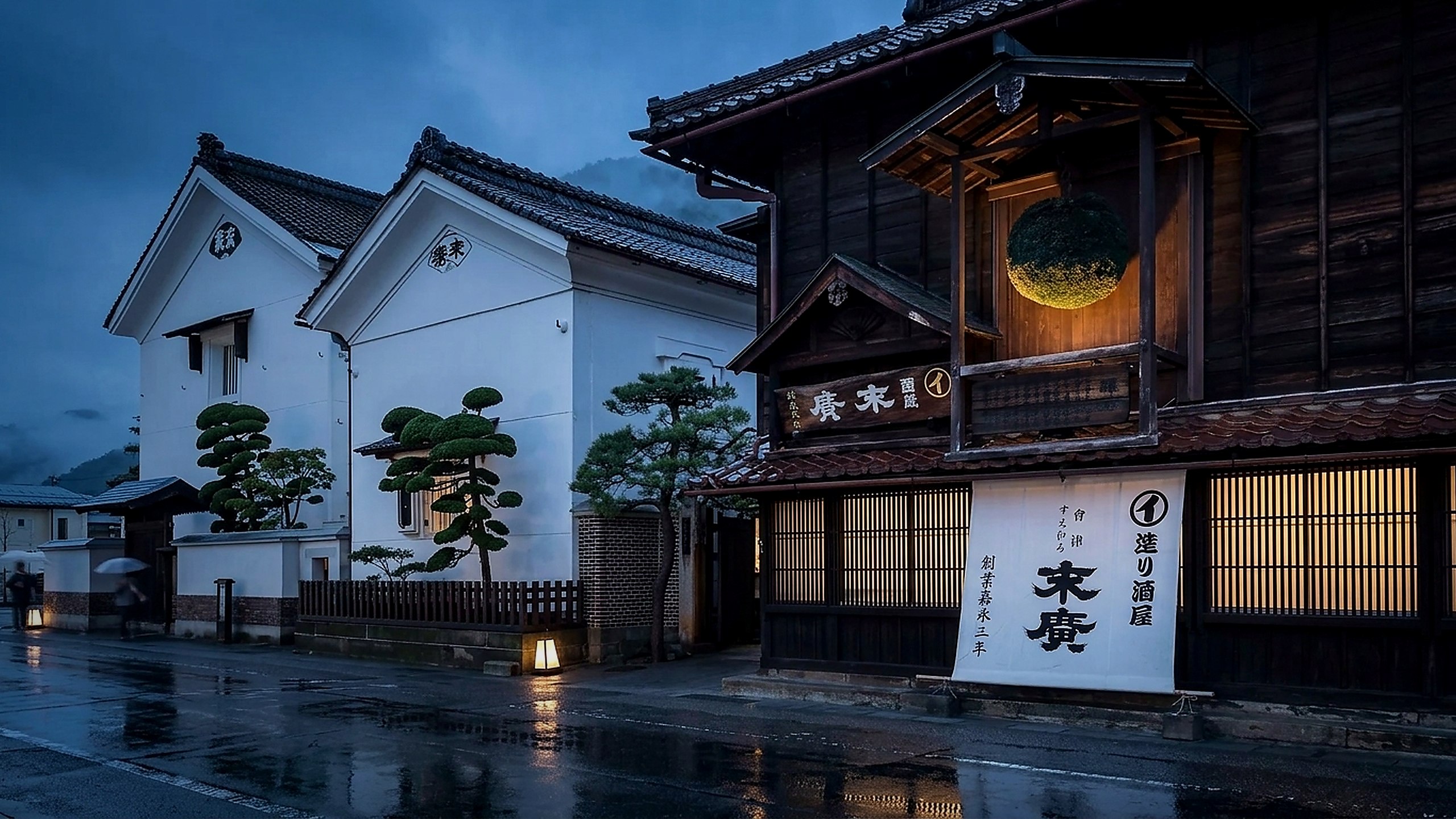
Founded in 1660 right at the entrance to Omiwa Shrine—revered across Japan as the spiritual birthplace of sake brewing—Imanishi Shuzo takes its brand name Mimurosugi from the sacred cedar trees of Mt. Miwa.

Yet when 14th-generation president Masayuki Imanishi left a major trading house in 2011 at age 28 following his father’s sudden passing, the brewery was burdened with heavy debt and producing fewer than 300 koku (54,000 liters) annually. Starting nearly alone, Imanishi rebuilt every step of rice washing, koji making, and cold-chain storage around a singular philosophy: "Drink Miwa"—brewing exclusively with subterranean water from sacred Mt. Miwa and contract-grown rice irrigated by the very same mountain stream.

Why Mimurosugi Dio Abita & Junmai Ginjo Yamada Nishiki Swept SAKE COMPETITION 2026

Mt. Miwa Soft-Water Texture
A remarkably plush, spherical entry on the palate derived from Miwa’s subterranean soft water.
13% ABV Undiluted Genshu Architecture (Dio Abita)
Meaning "Where God Dwells" in Italian, Dio Abita pairs featherlight 13% alcohol with vibrant malic acidity and pure rice umami—finishing with zero heaviness so diners can effortlessly enjoy glass after glass.

2. Choshu Shuzo’s Tenbi (Shimonoseki, Yamaguchi) — Master Brewer Miyoshi Fujioka’s White-Grape Alchemy

Born in 2020 when a 150-year-old local brewery in Kikugawa, Shimonoseki was revitalized with state-of-the-art cold-fermentation rooms, Tenbi was entrusted from day one to Master Brewer (*Toji*) Miyoshi Fujioka. Drawing on more than two decades of brewing experience in Mie and Akita, Fujioka set out to craft sake that is "bright as sunlight, lifting the spirit from the very first sip."

Inside the IWC 2026 Champion Sake: Tenbi Junmai Ginjo Hotaten

The Firefly Sky of Kikugawa
Hotaten ("Firefly Sky") is named after the thousands of wild fireflies that illuminate the pristine Kikugawa river basin beside the brewery each summer, mirroring the Milky Way above.
Muscat-Toned Acidity Loved by Masters of Wine
Rather than heavy banana esters, Hotaten offers crisp Shine Muscat and green apple aromatics supported by a taut, mineral spine. The IWC judging panel praised its poise as the ultimate bridge between fine white wine and Junmai Ginjo.

3. Yamanashi Meijo’s Shichiken (Hakushu, Yamanashi) — World-Champion Bubbles Born from Southern Alps Granite Water

Founded in 1750 in Hakushu—a mountain town so famed for its granite-filtered soft water from Mt. Kaikomagatake that Suntory built its legendary Hakushu whisky distillery next door—Yamanashi Meijo is led by 13th-generation president Tsushima Kitahara and his brother, head brewer Ryoko Kitahara.

How Shichiken Sparkling Hoshi no Kagayaki Conquered Paris at Kura Master 2026

True Secondary In-Bottle Fermentation & Riddling
Unlike carbonated sakes, Hoshi no Kagayaki undergoes secondary fermentation inside each bottle followed by meticulous disgorgement (dégorgement) to remove the lees while preserving crystal clarity.
Triumph in the Homeland of Champagne
That France’s top MOF sommeliers awarded their 10th-anniversary Supreme President Prize to a Japanese sparkling sake proves that Hakushu’s ultra-soft water and rice-koji umami can stand shoulder-to-shoulder with prestige Champagne as a global aperitif.
"Subterranean water from sacred Mt. Miwa (Mimurosugi), the firefly streams of Kikugawa (Tenbi), and the granite snowmelt of Hakushu (Shichiken)—all three 2026 world champions share a devotion to pristine soft water, nimble alcohol, and crystalline acidity." — SakeStream Brewing Research Lab
1,215 Breweries · 2,891 Labels · Neutral Archive
Linked from 1,215 Breweries · 2,891 Labels · 8,673 Reviews

Featured Breweries, Specs & Flavor Balance

Flagship LabelBrewery & RegionSignature Rice & WaterBrewery Profile
MimurosugiImanishi Sake Brewery Co., Ltd. (510 Miwa, Sakurai-shi, Nara 633-0001, Japan)Tsuyuhakaze, Yamadanishiki, Omachi · Subsurface water from sacred Mt. Miwa (medium-soft water)Brewery Profile
TenbiChoshu Brewery Co., Ltd. (72 Yoshika, Kikugawa-cho, Shimonoseki-shi, Yamaguchi 750-0316, Japan)Yamada Nishiki, Saito no Shizuku · Koya River System & Kikugawa Natural Subterranean Medium-Soft WaterBrewery Profile
ShichikenYamanashi Meijo Co., Ltd. (2283 Daigahara, Hakushu-cho, Hokuto City, Yamanashi 408-0312, Japan)Hakushu-Grown Yumesansui, Yamada Nishiki, Hitogokochi (Estate & Contract-Farmed) · Mt. Kaikomagatake Subterranean Soft Water (Ojira River System, Top 100 Famous Waters)Brewery Profile
TENBUNishi Shuzo Co., Ltd. (4970-17 Yokura, Fukiage-cho, Hioki City, Kagoshima 899-3309, Japan (Tenbu Sake Kura: 3142-10 Yokura, Fukiage-cho, Hioki City))Yamada Nishiki (Tojo Special A District, Hyogo), Aiyama, Akaiwa Omachi · Satsuma Peninsula Deep Subterranean Natural Soft Water ('HOUMEI')Brewery Profile
MinenoyukiMinenoyuki Sake Brewery Co., Ltd. (1-17 Sakuragaoka, Kitakata-shi, Fukushima 966-0802, Japan)Kitakata-grown Gohyakumangoku, Yumenoka, Fukunoka, Yamadanishiki · Mt. Iide subterranean snowmelt water in Kitakata (soft water)Brewery Profile
510 Miwa, Sakurai-shi, Nara 633-0001, Japan · Imanishi Sake Brewery Co., Ltd. (Est. 1660)
Mimurosugiラムネガス華やか
Subsurface water from sacred Mt. Miwa (medium-soft water) Tsuyuhakaze, Yamadanishiki, Omachi Kyokai No. 9 strain, Miwa Heritage Yeast and Bodaimoto

Founded in 1660 at the foot of sacred Mount Miwa and Omiwa Shrine—revered as the ancestral deity of Japanese sake brewing—Imanishi Shuzo crafts Mimurosugi using shrine-mountain subterranean water and locally grown Yamadanishiki and Tsuyuhakaze rice. Luminous lychee, white peach, and Muscat aromas flow into a crystal-clear, juicy palate with a brisk finish that pairs effortlessly with sushi, sashimi, and delicate crudo.

Flavor Balance (1–5 Rice Grains)Shows which flavor direction the balance leans toward (1 to 5 rice grains), never a quality rank or score.
Serving & Glassware:Recommended Temperature: 10–14°C (Cool Cellar) & 42–45°C (Bain-Marie Warmed / Nurukan) / Recommended Glassware: Thin-rimmed white Burgundy or Riedel O Daiginjo wine glass. Right after opening at 10°C, savor the vibrant micro-effervescence and taut lactic/citric tension shaped by Subsurface water from sacred Mt. Miwa (medium-soft water); after 15 minutes as it reaches 14°C, multi-dimensional Tsuyuhakaze, Yamadanishiki, Omachi umami and savory kimoto complexity blossom.
Global Gastronomy Pairings
• Charcoal-grilled Yamato heritage chicken with narazuke sake-lees glaze and Yamato Wagyu shabu-shabu
• Crispy-scaled Jeju tilefish (okdom) and creamy abalone liver (geu) rice porridge risotto
• Dover sole meunière with cultured hazelnut brown butter, Meyer lemon, and capers
“Mimurosugi Roman Junmai Ginjo Yamadanishiki and Dio Abita open with morning-dew clarity and delicate lychee and white peach notes—juicy on the mid-palate yet vanishing effortlessly thanks to soft Mount Miwa water. The absolute pinnacle of the 'clean and juicy' style.”
Domestic Review · SAKETIME三輪の酒神礼賛
“Mimurosugi Kioke Bodaimoto—fermented in vats coopered from sacred Mount Miwa cedar using ambient lactic bacteria and brewery yeast—is true terroir sake, weaving silky acidity with white peach and cedar-herb nuances for Michelin-level pairings.”
Global Sommelier · Vivino / Michelin Guide Sommelier SelectionCamille L.
“Stopped by Imanishi Shuzo after visiting Omiwa Shrine and picked up Mimurosugi 'Hanakyun' Origarami and Junmai Ginjo Tsuyuhakaze—the Tsuyuhakaze's pink-grapefruit acidity and subtle bitterness are addictive at the dinner table.”
SNS Buzz · X (Twitter)@nara_sake_pilgrim
72 Yoshika, Kikugawa-cho, Shimonoseki-shi, Yamaguchi 750-0316, Japan · Choshu Brewery Co., Ltd. (Est. 1871)
Tenbiガスフレッシュ甘味
Koya River System & Kikugawa Natural Subterranean Medium-Soft Water Yamada Nishiki, Saito no Shizuku Kyokai No. 901 & Kyokai No. 701 Yeast

Launched in late 2020 in Shimonoseki, Yamaguchi by Choshu Shuzo, Tenbi skyrocketed to national stardom with its bright, uplifting house style. Bearing sun-and-moon labels for day and night expressions, it offers crisp green apple and white grape aromatics, delicate pinpoint effervescence, and vibrant malic acidity that pair beautifully with seafood ceviche, seasonal vegetable tempura, and modern izakaya fare.

Flavor Balance (1–5 Rice Grains)Shows which flavor direction the balance leans toward (1 to 5 rice grains), never a quality rank or score.
Serving & Glassware:Recommended Temperature: 10–13°C (Chilled / Hanabie to Suzubie) / Recommended Glassware: Thin-rimmed, medium-bowled white wine glass (such as Riedel O Daiginjo). Avoid over-chilling below 6°C so the delicate esters are not muted. Upon pouring, experience crystalline purity from Koya River System & Kikugawa Natural Subterranean Medium-Soft Water and lifted orchard-fruit aromatics; after 15 minutes as the glass warms to 14°C, silky Yamada Nishiki, Saito no Shizuku mid-palate umami opens gracefully.
Global Gastronomy Pairings
• Shimonoseki wild tiger pufferfish tessa wrapped around Yasuoka green onion and kelp-cured Hagi tilefish
• Jeju silver belt-fish sashimi and delicate pan-fried scallop & cod jeon with citrus soy
• Poached lobster tail and white asparagus warm salad with yuzu-infused citrus hollandaise
“Opened Tenbi Junmai Ginjo Usunigori Nama (Momoten). Silky lees-touched sweetness meets a lively tingle and a grapefruit-pith finish so refreshing the 720ml bottle vanished in an evening.”
Domestic Review · SAKETIME / 国内口コミ令和の地酒ウォッチャー
“Reminiscent of Basque Txakoli or young Loire Chenin Blanc with its lively spritz and bright acidity—an absolute dream pairing at oyster bars and seafood tapas counters.”
Global Sommelier · Vivino / Global SakeSophia Lin
“Chilled white-label Tenbi Junmai Ginjo tonight. Beyond the gorgeous mizuhiki-inspired label, that crystalline purity and bright malic lift on the palate are simply one of a kind.”
SNS Buzz · X (Twitter) / Instagram@sake_palette
2283 Daigahara, Hakushu-cho, Hokuto City, Yamanashi 408-0312, Japan · Yamanashi Meijo Co., Ltd. (Est. 1750)
Shichikenガスフルーティさわやか
Mt. Kaikomagatake Subterranean Soft Water (Ojira River System, Top 100 Famous Waters) Hakushu-Grown Yumesansui, Yamada Nishiki, Hitogokochi (Estate & Contract-Farmed) Proprietary House Yeast & Kyokai No. 1801

Founded in 1750 in Hakushu at the foot of the Southern Japanese Alps in Yamanashi, Shichiken ('Seven Sages of the Bamboo Grove') harnesses crystal-clear Mount Kaikomagatake snowmelt water. Renowned globally for its bottle-fermented sparkling sakes—including 'Mori no Kanade' aged in Suntory Hakushu whisky barrels—as well as its crisp 'Furinbizan' Junmai and 'Onakaya' Junmai Daiginjo, it pairs seamlessly with French gastronomy, roast poultry, and sushi.

Flavor Balance (1–5 Rice Grains)Shows which flavor direction the balance leans toward (1 to 5 rice grains), never a quality rank or score.
Serving & Glassware:Recommended Temperature: 5–8°C (Well-Chilled / Yukibie) / Recommended Glassware: Tall flute or thin-rimmed tulip Champagne stem. Chill thoroughly before opening to preserve pinpoint effervescence shaped by Mt. Kaikomagatake Subterranean Soft Water (Ojira River System, Top 100 Famous Waters). Immediately upon pouring, enjoy the vibrant spritz and lifted aromatics; after 10–15 minutes as it warms toward 10°C, silky Hakushu-Grown Yumesansui, Yamada Nishiki umami and bright acid tension unfold across the mid-palate.
Global Gastronomy Pairings
• Kelp-cured Yatsugatake spring-water Kai salmon and traditional Koshu soy-simmered abalone (nigai)
• Aged Jeju flounder hoe (raw slices) dressed with cold-pressed perilla oil and crisp minari water dropwort
• Hokkaido scallop & Oscietra caviar crudo with finger lime and white truffle vinaigrette
“Every bottle of Shichiken radiates the pure, mineral-soft character of Hakushu mountain water. From the silky 'Kinu no Aji' Junmai Daiginjo to the pinpoint mousse of 'Hoshi no Kagayaki' and 'Mori no Kanade' sparkling sakes, the craftsmanship is world-class.”
Domestic Review · SAKETIME / 国内口コミ白州の名水ファン
“Through collaborations with Alain Ducasse and its Hakushu whisky-cask-aged sparkling expressions, Shichiken has redefined sake's role in haute gastronomy—offering notes of white peach, vanilla bean, and whisper-light forest smoke.”
Global Sommelier · Vivino / Alain Ducasse & Global GastronomyPierre-Luc G., Paris
“Visited Shichiken's historic brewery in Hakushu and brought home Mori no Kanade Sparkling! The marriage of Hakushu whisky-barrel oak and delicate ginjo fruitiness alongside smoked cheese is pure heaven.”
SNS Buzz · X (Twitter) / Instagram@yamanashi_terroir
4970-17 Yokura, Fukiage-cho, Hioki City, Kagoshima 899-3309, Japan (Tenbu Sake Kura: 3142-10 Yokura, Fukiage-cho, Hioki City) · Nishi Shuzo Co., Ltd. (Est. 1845)
TENBUフルーティ甘味旨味
Satsuma Peninsula Deep Subterranean Natural Soft Water ('HOUMEI') Yamada Nishiki (Tojo Special A District, Hyogo), Aiyama, Akaiwa Omachi Nishi Shuzo Proprietary Cultured Yeast

Created in 2020 by Nishi Shuzo—the legendary Kagoshima distillery behind Tomino Hozan shochu—Tenbu brings world-class precision to Japan's southernmost mainland prefecture. Crafted with ultra-soft Satsuma mountain water and elite Yamada Nishiki and Aiyama rice, its lush lychee-and-white-peach aromatics, velvety sweetness, and crystal-clear finish pair magnificently with Kagoshima black Wagyu, Kurobuta pork shabu-shabu, and silver-stripe round herring sashimi.

Flavor Balance (1–5 Rice Grains)Shows which flavor direction the balance leans toward (1 to 5 rice grains), never a quality rank or score.
Serving & Glassware:Recommended Temperature: 10–13°C (Chilled / Hanabie to Suzubie) / Recommended Glassware: Thin-rimmed, medium-bowled white wine glass (such as Riedel O Daiginjo). Avoid over-chilling below 6°C so the delicate esters are not muted. Upon pouring, experience crystalline purity from Satsuma Peninsula Deep Subterranean Natural Soft Water ('HOUMEI') and lifted orchard-fruit aromatics; after 15 minutes as the glass warms to 14°C, silky Yamada Nishiki (Tojo Special A District, Hyogo), Aiyama, Akaiwa Omachi mid-palate umami opens gracefully.
Global Gastronomy Pairings
• Kinko Bay amberjack & silver-stripe round herring (kibinago) sashimi with salt-grilled kuruma prawn
• Jeju silver belt-fish sashimi and delicate pan-fried scallop & cod jeon with citrus soy
• Poached lobster tail and white asparagus warm salad with yuzu-infused citrus hollandaise
“Tasted Tenbu Junmai Daiginjo alongside the Junmai Ginjo Aiyama. Any preconceptions about southern Kyushu sake vanish on the first sip—breathtaking clarity, white-peach perfume, and velvet texture born of Nishi Shuzo's fermentation mastery.”
Domestic Review · SAKETIME / 国内口コミ薩摩の美酒探訪家
“Drawing on Nishi Shuzo's global experience in both luxury shochu and New Zealand biodynamic winemaking, Tenbu achieves a modern, satin-textured elegance that dazzles international sommeliers.”
Global Sommelier · Vivino / Global SakeVictor Sterling
“Had Tenbu Junmai Ginjo with Kagoshima Kurobuta pork shabu-shabu on a trip south and was blown away! Its dewy aromatics and soft sweetness wrapped around the sweet pork fat in pure harmony.”
SNS Buzz · X (Twitter) / Instagram@kagoshima_gourmet_club
1-17 Sakuragaoka, Kitakata-shi, Fukushima 966-0802, Japan · Minenoyuki Sake Brewery Co., Ltd. (Est. 1942)
Minenoyukiバナナ渋み苦味
Mt. Iide subterranean snowmelt water in Kitakata (soft water) Kitakata-grown Gohyakumangoku, Yumenoka, Fukunoka, Yamadanishiki Utsukushima Yume Yeast (F7-01), Utsukushima Kirameki Yeast, Kyokai No. 1801

Named after the snow-capped peaks of Mt. Iide, this classic Kitakata label offers soft, approachable umami and a refreshing finish. Brewed by Minenoyuki Sake Brewery Co., Ltd. in Fukushima using Mt. Iide subterranean snowmelt water in Kitakata (soft water) and Kitakata-grown Gohyakumangoku, Yumenoka, Fukunoka, Yamadanishiki, it brings together ripe banana ester aromatics, pleasant, palate-framing tannic grip, subtle, refreshing herbal bitterness on the finish with memorable poise.

Flavor Balance (1–5 Rice Grains)Shows which flavor direction the balance leans toward (1 to 5 rice grains), never a quality rank or score.
Serving & Glassware:Recommended Temperature: 13–16°C (Cool Cellar) & 40–48°C (Nurukan to Jokan Warmth) / Recommended Glassware: Medium Burgundy bowl or artisanal Mino/Bizen ceramic guinomi (warmed via tin chirori in a water bath). Starting at 13°C allows Mt. Iide subterranean snowmelt water in Kitakata (soft water) and Kitakata-grown Gohyakumangoku, Yumenoka, Fukunoka, Yamadanishiki to express generous grain umami without astringency; warming to 42–45°C unlocks plush savory depth ideal for grilled Wagyu and rich dashis.
Global Gastronomy Pairings
• Charcoal-seared Aizu heritage chicken and rich Fukushima monkfish dobujiru liver-miso stew
• Charcoal-grilled Hanwoo 1++ striploin with truffle salt and pickled mountain garlic leaf (myeongi-namul)
• Roasted Bresse poularde with porcini mushroom & cultured butter jus alongside 18-month Comté
“Tasted 'Minenoyuki' by Minenoyuki Sake Brewery Co., Ltd.: opening with the pure touch of Mt. Iide subterranean snowmelt water in Kitakata (soft water), it reveals savory layers from Kitakata-grown Gohyakumangoku, Yumenoka, Fukunoka, Yamadanishiki and ripe banana ester aromatics, pleasant, palate-framing tannic grip, subtle, refreshing herbal bitterness on the finish before finishing with crisp precision.”
Domestic Review · SAKETIME / 国内口コミ全国新酒・銘酒レビュー
“Highly rated on global sake platforms for its poised structure shaped by Mt. Iide subterranean snowmelt water in Kitakata (soft water) in Fukushima, offering ripe banana ester aromatics, pleasant, palate-framing tannic grip, subtle, refreshing herbal bitterness on the finish that pairs seamlessly with sushi, sashimi, and contemporary cuisine.”
Global Sommelier · Vivino / Global SakeGlobal Sake Sommelier
“Loved on X and Instagram for its dynamic temperature evolution—showing crisp mineral clarity when chilled and generous Kitakata-grown Gohyakumangoku, Yumenoka, Fukunoka, Yamadanishiki umami as it warms.”
SNS Buzz · X (Twitter) / Instagram@sake_pairing_lab

Recommended Pairing

Scallop Tartare with Oscietra Caviar
Magical with Shichiken Hoshi no Kagayaki’s fine mousse
Charcoal-Grilled Belt Fish with Sudachi
Elevated by Tenbi Hotaten & Mimurosugi Dio Abita
SakeStream
A neutral global sake editorial archive and database documenting 1,215 breweries, 2,891 labels, brewing water & rice provenance, and 8,673 verified tasting records without proprietary ranking tiers.
Weekly Sake Dispatch

Weekly Sake & Tasting Dispatch

Curated seasonal releases, sub-zero arrivals, and tasting city guides across global editions.
ArticlesBreweries