[Why Global 3-Star Michelin Restaurants Embrace Sake] Inside Nobu, Geranium, SingleThread & L’Effervescence — And 5 Challenging Dishes Where Sake Shines
Pairing

[Why Global 3-Star Michelin Restaurants Embrace Sake] Inside Nobu, Geranium, SingleThread & L’Effervescence — And 5 Challenging Dishes Where Sake Shines

2026-10-1410min readSakeStream
Back
EXECUTIVE SUMMARY & KEY TAKEAWAYS

From Chef Nobu Matsuhisa’s pioneering global partnership with Sado Island’s Hokusetsu Brewery to 3-star Michelin programs at Copenhagen’s Geranium, California’s SingleThread, and Tokyo’s L’Effervescence, here is why the world’s top sommeliers deploy craft sake for haute cuisine’s hardest dishes.

Key Sections in This Report:

The Quiet Paradigm Shift Inside the World’s 3-Star Michelin Dining Rooms

Twenty years ago, ordering the beverage pairing at a three-star Michelin temple in Paris, Copenhagen, or New York meant drinking wine from the first amuse-bouche to the final mignardise.

In 2026, that monopoly is gone. Following Alain Ducasse’s landmark collaboration with Yamanashi Meijo (Shichiken) and former Dom Pérignon Chef de Cave Richard Geoffroy’s founding of IWA 5 in Toyama, head sommeliers at Geranium and Noma in Copenhagen, SingleThread in California, Restaurant Kei and Alléno Paris, L’Effervescence in Tokyo, and Mingles in Seoul routinely dedicate two to three pours of their flagship tasting menus to Japanese craft sake.

Why? Not for theatrical novelty, but out of chemical necessity. As contemporary haute cuisine evolved away from heavy butter and cream toward raw seafood, koji fermentation, bitter botanicals, and clear umami broths, sommeliers—as documented by London’s IWC Official judges and international sake journals like SAKE Street—hit five culinary walls where even the greatest Grand Cru wines falter—and where Japanese sake triumphs.


Four Benchmark Global Sake Programs: From Nobu to 3-Star Michelin Temples

#1

Nobu (Chef Nobu Matsuhisa × Hokusetsu Shuzo, Sado Island) — The Global Pioneer

Program Vision
Long before European sommeliers discovered jizake, Chef Nobu Matsuhisa forged an exclusive global partnership with Sado Island’s Hokusetsu Brewery (北雪酒造), introducing chilled Daiginjo in wine glasses and bamboo carafes across more than 50 cities worldwide.
Signature Pairing
Nobu’s iconic Black Cod with Miso (*Gindara Saikyo-yaki*) paired with ultrasonically aged Hokusetsu Daiginjo YK35—where silky rice esters and zero tannins embrace caramelized sweet miso and rich marine lipids.
#2

Geranium (Copenhagen / 3 Michelin Stars & World’s No. 1 Restaurant)

Program Vision
At Chef Rasmus Kofoed’s meat-free Nordic seafood and botanical temple, co-owner and Wine Director Søren Ledet integrates wooden-vat (kioke) and kimoto craft sakes directly into the flagship pairing flight.
Signature Pairing
Nordic razor clams, scallops, fermented mushroom jus, and kelp reductions paired with high-acid, iron-free sakes (Aramasa, Ubusuna, Shichiken) that amplify marine glutamate without a trace of metallic oxidation.
#3

SingleThread (Healdsburg, California / 3 Michelin Stars)

Program Vision
Chef Kyle Connaughton blends Sonoma farm-to-table agriculture with Japanese kaiseki sensibility and Iga donabe claypot cooking, backed by one of North America’s deepest cellars of allocated artisanal sake.
Signature Pairing
Smoked black cod, sea urchin, and California matsutake dashi paired with 42°C nurukan Yamahai Junmai served in handmade Japanese ceramic guinomi.
#4

L’Effervescence (Tokyo / 3 Michelin Stars & Michelin Green Star)
Program Vision
Chef Shinobu Namae’s Franco-Japanese gastronomy treats French Grand Cru wines, artisanal Japanese sake, and single-estate teas as equal peers across a unified tasting arc.
Signature Pairing
Whole slow-roasted turnip (kabu) and seasonal Japanese coastal fish in fermented koji emulsions paired with temperature-calibrated Kimoto sakes, Kaze no Mori, and Mimurosugi.
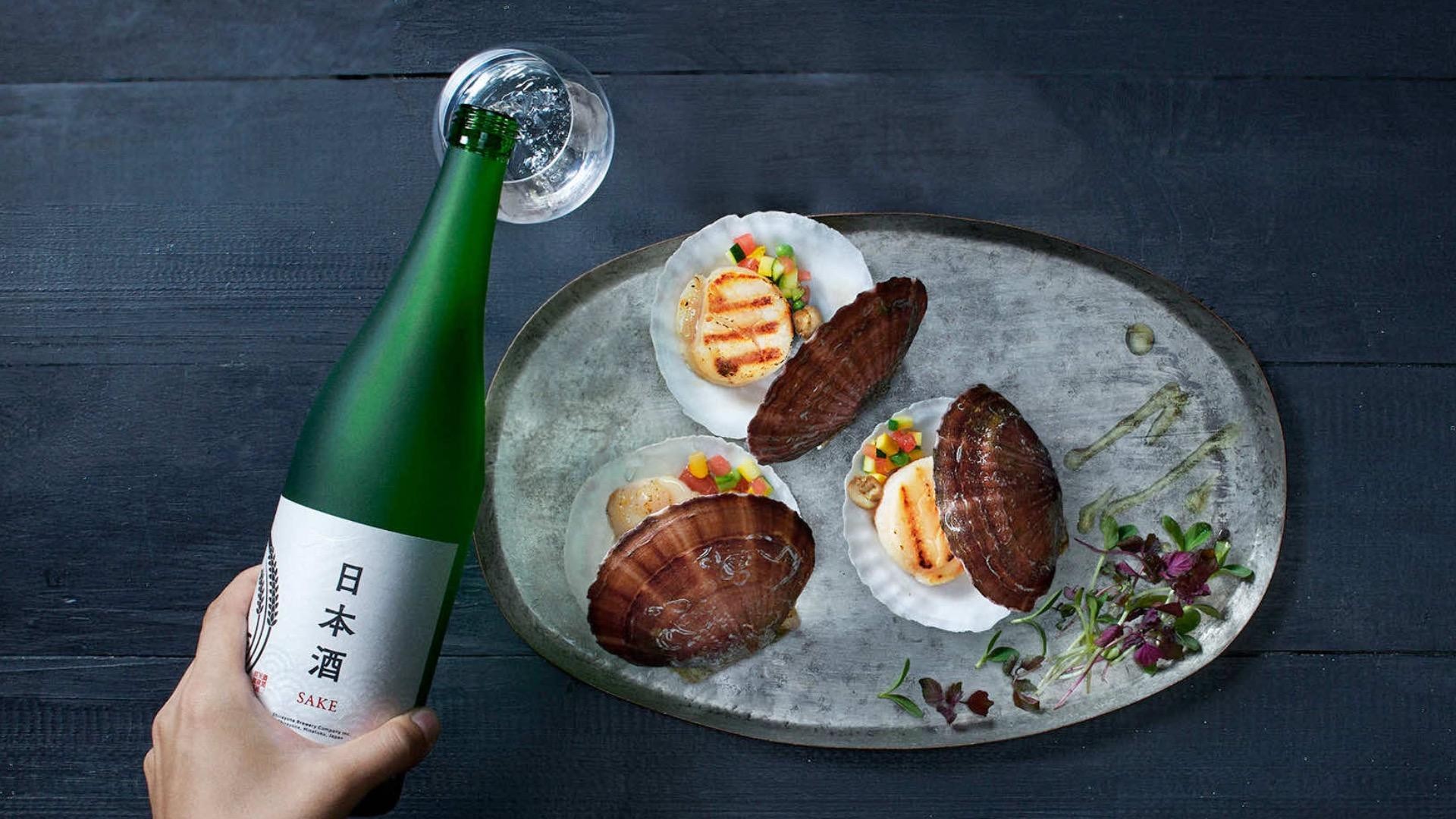
Artisanal Japanese sake solving contemporary haute cuisine's most challenging pairing puzzles

Five Challenging Dishes Where Sake’s Fermentation Chemistry Shines

#1

White Asparagus, Artichokes & Bitter Spring Greens (The Cynarin Trap)

Why Wine Struggles
Artichokes and white asparagus contain cynarin, aspartic acid, and organosulfur compounds. Next to dry wine tannins or high tartaric acid, cynarin tricks human taste receptors into perceiving a harsh, metallic bitterness followed by an artificial sweet aftertaste.
How Sake Solves It
With zero tannins, soft lactic acidity, and delicate rice oligosaccharides, ultra-soft-water sakes like Tabika Junmai Ginjo or lightly cloudy Ubusuna wrap around bitter vegetal polyphenols and turn white asparagus into pure cream.
#2

Oscietra Caviar, Raw Sea Urchin (Uni) & Oysters (Iron-Catalyzed Oxidation)

Why Wine Struggles
Even a tiny trace of ferrous iron (Fe²⁺) and free sulfites (SO₂) in white wine or Champagne reacts with the unsaturated marine lipids in caviar and uni to generate fishy hexanal off-notes.
How Sake Solves It
Brewed with iron-free spring water (< 0.01 ppm), Kura Master 2026 President’s Prize winner Shichiken Sparkling Hoshi no Kagayaki and Mimurosugi Dio Abita deliver zero metallic clash while amplifying marine glutamate umami eightfold.
#3

Koji Sauces, Aged Miso, Soy & Korean Jang (Shared Aspergillus Enzyme DNA)

Why Wine Struggles
From Noma’s koji-fermented garums in Copenhagen to aged ganjang (soy sauce), doenjang, and gochujang in Seoul’s modern Korean tasting menus, high-peptide fermented sauces overwhelm delicate white wines and clash with oak tannins in reds.
How Sake Solves It
Because soy sauce, miso, Korean jang, and sake are all born from the exact same Aspergillus oryzae protease enzymes and Maillard amino-carbonyl reactions, pairing them with Gensai Tokubetsu Junmai or Ki-oku 14% Genshu creates a seamless molecular bridge.
#4

Lobster Bisque & Abalone with Liver (Geu) Sauce (Sublimating Marine Innards)

Why Wine Struggles
Roasted abalone dressed in its own rich, slightly bitter green liver emulsion—a signature dish in both French and Korean haute cuisine—overpowers most white wines while turning red wines astringent.
How Sake Solves It
Cedar kioke-fermented sakes (Aramasa, Ubusuna) and modern Yamahai (Gensai, Tachibanaya) bring savory lactic-succinic depth and subtle woody spice that transform abalone liver into truffle-like luxury.
#5

Clear Consommé, Matsutake Broth & Ichiban Dashi (The 40°C Thermal Pairing)

Why Wine Struggles
Sipping a 10°C chilled white wine immediately after a spoonful of 60°C consommé shocks the palate thermally and shuts down volatile broth aromatics—and you cannot heat a Montrachet to 40°C without destroying it.
How Sake Solves It
Sake is the only world-class fermented beverage that shines across a 50°C thermal spectrum (from 5°C to 55°C). Pouring a structured Junmai at 40°C (*nurukan*) to match the exact temperature of a clear mushroom consommé or kelp dashi creates "zero-delta thermal harmony" on the tongue.
"We once viewed sake as an exotic Asian aperitif. Today we recognize it for what it truly is: the missing chemical link that solves modern gastronomy’s hardest pairing puzzles." — European & Tokyo 3-Star Michelin Head Sommeliers
1,215 Breweries · 2,891 Labels · Neutral Archive
Linked from 1,215 Breweries · 2,891 Labels · 8,673 Reviews

Featured Breweries, Specs & Flavor Balance

Flagship LabelBrewery & RegionSignature Rice & WaterBrewery Profile
HokusetsuHokusetsu Shuzo Co., Ltd. (2377-2 Tokuwa, Sado-shi, Niigata 952-0706, Japan)Yamada Nishiki, Sado-Grown Gohyakumangoku & Koshitanrei (Crested Ibis Eco-Certified Rice) · Soft Subterranean Mountain Water from the Kosado Range on Sado IslandBrewery Profile
SadoHenmi Sake Brewery Co., Ltd. (84-Ko Nagaishi, Sado-shi, Niigata 952-0305, Japan)Sado Island-Grown Gohyakumangoku, Koshitanrei & Yamada Nishiki · Subterranean Water from the Kuninaka Plain & Mt. Kinpoku RangeBrewery Profile
ShichikenYamanashi Meijo Co., Ltd. (2283 Daigahara, Hakushu-cho, Hokuto City, Yamanashi 408-0312, Japan)Hakushu-Grown Yumesansui, Yamada Nishiki, Hitogokochi (Estate & Contract-Farmed) · Mt. Kaikomagatake Subterranean Soft Water (Ojira River System, Top 100 Famous Waters)Brewery Profile
AramasaAramasa Co., Ltd. (6-2-35 Omachi, Akita-shi, Akita 010-0921, Japan)Pesticide-Free & Estate-Grown Akita Rice (Kairyo Shinko, Rikuu No. 132, Misato Nishiki, Akita Sakekomachi) · Mount Taihei Subterranean Soft Water (Akita City)Brewery Profile
UbusunaHananoka Shuzo Co., Ltd. (2226-2 Nishiyoshiji, Nagomi-machi, Tamana-gun, Kumamoto 861-0906, Japan)Nagomi-machi Natural-Farmed Homase, Higo Kabashiko, Yamada Nishiki · Brewery Shrine Spring Water (Kikuchi River Basin Subterranean Water from the Former Bairin Tenmangu Well)Brewery Profile
KazenomoriYucho Sake Brewery Co., Ltd. (1160 Nakahonmachi, Gose-shi, Nara 639-2216, Japan)Akitsuho, Tsuyuhakaze, Yamadanishiki, Omachi · Deep subterranean water from the Mt. Kongo and Mt. Katsuragi range (hard water, approx. 214 mg/L)Brewery Profile
MimurosugiImanishi Sake Brewery Co., Ltd. (510 Miwa, Sakurai-shi, Nara 633-0001, Japan)Tsuyuhakaze, Yamadanishiki, Omachi · Subsurface water from sacred Mt. Miwa (medium-soft water)Brewery Profile
TabikaHayakawa Sake Brewery Co. (468 Ojima, Komono-cho, Mie-gun, Mie 510-1323, Japan)Kaminoho, Yamadanishiki, Omachi, Gohyakumangoku · Subsurface water from Mount Shakagatake in the Suzuka Mountains (soft water)Brewery Profile
GensaiSuehiro Sake Brewery Co., Ltd. (12-38 Nisshin-machi, Aizuwakamatsu-shi, Fukushima 965-0861, Japan)Yumenoka, Fukunoka, Yamadanishiki, Gohyakumangoku, Kamenoo · Subsurface snowmelt soft water from Mt. Hakase and the Aizu BasinBrewery Profile
KiokuYamazaki & Co. (Sonnoh Kuramoto) (57 Kakita, Nishihazu-cho, Nishio-shi, Aichi 444-0703, Japan)Aichi-grown Yumesansui, Yumeginga, Yamada Nishiki · Subterranean water from the Mt. Sangane range (soft water)Brewery Profile
2377-2 Tokuwa, Sado-shi, Niigata 952-0706, Japan · Hokusetsu Shuzo Co., Ltd. (Est. 1872)
Hokusetsu辛口スッキリ旨味
Soft Subterranean Mountain Water from the Kosado Range on Sado Island Yamada Nishiki, Sado-Grown Gohyakumangoku & Koshitanrei (Crested Ibis Eco-Certified Rice) Kyokai No. 9 Yeast & Niigata Prefectural Yeasts

Founded in 1872 on Sado Island, Niigata, Hokusetsu is a globally celebrated flagship brewed with soft Kosado mountain subterranean water, Yamada Nishiki, and eco-certified Sado Koshitanrei and Gohyakumangoku rice. Renowned worldwide as the exclusive house sake of Chef Nobu Matsuhisa's global NOBU restaurants, it combines iconic YK35 Daiginjo aromatics with ultrasonic and musical maturation techniques for a silk-smooth entry and a crisp, island-dry finish—unbeatable alongside black cod with miso, Sado winter yellowtail, and toro sashimi.

Flavor Balance (1–5 Rice Grains)Shows which flavor direction the balance leans toward (1 to 5 rice grains), never a quality rank or score.
Serving & Glassware:Recommended Temperature: 10–13°C (Chilled / Hanabie to Suzubie) / Recommended Glassware: Thin-rimmed, medium-bowled white wine glass (such as Riedel O Daiginjo). Avoid over-chilling below 6°C so the delicate esters are not muted. Upon pouring, experience crystalline purity from Soft Subterranean Mountain Water from the Kosado Range on Sado Island and lifted orchard-fruit aromatics; after 15 minutes as the glass warms to 14°C, silky Yamada Nishiki, Sado-Grown Gohyakumangoku & Koshitanrei (Crested Ibis Eco-Certified Rice) mid-palate umami opens gracefully.
Global Gastronomy Pairings
• Sado Island sweet shrimp & wild flounder sashimi with torched Niigata nodoguro (blackthroat seaperch) nigiri
• Jeju silver belt-fish sashimi and delicate pan-fried scallop & cod jeon with citrus soy
• Poached lobster tail and white asparagus warm salad with yuzu-infused citrus hollandaise
“Opened Hokusetsu Daiginjo YK35 alongside Junmai Daiginjo Koshitanrei—polished to 35% Yamadanishiki and fermented with No. 9 yeast, YK35 delivers breathtaking melon-and-peach elegance with a crystalline Kosado spring-water finish.”
Domestic Review · SAKETIME佐渡海峡の酒仙
“Poured at NOBU dining rooms around the globe, Hokusetsu YK35 set the modern benchmark for luxury Daiginjo—silky, aromatic, and peerless alongside miso-marinated black cod and yellowtail sashimi.”
Global Sommelier · Vivino / Global Fine DiningMarcus V.
“Tasted Hokusetsu Junmai Ginjo Koshitanrei and their centrifuge-extracted bottling on Sado Island—frictionless purity, delicate island-rice sweetness, and a crisp Niigata dry snap that pairs seamlessly with sweet shrimp and winter yellowtail.”
SNS Buzz · X (Twitter)@sado_island_sake
84-Ko Nagaishi, Sado-shi, Niigata 952-0305, Japan · Henmi Sake Brewery Co., Ltd. (Est. 1872)
Sado食中酒旨味バランス
Subterranean Water from the Kuninaka Plain & Mt. Kinpoku Range Sado Island-Grown Gohyakumangoku, Koshitanrei & Yamada Nishiki Kyokai Yeasts (No. 9 & No. 7 Strains) & Niigata Prefectural Yeasts

Named in honor of Sado Island, brewed to accompany the island's abundant seafood and local cuisine. Brewed by Henmi Sake Brewery Co., Ltd. in Niigata using Subterranean Water from the Kuninaka Plain & Mt. Kinpoku Range and Sado Island Gohyakumangoku, Koshitanrei, and Yamada Nishiki, it brings together versatile, cuisine-elevating table-sake poise, savory, resonant rice umami, harmonious balance of umami, acidity, and finish with memorable poise.

Flavor Balance (1–5 Rice Grains)Shows which flavor direction the balance leans toward (1 to 5 rice grains), never a quality rank or score.
Serving & Glassware:Recommended Temperature: 8–12°C (Crisp Chilled) or 45–48°C (Jokan Warmed) / Recommended Glassware: Narrow-tulip white wine stem, thin porcelain hirahai cup, or tin (suzu) vessel. Chilled to 9°C, Subterranean Water from the Kuninaka Plain & Mt. Kinpoku Range delivers razor-sharp mineral precision and a bone-dry finish; as it warms to 13°C—or when heated in a tin carafe to 45°C—savory Sado Island-Grown Gohyakumangoku, Koshitanrei & Yamada Nishiki grain character emerges to frame coastal cuisine.
Global Gastronomy Pairings
• Sado Island sweet shrimp & wild flounder sashimi with torched Niigata nodoguro (blackthroat seaperch) nigiri
• Seasonal Korean croaker sashimi & warm pan-seared min-eo jeon with tangy minari salad
• Mediterranean-style Acqua Pazza of line-caught white fish poached with clams, capers, and olives
“Tasted 'Sado' by Henmi Sake Brewery Co., Ltd.: opening with the pure touch of Subterranean Water from the Kuninaka Plain & Mt. Kinpoku Range, it reveals savory layers from Sado Island Gohyakumangoku, Koshitanrei, and Yamada Nishiki and versatile, cuisine-elevating table-sake poise, savory, resonant rice umami, harmonious balance of umami, acidity, and finish before finishing with crisp precision.”
Domestic Review · SAKETIME / 国内口コミ地酒専門店バイヤー評
“Highly rated on global sake platforms for its poised structure shaped by Subterranean Water from the Kuninaka Plain & Mt. Kinpoku Range in Niigata, offering versatile, cuisine-elevating table-sake poise, savory, resonant rice umami, harmonious balance of umami, acidity, and finish that pairs seamlessly with sushi, sashimi, and contemporary cuisine.”
Global Sommelier · Vivino / Global SakeGlobal Sake Sommelier
“Loved on X and Instagram for its dynamic temperature evolution—showing crisp mineral clarity when chilled and generous Sado Island Gohyakumangoku, Koshitanrei, and Yamada Nishiki umami as it warms.”
SNS Buzz · X (Twitter) / Instagram@craft_sake_journal
2283 Daigahara, Hakushu-cho, Hokuto City, Yamanashi 408-0312, Japan · Yamanashi Meijo Co., Ltd. (Est. 1750)
Shichikenガスフルーティさわやか
Mt. Kaikomagatake Subterranean Soft Water (Ojira River System, Top 100 Famous Waters) Hakushu-Grown Yumesansui, Yamada Nishiki, Hitogokochi (Estate & Contract-Farmed) Proprietary House Yeast & Kyokai No. 1801

Founded in 1750 in Hakushu at the foot of the Southern Japanese Alps in Yamanashi, Shichiken ('Seven Sages of the Bamboo Grove') harnesses crystal-clear Mount Kaikomagatake snowmelt water. Renowned globally for its bottle-fermented sparkling sakes—including 'Mori no Kanade' aged in Suntory Hakushu whisky barrels—as well as its crisp 'Furinbizan' Junmai and 'Onakaya' Junmai Daiginjo, it pairs seamlessly with French gastronomy, roast poultry, and sushi.

Flavor Balance (1–5 Rice Grains)Shows which flavor direction the balance leans toward (1 to 5 rice grains), never a quality rank or score.
Serving & Glassware:Recommended Temperature: 5–8°C (Well-Chilled / Yukibie) / Recommended Glassware: Tall flute or thin-rimmed tulip Champagne stem. Chill thoroughly before opening to preserve pinpoint effervescence shaped by Mt. Kaikomagatake Subterranean Soft Water (Ojira River System, Top 100 Famous Waters). Immediately upon pouring, enjoy the vibrant spritz and lifted aromatics; after 10–15 minutes as it warms toward 10°C, silky Hakushu-Grown Yumesansui, Yamada Nishiki umami and bright acid tension unfold across the mid-palate.
Global Gastronomy Pairings
• Kelp-cured Yatsugatake spring-water Kai salmon and traditional Koshu soy-simmered abalone (nigai)
• Aged Jeju flounder hoe (raw slices) dressed with cold-pressed perilla oil and crisp minari water dropwort
• Hokkaido scallop & Oscietra caviar crudo with finger lime and white truffle vinaigrette
“Every bottle of Shichiken radiates the pure, mineral-soft character of Hakushu mountain water. From the silky 'Kinu no Aji' Junmai Daiginjo to the pinpoint mousse of 'Hoshi no Kagayaki' and 'Mori no Kanade' sparkling sakes, the craftsmanship is world-class.”
Domestic Review · SAKETIME / 国内口コミ白州の名水ファン
“Through collaborations with Alain Ducasse and its Hakushu whisky-cask-aged sparkling expressions, Shichiken has redefined sake's role in haute gastronomy—offering notes of white peach, vanilla bean, and whisper-light forest smoke.”
Global Sommelier · Vivino / Alain Ducasse & Global GastronomyPierre-Luc G., Paris
“Visited Shichiken's historic brewery in Hakushu and brought home Mori no Kanade Sparkling! The marriage of Hakushu whisky-barrel oak and delicate ginjo fruitiness alongside smoked cheese is pure heaven.”
SNS Buzz · X (Twitter) / Instagram@yamanashi_terroir
6-2-35 Omachi, Akita-shi, Akita 010-0921, Japan · Aramasa Co., Ltd. (Est. 1852)
Aramasaガス酸味ワイン
Mount Taihei Subterranean Soft Water (Akita City) Pesticide-Free & Estate-Grown Akita Rice (Kairyo Shinko, Rikuu No. 132, Misato Nishiki, Akita Sakekomachi) Kyokai No. 6 Yeast (Birthplace Brewery, 100% Exclusive Use)

As the birthplace of Kyokai No. 6 yeast, Aramasa represents the pinnacle of modern sake brewing through 100% kimoto fermentation in cedar vats using exclusively Akita-grown rice. Its vibrant citrus acidity, low-alcohol elegance, and silky sweetness evoke fine white Burgundy, pairing effortlessly with sashimi, crudo, and modern gastronomy.

Flavor Balance (1–5 Rice Grains)Shows which flavor direction the balance leans toward (1 to 5 rice grains), never a quality rank or score.
Serving & Glassware:Recommended Temperature: 10–14°C (Cool Cellar) & 42–45°C (Bain-Marie Warmed / Nurukan) / Recommended Glassware: Thin-rimmed white Burgundy or Riedel O Daiginjo wine glass. Right after opening at 10°C, savor the vibrant micro-effervescence and taut lactic/citric tension shaped by Mount Taihei Subterranean Soft Water (Akita City); after 15 minutes as it reaches 14°C, multi-dimensional Pesticide-Free & Estate-Grown Akita Rice (Kairyo Shinko, Rikuu No. 132) umami and savory kimoto complexity blossom.
Global Gastronomy Pairings
• Charcoal-grilled Hinai-jidori chicken kiritanpo hotpot and smoked iburigakko with sake-lees cream cheese
• Charcoal-seared Hanwoo 1++ brisket point (chadolbagi) paired with aromatic minari and chilled dongchimi radish
• Pan-roasted Breton blue lobster with Champagne, tarragon, and cultured butter beurre blanc
“Opened a bottle of No. 6 X-type and was floored by the burst of Shine Muscat and white peach aromatics, backed by multi-dimensional kimoto acidity and crystalline purity from cedar vat fermentation. An absolute masterpiece of contemporary Japanese brewing.”
Domestic Review · SAKETIME / 国内口コミ六号酵母の求道者
“A revelation for Burgundy and Champagne lovers: laser-focused lactic and malic tension, delicate wooden-vat complexity, and incredible concentration at just 13% ABV. Pairs brilliantly with Dover sole and shellfish.”
Global Sommelier · Vivino / Fine Wine & SakeMarc L.
“Finally scored Amaneko and Ecru through a bottle shop lottery! That lively micro-effervescence on opening and bright, juicy sweet-tart balance is unmatched—turned my wine-drinking friends into instant sake fanatics.”
SNS Buzz · X (Twitter) / Reddit r/Sake@tokyo_sake_hunter
2226-2 Nishiyoshiji, Nagomi-machi, Tamana-gun, Kumamoto 861-0906, Japan · Hananoka Shuzo Co., Ltd. (Est. 1902)
Ubusunaガスシャンパン酸味
Brewery Shrine Spring Water (Kikuchi River Basin Subterranean Water from the Former Bairin Tenmangu Well) Nagomi-machi Natural-Farmed Homase, Higo Kabashiko, Yamada Nishiki Kyokai No. 9 (Kumamoto Yeast) & Indigenous Brewery Yeast

Created in Nagomi, Kumamoto by Kiyotaka Kanda of Hananoka Shuzo to embody 'earth, native ecosystem, and ancestral regenerative agriculture,' Ubusuna stands at the absolute pinnacle of contemporary craft sake. Brewed with pesticide-free local Yamada Nishiki and revived Edo-era heirloom rices (Homase and Kabashiko) using kimoto and wooden vats, its Champagne-like pinpoint mousse and electric orchard-and-yuzu complexity transfix fine-dining tables worldwide.

Flavor Balance (1–5 Rice Grains)Shows which flavor direction the balance leans toward (1 to 5 rice grains), never a quality rank or score.
Serving & Glassware:Recommended Temperature: 10–14°C (Cool Cellar) & 42–45°C (Bain-Marie Warmed / Nurukan) / Recommended Glassware: Thin-rimmed white Burgundy or Riedel O Daiginjo wine glass. Right after opening at 10°C, savor the vibrant micro-effervescence and taut lactic/citric tension shaped by Brewery Shrine Spring Water (Kikuchi River Basin Subterranean Water from the Former Bairin Tenmangu Well); after 15 minutes as it reaches 14°C, multi-dimensional Nagomi-machi Natural-Farmed Homase, Higo Kabashiko, Yamada Nishiki umami and savory kimoto complexity blossom.
Global Gastronomy Pairings
• Charcoal-grilled Kumamoto Akaushi beef steak and Binchotan-roasted Amakusa Daio giant heritage chicken
• Charcoal-seared Hanwoo 1++ brisket point (chadolbagi) paired with aromatic minari and chilled dongchimi radish
• Pan-roasted Breton blue lobster with Champagne, tarragon, and cultured butter beurre blanc
“Miraculously secured Ubusuna Homase 5-Nojo and Yamada Nishiki 2-Nojo. Fine, persistent bubbles carry waves of Japanese citrus, white peach, wild herbs, and living earth minerality—one of the most spine-tingling bottles of my life.”
Domestic Review · SAKETIME / 国内口コミテロワール日本酒探求家
“Encountering Ubusuna gave me the same electric shock as my first glass of Jacques Selosse. The vibrating energy born from regenerative paddies, native microbes, and wooden vats stands shoulder to shoulder with the greatest wines on earth.”
Global Sommelier · Vivino / Global SakeGuillaume Delacroix
“Popped Ubusuna Kabashiko 4-Nojo! To think an heirloom Edo-era Kumamoto rice once praised as the finest in the realm has been revived into something so dewy, aromatic, and transcendent—pure genius from Hananoka Shuzo.”
SNS Buzz · X (Twitter) / Instagram@craft_sake_chronicle
1160 Nakahonmachi, Gose-shi, Nara 639-2216, Japan · Yucho Sake Brewery Co., Ltd. (Est. 1719)
Kazenomoriガス酸味フルーティ
Deep subterranean water from the Mt. Kongo and Mt. Katsuragi range (hard water, approx. 214 mg/L) Akitsuho, Tsuyuhakaze, Yamadanishiki, Omachi Kyokai No. 7, Bodaimoto Indigenous Lactic Acid Bacteria and Yeast

Brewed in Gose City, Nara by 1719-founded Yucho Shuzo, Kaze no Mori unites ancient Muromachi-era Bodaimoto heritage with cutting-edge fermentation science across an all-Muroka Nama Genshu lineup. Fermented with ultra-hard Katsuragi Mountain subsurface water (over 200mg/L hardness) and local Akitsuho rice, its signature micro-effervescence, Muscat and pear aromatics, and chiseled mineral finish captivate diners from sushi counters to Michelin-starred French and Italian tables.

Flavor Balance (1–5 Rice Grains)Shows which flavor direction the balance leans toward (1 to 5 rice grains), never a quality rank or score.
Serving & Glassware:Recommended Temperature: 10–14°C (Cool Cellar) & 42–45°C (Bain-Marie Warmed / Nurukan) / Recommended Glassware: Thin-rimmed white Burgundy or Riedel O Daiginjo wine glass. Right after opening at 10°C, savor the vibrant micro-effervescence and taut lactic/citric tension shaped by Deep subterranean water from the Mt. Kongo and Mt. Katsuragi range (hard water, approx. 214 mg/L); after 15 minutes as it reaches 14°C, multi-dimensional Akitsuho, Tsuyuhakaze, Yamadanishiki, Omachi umami and savory kimoto complexity blossom.
Global Gastronomy Pairings
• Charcoal-grilled Yamato heritage chicken with narazuke sake-lees glaze and Yamato Wagyu shabu-shabu
• Crispy-scaled Jeju tilefish (okdom) and creamy abalone liver (geu) rice porridge risotto
• Pan-roasted Breton blue lobster with Champagne, tarragon, and cultured butter beurre blanc
“Kaze no Mori Akitsuho 657 opens with a lively pop and a ribbon of fine micro-bubbles in the glass: fresh Muscat and green apple aromatics, a juicy burst of rice sweetness, and a taut, stony finish driven by ultra-hard Katsuragi mountain water. Experiencing this level of craftsmanship at an everyday price is nothing short of a miracle.”
Domestic Review · SAKETIME大和の美酒巡礼
“Chobee Yamamoto's work at Yucho Shuzo—bridging 15th-century Nara temple brewing texts with precision low-temperature fermentation—is thrilling. The high-hardness mineral tension and natural effervescence of Kaze no Mori ALPHA and 807 deliver a gastronomic experience unlike anything else in the world of wine or sake.”
Global Sommelier · Vivino / World Sommelier AssociationMaximilian H.
“Opened Kaze no Mori ALPHA 8 alongside Yamadanishiki 807 tonight—807's crystalline purity and mineral grip at 80% polishing defy belief, while the ALPHA series pushes boundaries with every release. Still the #1 bottle that turns friends into lifelong sake lovers.”
SNS Buzz · X (Twitter)@kazenomori_holic
510 Miwa, Sakurai-shi, Nara 633-0001, Japan · Imanishi Sake Brewery Co., Ltd. (Est. 1660)
Mimurosugiラムネガス華やか
Subsurface water from sacred Mt. Miwa (medium-soft water) Tsuyuhakaze, Yamadanishiki, Omachi Kyokai No. 9 strain, Miwa Heritage Yeast and Bodaimoto

Founded in 1660 at the foot of sacred Mount Miwa and Omiwa Shrine—revered as the ancestral deity of Japanese sake brewing—Imanishi Shuzo crafts Mimurosugi using shrine-mountain subterranean water and locally grown Yamadanishiki and Tsuyuhakaze rice. Luminous lychee, white peach, and Muscat aromas flow into a crystal-clear, juicy palate with a brisk finish that pairs effortlessly with sushi, sashimi, and delicate crudo.

Flavor Balance (1–5 Rice Grains)Shows which flavor direction the balance leans toward (1 to 5 rice grains), never a quality rank or score.
Serving & Glassware:Recommended Temperature: 10–14°C (Cool Cellar) & 42–45°C (Bain-Marie Warmed / Nurukan) / Recommended Glassware: Thin-rimmed white Burgundy or Riedel O Daiginjo wine glass. Right after opening at 10°C, savor the vibrant micro-effervescence and taut lactic/citric tension shaped by Subsurface water from sacred Mt. Miwa (medium-soft water); after 15 minutes as it reaches 14°C, multi-dimensional Tsuyuhakaze, Yamadanishiki, Omachi umami and savory kimoto complexity blossom.
Global Gastronomy Pairings
• Charcoal-grilled Yamato heritage chicken with narazuke sake-lees glaze and Yamato Wagyu shabu-shabu
• Crispy-scaled Jeju tilefish (okdom) and creamy abalone liver (geu) rice porridge risotto
• Dover sole meunière with cultured hazelnut brown butter, Meyer lemon, and capers
“Mimurosugi Roman Junmai Ginjo Yamadanishiki and Dio Abita open with morning-dew clarity and delicate lychee and white peach notes—juicy on the mid-palate yet vanishing effortlessly thanks to soft Mount Miwa water. The absolute pinnacle of the 'clean and juicy' style.”
Domestic Review · SAKETIME三輪の酒神礼賛
“Mimurosugi Kioke Bodaimoto—fermented in vats coopered from sacred Mount Miwa cedar using ambient lactic bacteria and brewery yeast—is true terroir sake, weaving silky acidity with white peach and cedar-herb nuances for Michelin-level pairings.”
Global Sommelier · Vivino / Michelin Guide Sommelier SelectionCamille L.
“Stopped by Imanishi Shuzo after visiting Omiwa Shrine and picked up Mimurosugi 'Hanakyun' Origarami and Junmai Ginjo Tsuyuhakaze—the Tsuyuhakaze's pink-grapefruit acidity and subtle bitterness are addictive at the dinner table.”
SNS Buzz · X (Twitter)@nara_sake_pilgrim
468 Ojima, Komono-cho, Mie-gun, Mie 510-1323, Japan · Hayakawa Sake Brewery Co. (Est. 1915)
Tabika旨味甘味酸味
Subsurface water from Mount Shakagatake in the Suzuka Mountains (soft water) Kaminoho, Yamadanishiki, Omachi, Gohyakumangoku Mie Prefectural Yeast (MK-1, MK-3), Kyokai Yeast

Handcrafted by a tiny family team in Komono, Mie using ultra-soft Mt. Shakagatake snowmelt water and 100% gentle fune (box) pressing, Tabika is celebrated for its pillowy, rounded sweetness. Brewed with local Kaminoho, Omachi, and Yamada Nishiki, its soothing umami and gentle acidity pair beautifully with dashi-steamed clams and seasonal washoku.

Flavor Balance (1–5 Rice Grains)Shows which flavor direction the balance leans toward (1 to 5 rice grains), never a quality rank or score.
Serving & Glassware:Recommended Temperature: 10–13°C (Chilled / Hanabie to Suzubie) / Recommended Glassware: Thin-rimmed, medium-bowled white wine glass (such as Riedel O Daiginjo). Avoid over-chilling below 6°C so the delicate esters are not muted. Upon pouring, experience crystalline purity from Subsurface water from Mount Shakagatake in the Suzuka Mountains (soft water) and lifted orchard-fruit aromatics; after 15 minutes as the glass warms to 14°C, silky Kaminoho, Yamadanishiki, Omachi, Gohyakumangoku mid-palate umami opens gracefully.
Global Gastronomy Pairings
• Ise-Shima spiny lobster sashimi and chilled ginjo-steamed Matoya oysters
• Jeju silver belt-fish sashimi and delicate pan-fried scallop & cod jeon with citrus soy
• Poached lobster tail and white asparagus warm salad with yuzu-infused citrus hollandaise
“Tabika Junmai Ginjo Kaminoho and Omachi Muroka Nama caress the palate like feathers thanks to ultra-soft mountain water and gentle fune pressing, unfolding into warm orchard fruit and sweet rice notes.”
Domestic Review · SAKETIME / 国内口コミ三重地酒コンプリート
“A triumph of small-batch family craftsmanship using 100% traditional fune pressing; its seamless, stress-free texture shines alongside steamed shellfish and white-fish sashimi.”
Global Sommelier · Vivino / Global SakeDaniel Kim
“Across every rice variety, Tabika maintains an unmistakable thread of softness and clarity—especially the seasonal nama releases and boutique shop collaborations.”
SNS Buzz · X (Twitter) / Instagram@suzuka_water_sake
12-38 Nisshin-machi, Aizuwakamatsu-shi, Fukushima 965-0861, Japan · Suehiro Sake Brewery Co., Ltd. (Est. 1850)
Gensaiガスフルーティ旨味
Subsurface snowmelt soft water from Mt. Hakase and the Aizu Basin Yumenoka, Fukunoka, Yamadanishiki, Gohyakumangoku, Kamenoo Suehiro Proprietary Yeast (M310 strain & Kaeigura Yeast), Utsukushima Yume Yeast (F7-01)

Named in honor of Harunaka (Gensai) Tanaka—the visionary Edo-period chief retainer who reformed the Aizu domain and elevated its brewing craft—Gensai represents the pinnacle of Suehiro Shuzo's Daiginjo artistry. Brewed with Special A-grade Yamadanishiki polished to 35%–40%, it delivers regal orchard-fruit aromatics, gossamer silkiness, and a poised finish worthy of celebratory kaiseki banquets.

Flavor Balance (1–5 Rice Grains)Shows which flavor direction the balance leans toward (1 to 5 rice grains), never a quality rank or score.
Serving & Glassware:Recommended Temperature: 10–13°C (Chilled / Hanabie to Suzubie) / Recommended Glassware: Thin-rimmed, medium-bowled white wine glass (such as Riedel O Daiginjo). Avoid over-chilling below 6°C so the delicate esters are not muted. Upon pouring, experience crystalline purity from Subsurface snowmelt soft water from Mt. Hakase and the Aizu Basin and lifted orchard-fruit aromatics; after 15 minutes as the glass warms to 14°C, silky Yumenoka, Fukunoka, Yamadanishiki, Gohyakumangoku, Kamenoo mid-palate umami opens gracefully.
Global Gastronomy Pairings
• Aged Joban coastal flounder sashimi and Aizu white asparagus & kuruma prawn tempura with mountain salt
• Jeju silver belt-fish sashimi and delicate pan-fried scallop & cod jeon with citrus soy
• Wild sea bream carpaccio with bergamot olive oil, shaved bottarga, and micro herbs
“Tasted Suehiro Daiginjo Gensai. Radiant melon and white-peach aromatics meet a crystal-clear, silky palate that showcases over 170 years of competition-level brewing mastery.”
Domestic Review · SAKETIME 福島県大吟醸・鑑評会受賞酒レビューAizu_Domain_Heritage
“Gensai Daiginjo embodies the timeless elegance of competition-grade Daiginjo—seamless, floral, and weightless on the palate alongside caviar and white-truffle hors d'oeuvres.”
Global Sommelier · IWC / Luxury Sake ConnoisseurVictoria Sterling
“Opened a paulownia-boxed bottle of Daiginjo Gensai for a family milestone celebration. Its regal presentation and effortlessly graceful, floral palate delighted every guest at the table.”
SNS Buzz · X (Twitter) / Instagram@celebration_sake
57 Kakita, Nishihazu-cho, Nishio-shi, Aichi 444-0703, Japan · Yamazaki & Co. (Sonnoh Kuramoto) (Est. 1903)
Kioku原酒14度夢吟香フルーティー
Subterranean water from the Mt. Sangane range (soft water) Aichi-grown Yumesansui, Yumeginga, Yamada Nishiki Kyokai No. 1801, Kyokai No. 10-derived yeast

Created by 6th-generation kuramoto-toji Masayuki Yamazaki at Yamazaki Goshi Kaisha in Nishio, Aichi, 'Kioku' weaves the brewery's iconic 'Oku' heritage with memories of his late father into a modern low-ABV vision. Fermented slowly at low temperatures with soft Mt. Sangane water and Aichi-grown Yumesansui and Yumeginga rice, this 14% ABV genshu delivers crystalline white peach and Shine Muscat aromatics with brisk, juicy acidity. Pair it with Mikawa Bay sea bream carpaccio, unagi shirayaki (white-grilled eel) from Isshiki, or seasonal fruit shira-ae.

Flavor Balance (1–5 Rice Grains)Shows which flavor direction the balance leans toward (1 to 5 rice grains), never a quality rank or score.
Serving & Glassware:Recommended Temperature: 10–13°C (Chilled / Hanabie to Suzubie) / Recommended Glassware: Thin-rimmed, medium-bowled white wine glass (such as Riedel O Daiginjo). Avoid over-chilling below 6°C so the delicate esters are not muted. Upon pouring, experience crystalline purity from Subterranean water from the Mt. Sangane range (soft water) and lifted orchard-fruit aromatics; after 15 minutes as the glass warms to 14°C, silky Aichi-grown Yumesansui, Yumeginga, Yamada Nishiki mid-palate umami opens gracefully.
Global Gastronomy Pairings
• Thinly sliced Mikawa Bay wild tiger pufferfish (tessa) and tender-simmered Himakajima octopus
• Jeju silver belt-fish sashimi and delicate pan-fried scallop & cod jeon with citrus soy
• Wild sea bream carpaccio with bergamot olive oil, shaved bottarga, and micro herbs
“Tried the new 'Kioku' release from the makers of Oku. Despite being a 14% ABV genshu, it delivers lush white peach and Muscat fruitiness that vanishes into a feather-soft finish from Mt. Sangane water.”
Domestic Review · SAKETIME / 国内口コミ三河の地酒探訪
“A brilliant modern light-bodied expression from a sixth-generation master in Aichi. The clean sweetness of local Yumesansui and Yumeginga rice meets delicate acidity, making it effortless alongside white fish crudo and herb-driven starters.”
Global Sommelier · Vivino / Fine Wine & SakeJulian Meyer
“Bought a bottle of Kioku at a Nagoya bottle shop after hearing the touching story behind the name. Served chilled in a white wine glass, its juicy transparency and clean acid line are pure joy!”
SNS Buzz · X (Twitter) / Reddit r/Sake@nagoya_sake_modern

Recommended Pairing

Roasted Abalone with Liver Butter Emulsion × Kioke / Yamahai Junmai
Zero-iron lactic and succinic acids elevate rich abalone liver emulsion into truffle-like depth
Charcoal-Grilled White Asparagus with Hollandaise & Oscietra Caviar
Tannin-free ultra-soft sake and bottle-fermented bubbles tame asparagus cynarin and caviar salinity
SakeStream
A neutral global sake editorial archive and database documenting 1,215 breweries, 2,891 labels, brewing water & rice provenance, and 8,673 verified tasting records without proprietary ranking tiers.
Weekly Sake Dispatch

Weekly Sake & Tasting Dispatch

Curated seasonal releases, sub-zero arrivals, and tasting city guides across global editions.
ArticlesBreweries