From chilled to hot. A complete guide to how temperature changes sake's expression.
Sake's Unique Temperature Range
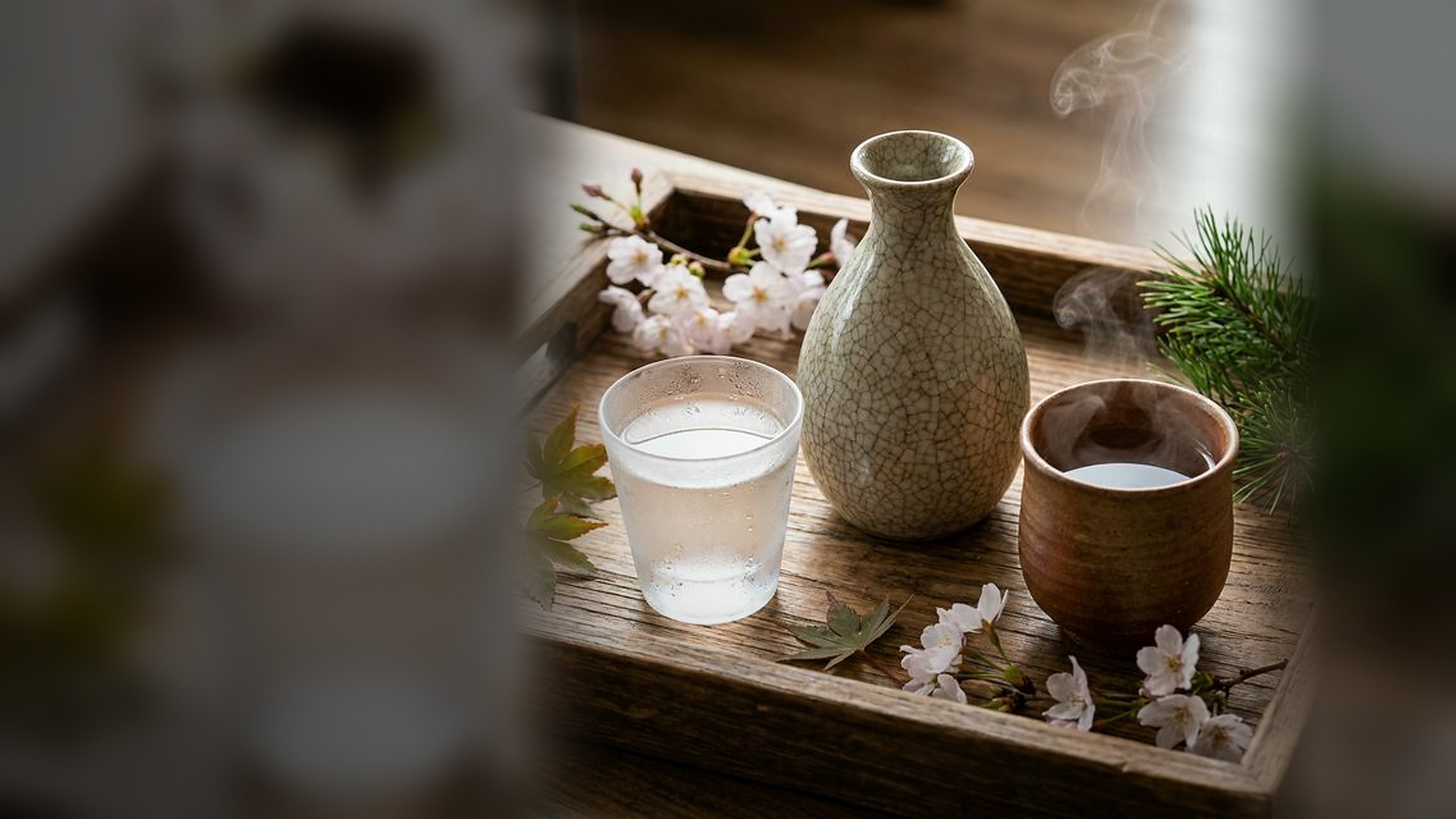
Among all alcoholic beverages worldwide, only sake can be enjoyed across a temperature range from 5°C to 55°C. Wine is served at room temperature or chilled; beer is refrigerated; whisky comes neat or on the rocks. But sake has 10 named temperature zones — yukibie, hanabie, hitohadakan, tobikirikan — and the very idea of naming temperatures tells you how deeply this drink is bound to them. It is a "flavor map" discovered over centuries, a system for enjoying one bottle ten different ways.
Quick Specs & 2026 Rating Summary
The Cold World (5°C–15°C)
Yukibie (5°C) — Near-freezing temperatures suppress both sweetness and acidity, creating a sharp, crisp profile. Ideal for sparkling sake and delicate daiginjo. Aromas close down, making this a zone for texture over fragrance.
Hanabie (10°C) — The most popular zone. Ginjo's fruity aromas bloom most beautifully here. Modern sakes like Jikon, Senkin, and Aramasa No.6 are best at this temperature. Pour into a white wine glass and the top notes gain even sharper definition.
Suzubie (15°C) — Slightly cool. Rice-derived umami of junmai gently emerges. The best balance for food pairing — a versatile temperature that carries through an entire washoku course.
Room Temperature Magic (20°C–25°C)
Room temperature, called "hiya," reveals sake's true character most honestly. Umami and bitterness that hide when chilled come forward — a temperature that tests a sake's real quality. Professional tasters check sake at room temperature first precisely because nothing can hide there.
The Universe of Warm Sake (30°C–55°C)
Hinatakan (30°C) — Slightly below body temperature. Gentle warmth spreads across the palate; aromas begin to open at this gateway zone.
Hitohadakan (35°C) — Body temperature. A sense of unity as sake seems to melt into you. Junmai umami peaks.
Nurukan (40°C) — The golden zone of warm sake. Aromas rise gently, flavors round out. Yamahai and kimoto sakes truly shine here, their lactic complexity unwinding into dashi-like umami.
Jokan (45°C) — Solidly warm. Crisp dry honjozo and table sakes show sharp definition at this level.
Atsukan (50°C) — Steam-rising hot. Perfect for cold winter nights with hot pot, warming you to the core.
Tobikirikan (55°C+) — The adventurous zone. Alcohol steps forward boldly, pairing brilliantly with miso-based hot pots and rich, fatty fish.
The Science Behind Temperature Changes
There is solid science behind why flavor shifts with temperature. Sweetness peaks near body temperature. Acidity intensifies as temperature drops. Bitterness softens with heat, and umami maximizes around 40°C. The same sake delivers completely different taste experiences at different temperatures.
Aroma is equally temperature-dependent. The key ginjo aromatics — ethyl caproate (apple-like) and isoamyl acetate (banana-like) — are highly volatile: restrained when cold, surging as the sake warms. Meanwhile, amino-acid umami and body become easier to perceive with gentle heating. Kimoto and yamahai sakes transform when warmed because the complex acidity of lactic and succinic acids relaxes into mellowness. Temperature is a lighting rig, deciding which of the components sleeping inside a sake gets the spotlight.
The 10-Step Temperature Chart: 5C to 55C
Japanese has ten beautiful names for sake serving temperatures — a vocabulary no other drink in the world possesses. Keep this chart at hand and take a single bottle on a journey across several of them.
| Name | Temp | Best Styles & Example Bottles | Vessel |
|---|---|---|---|
| Yukibie ("snow-chilled") | 5C | Sparkling and nama (Aramasa No.6, Kankiku muroka nama) | Flute or small wine glass |
| Hanabie ("blossom-chilled") | 10C | Daiginjo and ginjo (Kokuryu Daiginjo, Dassai 45) | White-wine glass |
| Suzubie ("cool-chilled") | 15C | Junmai ginjo (Jikon, Hiroki Black Label) | Wine glass or thin hirasakazuki |
| Hiya (ambient) | 20C | Junmai and kimoto (Classic Senkin) | Flat cup or guinomi |
| Hinata-kan ("sunshine-warm") | 30C | Gentle junmai and honjozo | Ceramic choko |
| Hitohada-kan ("body-warm") | 35C | Kimoto and yamahai junmai (Daishichi Kimoto) | Ceramic choko and tokkuri |
| Nuru-kan ("lukewarm") | 40C | Umami-rich junmai (Hiroki Tokubetsu Junmai) | Tokkuri with choko |
| Jo-kan ("upper-warm") | 45C | Crisp honjozo and yamahai | Tin chirori with choko |
| Atsu-kan ("hot") | 50C | Dry honjozo and futsushu | Thick-walled choko |
| Tobikiri-kan ("extra-hot") | 55C | Robust, rich-dry yamahai | Thick choko or guinomi |
The Art of Chilling: Ice Water Beats the Fridge
Straight from a 4C refrigerator, the aroma stays shut. The best method is ten minutes in ice water — the whole bottle settles uniformly around 10C, where ginjo aromatics bloom most beautifully. Factor in the gentle warming in the glass as you drink.
The Art of Warming: The Three-Minute Golden Rule
Fill a tokkuri to 80%, stand it in just-boiled water, and three minutes brings it to about 40C. If using a microwave, heat in 30-second bursts and rotate the flask between them to erase hot spots. Never blast it — rushed heating raises only the alcohol burn.
The Round Trip: One Bottle, Three Temperatures
How to Warm Sake at Home
The recommended method is a hot water bath (yusen). Pour sake into a tokkuri and immerse in 60°C water for 2-3 minutes. Avoid microwaves — they create uneven heating. No thermometer? Touch the base of the tokkuri: "rather hot" is about 45°C; "too hot to hold" is past 55°C.
Letting warmed sake settle slightly — kanzamashi — is a connoisseur's trick of its own: raise it to 50°C, let it fall to 45°C, and the edges soften into roundness. Start with a single junmai and taste it at three stages — hanabie, room temperature, nurukan. You will meet three expressions you would never guess came from the same bottle. Once you hold the freedom of temperature, sake becomes the most eloquent companion on your table.
Featured Breweries, Specs & Flavor Balance
| Flagship Label | Brewery & Region | Signature Rice & Water | Brewery Profile |
|---|---|---|---|
| Juyondai | Takagi Shuzo Co., Ltd. (1826 Oaza Tominami, Murayama-shi, Yamagata 995-0111, Japan) | Tatsu no Otoshigo, Sakemirai, Ushu Homare, Aiyama, Yamada Nishiki · Mount Hayama Subterranean Spring Water 'Sakura-Shimizu' (Soft Water) | Brewery Profile |
| Aramasa | Aramasa Co., Ltd. (6-2-35 Omachi, Akita-shi, Akita 010-0921, Japan) | Pesticide-Free & Estate-Grown Akita Rice (Kairyo Shinko, Rikuu No. 132, Misato Nishiki, Akita Sakekomachi) · Mount Taihei Subterranean Soft Water (Akita City) | Brewery Profile |
| Jikon | Kiyasho Sake Brewery Co., Ltd. (314-1 Honmachi, Nabari-shi, Mie 518-0726, Japan) | Yamadanishiki, Aiyama, Omachi, Hattannishiki, Senbonnishiki · Subsurface water from the Nunobiki mountain range (brewery well water, soft water) | Brewery Profile |
| Senkin | Senkin Co., Ltd. (106 Baba, Sakura-shi, Tochigi 329-1321, Japan) | Domaine Sakura Estate-Grown Rice (Kamenoo, Yamada Nishiki, Omachi) · Kinugawa River System Subterranean Ultra-Soft Water (Domaine Aquifer) | Brewery Profile |
| Kokuryu | Kokuryu Sake Brewing Corporation (1-38 Matsuoka-Kasuga, Eiheiji-cho, Yoshida-gun, Fukui 910-1133, Japan) | Hyogo Tojo Yamada Nishiki, Fukui Sakahomare, Gohyakumangoku, Koshinoshizuku · Mt. Hakusan Range & Kuzuryu River Subterranean Soft Water | Brewery Profile |
| Dassai | Dassai Inc. (Asahi Shuzo Co., Ltd.) (2167-4 Osogoe, Shuto-cho, Iwakuni-shi, Yamaguchi 742-0422, Japan) | Yamada Nishiki (100% Exclusive Use) · Osogoe Natural Subterranean Soft Water (Shuto-cho, Iwakuni) | Brewery Profile |
| Hiroki | Hiroki Shuzo Honten Co., Ltd. (Ko 3574 Shichuniban, Aizubange-machi, Kawanuma-gun, Fukushima 969-6543, Japan) | Yamadanishiki, Gohyakumangoku, Omachi, Fukunoka, Yumenoka · Subsurface snowmelt water from the Mt. Iide range in the Aizu Basin (soft water) | Brewery Profile |
| Daishichi | Daishichi Sake Brewery Co., Ltd. (1-66 Takeda, Nihonmatsu-shi, Fukushima 964-0904, Japan) | Yamadanishiki, Gohyakumangoku, Yumenoka (100% Super-Flat Rice Polishing) · Mt. Adatara subterranean spring water and Hikage well water (medium-hard water) | Brewery Profile |
| Tobikiri | Tenryo Shuzo Co., Ltd. (1289-1 Hagiwara, Hagiwara-cho, Gero-shi, Gifu 509-2517, Japan) | Hida-Grown Hidahomare & Hyogo Yamada Nishiki · Mt. Ontake & Hida River System Subterranean Ultra-Soft Water | Brewery Profile |
Pioneered by 15th-generation master brewer Akitsuna Takagi, Juyondai revolutionized modern sake by shifting the paradigm from dry austerity to lush, nectar-like aromatics of ripe musk melon and white peach. Crafted with proprietary rice strains like Sakemirai, Ryuno-otoshigo, and Ushuhomare alongside Special A-grade Yamadanishiki using the prized Shichitare Nijikkan drip technique, its velvety umami and crystalline finish elevate omakase sushi and Wagyu kaiseki.
As the birthplace of Kyokai No. 6 yeast, Aramasa represents the pinnacle of modern sake brewing through 100% kimoto fermentation in cedar vats using exclusively Akita-grown rice. Its vibrant citrus acidity, low-alcohol elegance, and silky sweetness evoke fine white Burgundy, pairing effortlessly with sashimi, crudo, and modern gastronomy.
Named after the Zen phrase 'living fully in the present moment,' Jikon by 6th-generation brewer Tadakatsu Onishi in Nabari, Mie stands at the absolute summit of modern sake. Radiant muscat and white peach aromatics, crystalline Nunobiki mountain soft-water sweetness, and electric acidity achieve a golden-ratio balance that enchants on its own or alongside Matsusaka Wagyu and fine sushi.
Pioneering the 'Domaine' terroir concept in Tochigi using estate-grown Kamenoo, Yamada Nishiki, and Omachi rice irrigated by the same ultra-soft Kinugawa aquifer as its brewing water, Senkin crafts natural sake through 100% kimoto fermentation in cedar vats with minimal rice polishing. Vibrant green apple and muscat tartness intertwines with savory wood-aged minerality, making it an extraordinary match for French seafood dishes, soft bloomy-rind cheeses, and herb-driven appetizers.
Founded in 1804 in Eiheiji, Fukui, Kokuryu pioneered commercial luxury Daiginjo in Japan, uniting soft Kuzuryu River water with prized Tojo Yamada Nishiki and local Sakahomare rice. Legendary bottlings like Ishidaya, Nizaemon, Shizuku, and Hachijuhachigo deliver crystalline elegance that elevates Echizen snow crab and haute kaiseki.
From the mountain valleys of Iwakuni, Yamaguchi, Dassai revolutionized global sake through data-driven precision brewing and ultra-polished Yamada Nishiki rice. Led by the iconic Dassai 23, its opulent aromas of white peach and Poire Williams, silky-smooth mid-palate, and crystalline finish pair effortlessly with fine Edomae sushi and Michelin-starred French cuisine.
Named 'Droplets of Joy Flying Forth,' 9th-generation brewer Kenji Hiroki ignited Japan's unfiltered unpasteurized (muroka nama genshu) boom and propelled Fukushima to national acclaim. Combining polished Yamadanishiki for mid-palate depth and Gohyakumangoku for crisp structure, it delivers fresh lychee and pear aromatics with vibrant acidity that pairs effortlessly with seasonal sashimi and charcoal-grilled yakitori.
Dedicated exclusively to traditional Kimoto-method brewing since 1752 in Nihonmatsu, Daishichi revolutionized the craft with its proprietary 'ultra-flat rice polishing' (cho-henpei seimai) technology. Offering rich, creamy lactic depth, velvety texture, and complex savory resonance that blossoms from chilled to gentle warm (nurukan), its sakes pair majestically with grilled unagi, Wagyu steak, and aged Comté cheese.
Crafted in Gero, Gifu by Tenryo Sake Brewery to shine from chilled service all the way up to piping-hot tobikiri-kan, 'Tobikiri' pairs Hida mountain soft water and Hidahomare rice with hearty Hida miso dishes.
Recommended Pairing
Weekly Sake & Tasting Dispatch
Curated seasonal releases, sub-zero arrivals, and tasting city guides across global editions.