A deep dive into the three starter-mash methods of sake brewing: Sokujo, Kimoto, and Yamahai. From the 1909 birth of Yamahai at Fukushima’s Suehiro Shuzo to the modern natural-sake renaissance.
How the Fermentation Starter (Shubo) Defines Sake’s Structural Spine
Before a sake brewery builds its main fermenting mash (moromi), it must first cultivate a dense, pure population of yeast in a starter mash known as the shubo (酒母) or moto (酛). To protect the young yeast from wild spoilage bacteria, the starter requires a high concentration of lactic acid.
Whether a brewer adds pure lactic acid directly (Sokujo) or invites wild, brewery-resident lactic acid bacteria to produce it naturally over a full month (Kimoto & Yamahai) fundamentally transforms the texture, acidity, and culinary power of the finished sake.
| Starter Method | Lactic Acid Source | Cultivation Time & Process | Structural Spine & Ideal Temp | Benchmark Breweries & Labels |
|---|---|---|---|---|
| Sokujo (速醸) | Pure food-grade lactic acid added | ~14 days / Low contamination risk; ultra-clean | High-toned floral clarity & silky entry (8–15°C) | ~90% of modern ginjo breweries (Dassai, Kankiku, Tenbi, Tabika) |
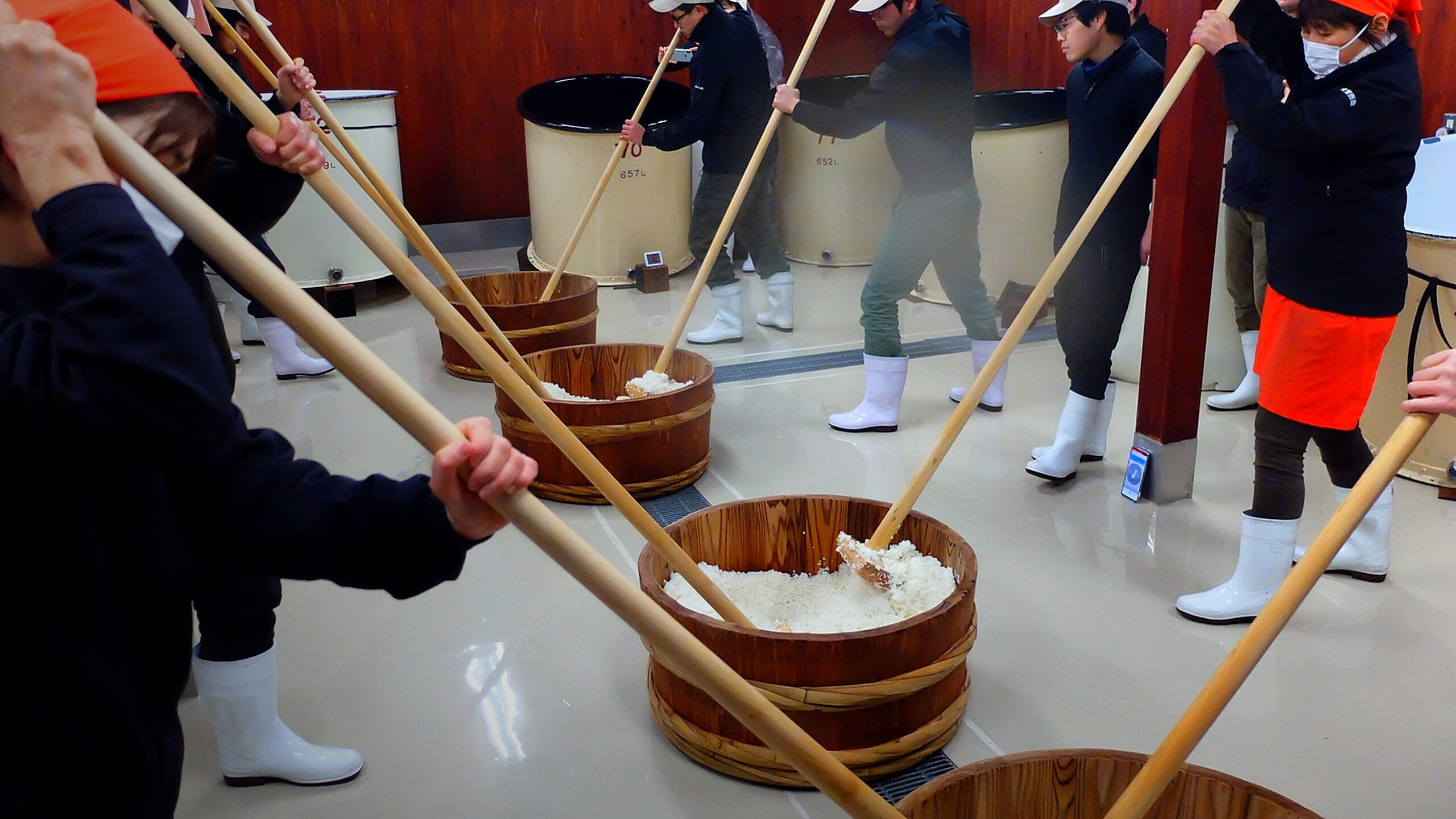
| Kimoto (生酛) | Wild brewery-resident lactic bacteria | ~28 days / Manual pole-ramming (yama-oroshi) | Layered lactic/malic tension & crisp cut (10–45°C) | Daishichi (Fukushima), Kikumasamune (Nada), Aramasa (100% Kimoto) |
| Yamahai (山廃) | Wild brewery-resident lactic bacteria | ~28 days / Koji enzymes dissolve rice without poles | Deep amino umami & architectural spine (12–50°C) | Suehiro Gensai (1909 birthplace), Tengumai, Kenbishi, Tachibanaya |
| High-Temp Yamahai | 55°C mash + wild lactic bacteria | ~7–20 days / High-temperature enzymatic conversion | White-wine / Sherry-like electric acidity (10–45°C) | Kidoizumi AFS (Chiba — pioneer of high-temp Yamahai) |
Comparing the Three Starter Methods: Sokujo, Kimoto & Yamahai
Sokujo (速醸 — "Fast Starter") — The Clean Standard Behind ~90% of Modern Sake
Kimoto (生酛 — "Traditional Pole-Rammed Starter") — 300 Years of Microbial Artistry
Yamahai (山廃 — "Yama-oroshi Abolished Starter") — Enzymatic Depth & Umami Architecture
Historical Spotlight: How Fukushima’s Suehiro Shuzo Birthed Yamahai in 1909
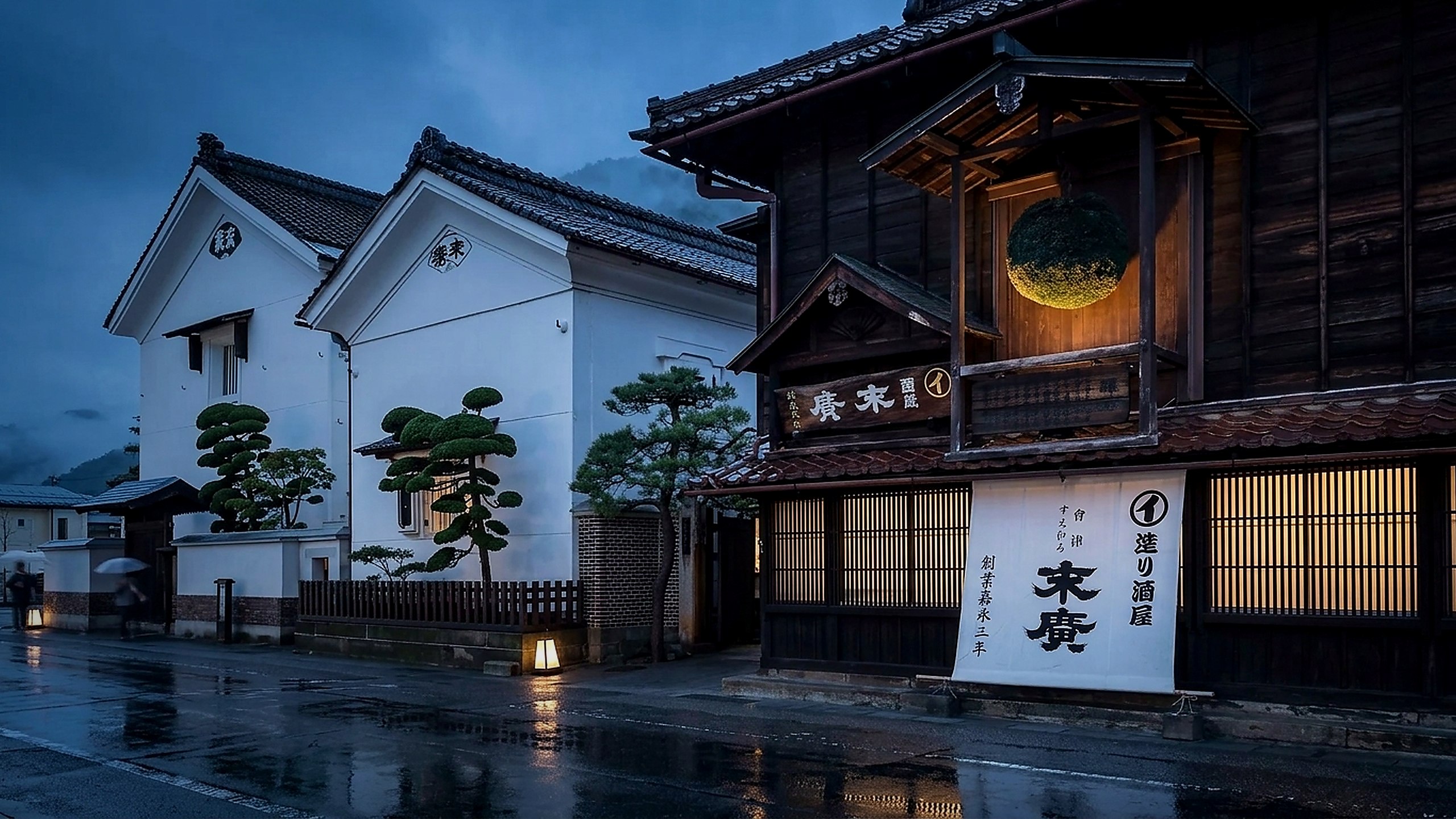
Few overseas drinkers realize that the Yamahai method was scientifically proven in 1909 (Meiji 42) inside the historic Kaei-gura cellar of Suehiro Shuzo in Aizu-Wakamatsu, Fukushima—one of the three featured breweries hosted at the 2nd Seoul Tasting (Asoto × Syuen × Koyama) held on November 4, 2026.
Working alongside Kinichiro Kagi of the National Brewing Research Institute, Suehiro Shuzo demonstrated that koji enzymes could saccharify the starter mash without manual pole-mashing, revolutionizing Japanese brewing science. More than 115 years later, Suehiro Shuzo’s prestige line *Gensai (玄宰)*—winner of BRONZE in the Junmai category at SAKE COMPETITION 2026—carries that unmistakable Aizu lineage of satin texture and architectural depth.
Meanwhile, at SAKE COMPETITION 2026, Miyagi’s Kawakei Shoten captured 1st Place in the Modern Natural category with *Tachibanaya Junmai Ginjo Kura no Hana—a sleek, crystal-clear Yamahai* that proves wild lactic fermentation is the vanguard of 2026 gastronomy.
"The outdated stereotype of Kimoto and Yamahai as 'heavy, funky, old-fashioned sake' is dead. From the aristocratic poise of Daishichi and Suehiro Shuzo’s Gensai to Aramasa’s No.6, Kidoizumi’s AFS, and Kawakei Shoten’s Tachibanaya, wild lactic fermentation is what gives modern sake remarkable gastronomic complexity." — SakeStream Brewing History Archive
Featured Breweries, Specs & Flavor Balance
| Flagship Label | Brewery & Region | Signature Rice & Water | Brewery Profile |
|---|---|---|---|
| Suehiro | Suehiro Sake Brewery Co., Ltd. (12-38 Nisshin-machi, Aizuwakamatsu-shi, Fukushima 965-0861, Japan) | Yumenoka, Fukunoka, Yamadanishiki, Gohyakumangoku, Kamenoo · Subsurface snowmelt soft water from Mt. Hakase and the Aizu Basin | Brewery Profile |
| Aramasa | Aramasa Co., Ltd. (6-2-35 Omachi, Akita-shi, Akita 010-0921, Japan) | Pesticide-Free & Estate-Grown Akita Rice (Kairyo Shinko, Rikuu No. 132, Misato Nishiki, Akita Sakekomachi) · Mount Taihei Subterranean Soft Water (Akita City) | Brewery Profile |
| Koganesawa | Kawakei Shoten Co. (6-7 Takatama, Nigo, Misato-machi, Toda-gun, Miyagi 989-4206, Japan) | Yamada Nishiki, Omachi, Sasanishiki, Miyama Nishiki · Ou Mountains Subterranean Well Water (Medium-Soft Water) | Brewery Profile |
| Daishichi | Daishichi Sake Brewery Co., Ltd. (1-66 Takeda, Nihonmatsu-shi, Fukushima 964-0904, Japan) | Yamadanishiki, Gohyakumangoku, Yumenoka (100% Super-Flat Rice Polishing) · Mt. Adatara subterranean spring water and Hikage well water (medium-hard water) | Brewery Profile |
| Tengumai | Shata Shuzo Co., Ltd. (60-1 Bomaru-machi, Hakusan-shi, Ishikawa 924-0823, Japan) | Hyogo Yamada Nishiki, Ishikawa Gohyakumangoku, Hyakumangoku no Shiro · Sacred Mt. Hakusan & Tedori River Subterranean Well Water | Brewery Profile |
| Kuromatsu Kenbishi | Kenbishi Sake Brewing Co., Ltd. (3-12-5 Mikagehonmachi, Higashinada-ku, Kobe-shi, Hyogo 658-0046, Japan) | Hyogo-Grown Yamada Nishiki, Aiyama, and Omachi · Mount Rokko Nada Miyamizu and Subterranean Hard Water | Brewery Profile |
| Sensuke | Izumi Sake Brewery Co., Ltd. (1-9-6 Mikagetsukamachi, Higashinada-ku, Kobe-shi, Hyogo 658-0044, Japan) | Hyogo-Grown Yamada Nishiki and Gohyakumangoku · Mount Rokko Nada Miyamizu Mineral Spring Water | Brewery Profile |
| Aizu | Aizu Shuzo Co., Ltd. (603 Anazawa, Nagata, Minamiaizu-machi, Minamiaizu-gun, Fukushima 967-0006, Japan) | Yumenoka, Fukunoka, Gohyakumangoku, Omachi, Yamadanishiki · Subsurface snowmelt water from Mt. Arakai in Okuaizu (ultra-soft water, hardness ~20 mg/L) | Brewery Profile |
| Dassai | Dassai Inc. (Asahi Shuzo Co., Ltd.) (2167-4 Osogoe, Shuto-cho, Iwakuni-shi, Yamaguchi 742-0422, Japan) | Yamada Nishiki (100% Exclusive Use) · Osogoe Natural Subterranean Soft Water (Shuto-cho, Iwakuni) | Brewery Profile |
| Tenbi | Choshu Brewery Co., Ltd. (72 Yoshika, Kikugawa-cho, Shimonoseki-shi, Yamaguchi 750-0316, Japan) | Yamada Nishiki, Saito no Shizuku · Koya River System & Kikugawa Natural Subterranean Medium-Soft Water | Brewery Profile |
Founded in 1850 in Aizuwakamatsu, Suehiro Shuzo is hallowed ground in Japanese brewing history as the very brewery where the experimental 'Yamahai' starter method was developed in the Meiji era. From its iconic 'Densho Yamahai Junmai' brimming with savory lactic depth to its silky Daiginjo 'Gensai,' Suehiro shines both chilled and warmed alongside Aizu heritage cuisine and sukiyaki.
As the birthplace of Kyokai No. 6 yeast, Aramasa represents the pinnacle of modern sake brewing through 100% kimoto fermentation in cedar vats using exclusively Akita-grown rice. Its vibrant citrus acidity, low-alcohol elegance, and silky sweetness evoke fine white Burgundy, pairing effortlessly with sashimi, crudo, and modern gastronomy.
Brewed since 1902 in Misato Town by 5th-generation president Masanao Kawana and his daughter, head brewer Yuri Kawana, Koganezawa pioneered the pairing of traditional Yamahai starter fermentation with Miyagi's fragrant Kyokai No. 12 yeast. This signature combination yields bright banana-and-Muscat aromatics, a silky lactic mid-palate free of heavy funk, and a crisp finish backed by a historic 17-year streak of National Gold Medals.
Dedicated exclusively to traditional Kimoto-method brewing since 1752 in Nihonmatsu, Daishichi revolutionized the craft with its proprietary 'ultra-flat rice polishing' (cho-henpei seimai) technology. Offering rich, creamy lactic depth, velvety texture, and complex savory resonance that blossoms from chilled to gentle warm (nurukan), its sakes pair majestically with grilled unagi, Wagyu steak, and aged Comté cheese.
Renowned across Japan as the gold standard of Yamahai brewing, Tengumai pours with a natural golden hue, rich aromas of ripe fruit and toasted grain, and bold lactic acidity. Its full-bodied umami shines from chilled to warm kanzake, standing up effortlessly to Kanazawa duck stew, braised yellowtail, and sukiyaki.
Kenbishi's signature multi-vintage blend, delivering golden amber color, rich savory depth, and a commanding finish that shines both chilled and warm.
Crafted in small batches by 1751-founded Izumi Shuzo in Kobe's Mikage-go using mineral-rich Miyamizu water and Hyogo Yamadanishiki rice, Sensuke is a boutique Nada sensation. Vigorous Miyamizu fermentation yields bright Muscat and white peach aromatics, lively micro-fizz, and plush savory fruit cut by crisp acidity—an electric pairing for Akashi sea bream carpaccio, tempura, and salt-grilled yakitori.
Known locally as Kinmon Aizu, this heritage label has served the mountain communities of Minamiaizu since 1688 with a clean, comforting profile. Brewed by Aizu Shuzo Co., Ltd. in Fukushima using Subsurface snowmelt water from Mt. Arakai in Okuaizu (ultra-soft water, hardness ~20 mg/L) and Yumenoka, Fukunoka, Gohyakumangoku, Omachi, and Yamada Nishiki, it brings together lively micro-effervescence with memorable poise.
From the mountain valleys of Iwakuni, Yamaguchi, Dassai revolutionized global sake through data-driven precision brewing and ultra-polished Yamada Nishiki rice. Led by the iconic Dassai 23, its opulent aromas of white peach and Poire Williams, silky-smooth mid-palate, and crystalline finish pair effortlessly with fine Edomae sushi and Michelin-starred French cuisine.
Launched in late 2020 in Shimonoseki, Yamaguchi by Choshu Shuzo, Tenbi skyrocketed to national stardom with its bright, uplifting house style. Bearing sun-and-moon labels for day and night expressions, it offers crisp green apple and white grape aromatics, delicate pinpoint effervescence, and vibrant malic acidity that pair beautifully with seafood ceviche, seasonal vegetable tempura, and modern izakaya fare.
Recommended Pairing
Weekly Sake & Tasting Dispatch
Curated seasonal releases, sub-zero arrivals, and tasting city guides across global editions.