Once universal across Japan, giant cedar fermentation vats (kioke) nearly went extinct in the 20th century as stainless steel took over. Today, a grassroots revival led by Japan’s most visionary young brewers has turned 100-year-old Yoshino cedar vats into the ultimate vessel of modern sake terroir.
From the Brink of Extinction to Japan’s Hottest Craft Movement
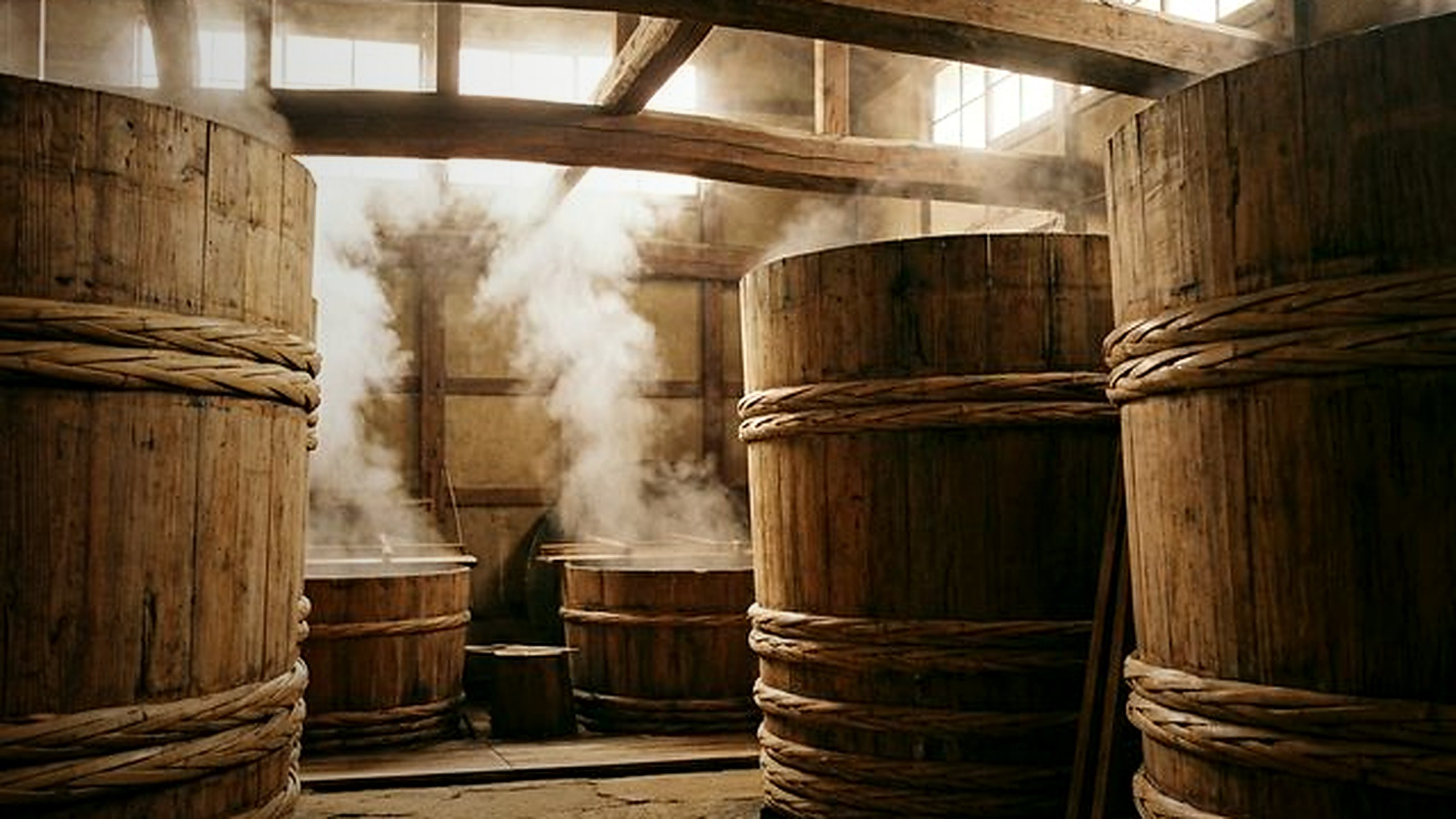
From the Edo period until the early 20th century, virtually every drop of Japanese sake, soy sauce, miso, and rice vinegar was fermented inside towering wooden vats called kioke (木桶)—crafted from century-old Japanese cedar planks bound together without a single nail or drop of glue using braided bamboo hoops (taketaga). During the post-war economic boom, however, breweries across Japan rapidly replaced their wooden vats with glass-lined enamel and stainless-steel tanks for easier sterilization, precise jacket cooling, and simpler tax-volume measurement.
By 2010, only a single commercial workshop in all of Japan—Fujii Woodwork (now Woodwork Co., led by Takeshi Ueshiba) in Sakai, Osaka—still possessed the tools and know-how to build giant fermentation vats. When its octogenarian master craftsman prepared to retire, 500 years of Japanese wooden-vat cooperage stood less than a decade from total extinction.
The turning point arrived in 2012 on the island of Shodoshima, where fifth-generation artisanal soy sauce brewer Yasuhisa Yamamoto (Yamaroku Shoyu) apprenticed himself in Osaka and launched the Kioke Craftsman Revival Project (*Kioke Shokunin Fukkatsu Project*). Every January, Yamamoto invited young brewers, carpenters, and chefs from across Japan and the world to Shodoshima to plane cedar staves and weave giant bamboo hoops with their own hands. Among the young sake brewers who answered that call were Yusuke Sato (*Aramasa*, Akita), Kazuki Usui (*Senkin*, Tochigi), Kiyotaka Kanda (*Hananoka / Ubusuna*, Kumamoto), and Masayuki Imanishi (*Imanishi Shuzo / Mimurosugi*, Nara)—the very leaders now redefining modern Japanese sake.
Three Scientific & Sensory Secrets Inside a Yoshino Cedar Kioke
Why are Japan’s most scientifically advanced breweries trading computer-controlled stainless steel back for 100-year-old Yoshino Cedar (吉野杉) vats? The answer combines microbiology, thermodynamics, and phenolic chemistry:
Microscopic Pores & The Living Brewery Microbiome (Kura-tsuki Flora)
Thermal Inertia & Gentle Natural Convection
Micro-Oxygenation & Subtle Cedar-Tannin Structure
"If stainless-steel fermentation is a digital track recorded inside an anechoic studio booth, kioke fermentation is a live symphony resonating inside a centuries-old wooden concert hall. The harmonic overtones and depth of finish belong to a different dimension." — Nara Traditional Kioke Brewing Circle
Four Flagship Breweries Leading the 2026 Kioke Renaissance
Aramasa Shuzo (Akita) — The First Sake Brewery with an In-House Cooperage
Hananoka Shuzo (Kumamoto) — Ubusuna & Edo-Era Heirloom Rice in Cedar
Senkin (Tochigi) — Organic Nature & Ancient Domaine Craft
Imanishi Shuzo (Nara) — Mimurosugi Bodaimoto × Yoshino Cedar Kioke
Sommelier Service Tips for Kioke & Traditional-Method Sakes
When serving kioke-fermented or traditional starter sakes, sommeliers recommend experiencing the bottle across two temperature stages: first at 10°C upon opening, and again at 15–18°C thirty minutes later. Chilled, the wild lactic and malic acids etched by the wooden vat’s microbiome shine with electric precision; as the glass warms toward cellar temperature, trace Yoshino cedar polyphenols and savory rice umami unfold in three-dimensional layers.
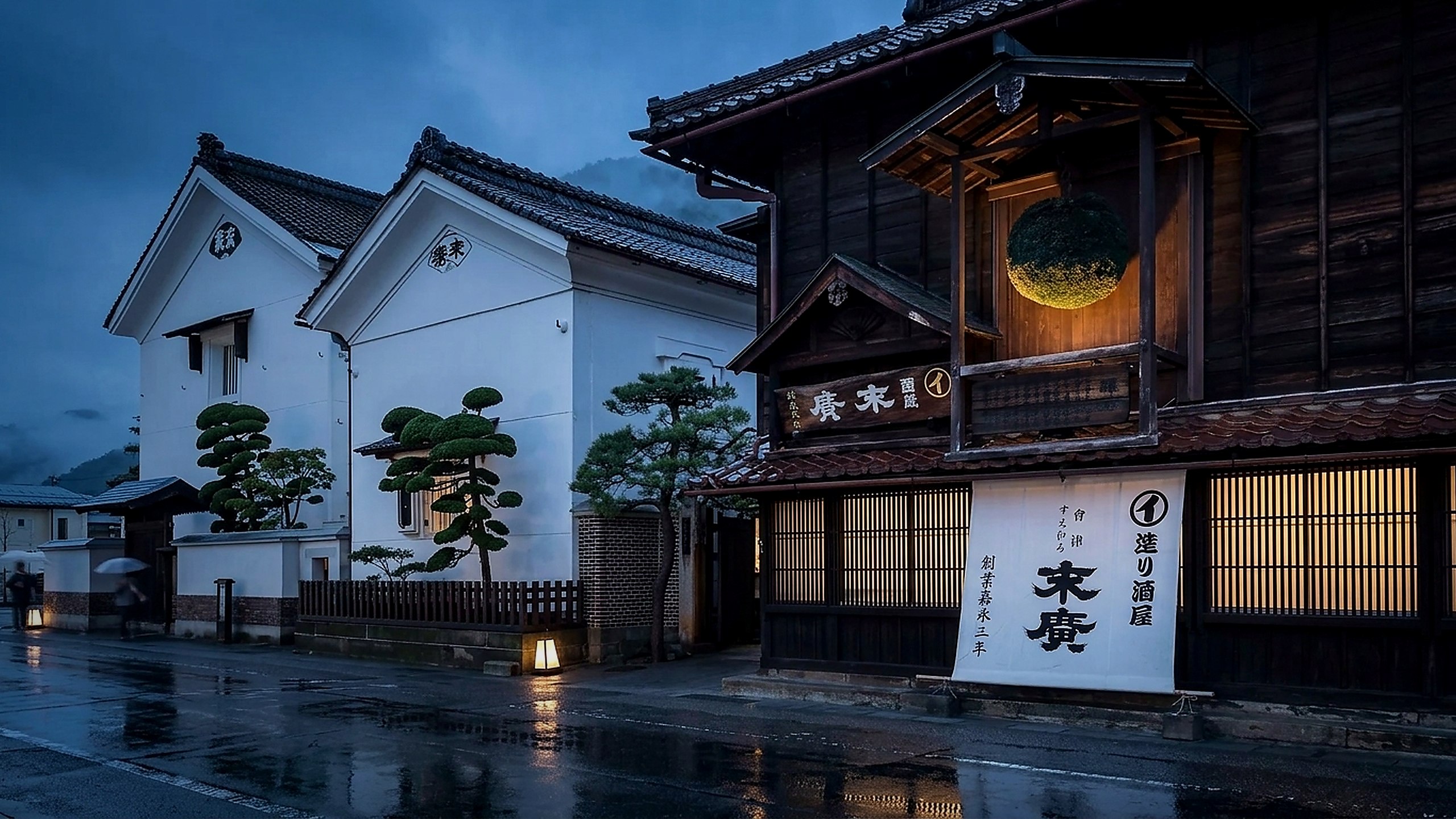
This reverence for slow, natural craftsmanship also defines benchmark artisan releases such as Suehiro Shuzo (*Gensai*, ~¥2,750 / 720ml), which pioneered the original Yamahai method in Aizu in 1909; Hayakawa Shuzo (*Tabika*, ~¥1,980 / 720ml), which presses 100% of its ultra-soft-water mashes in gentle fune box presses; and Yamazaki Goshi Kaisha (*Ki-oku*, ~¥1,980 / 720ml), which bottles undiluted 14% ABV genshu crafted from local Mikawa mountain rice.
Featured Breweries, Specs & Flavor Balance
| Flagship Label | Brewery & Region | Signature Rice & Water | Brewery Profile |
|---|---|---|---|
| Aramasa | Aramasa Co., Ltd. (6-2-35 Omachi, Akita-shi, Akita 010-0921, Japan) | Pesticide-Free & Estate-Grown Akita Rice (Kairyo Shinko, Rikuu No. 132, Misato Nishiki, Akita Sakekomachi) · Mount Taihei Subterranean Soft Water (Akita City) | Brewery Profile |
| Ubusuna | Hananoka Shuzo Co., Ltd. (2226-2 Nishiyoshiji, Nagomi-machi, Tamana-gun, Kumamoto 861-0906, Japan) | Nagomi-machi Natural-Farmed Homase, Higo Kabashiko, Yamada Nishiki · Brewery Shrine Spring Water (Kikuchi River Basin Subterranean Water from the Former Bairin Tenmangu Well) | Brewery Profile |
| Senkin | Senkin Co., Ltd. (106 Baba, Sakura-shi, Tochigi 329-1321, Japan) | Domaine Sakura Estate-Grown Rice (Kamenoo, Yamada Nishiki, Omachi) · Kinugawa River System Subterranean Ultra-Soft Water (Domaine Aquifer) | Brewery Profile |
| Mimurosugi | Imanishi Sake Brewery Co., Ltd. (510 Miwa, Sakurai-shi, Nara 633-0001, Japan) | Tsuyuhakaze, Yamadanishiki, Omachi · Subsurface water from sacred Mt. Miwa (medium-soft water) | Brewery Profile |
| TENBU | Nishi Shuzo Co., Ltd. (4970-17 Yokura, Fukiage-cho, Hioki City, Kagoshima 899-3309, Japan (Tenbu Sake Kura: 3142-10 Yokura, Fukiage-cho, Hioki City)) | Yamada Nishiki (Tojo Special A District, Hyogo), Aiyama, Akaiwa Omachi · Satsuma Peninsula Deep Subterranean Natural Soft Water ('HOUMEI') | Brewery Profile |
| Kiokeshikomi | Terada Honke Co., Ltd. (1964 Kozaki-Honjuku, Kozaki-machi, Katori-gun, Chiba 289-0221, Japan) | Pesticide-Free Organic Rice (Miyama Nishiki, Gohyakumangoku, Koshihikari, Kamenoo) · Sacred Forest Subterranean Well Water from Kozaki Shrine Grounds | Brewery Profile |
| Gensai | Suehiro Sake Brewery Co., Ltd. (12-38 Nisshin-machi, Aizuwakamatsu-shi, Fukushima 965-0861, Japan) | Yumenoka, Fukunoka, Yamadanishiki, Gohyakumangoku, Kamenoo · Subsurface snowmelt soft water from Mt. Hakase and the Aizu Basin | Brewery Profile |
| Tabika | Hayakawa Sake Brewery Co. (468 Ojima, Komono-cho, Mie-gun, Mie 510-1323, Japan) | Kaminoho, Yamadanishiki, Omachi, Gohyakumangoku · Subsurface water from Mount Shakagatake in the Suzuka Mountains (soft water) | Brewery Profile |
| Kioku | Yamazaki & Co. (Sonnoh Kuramoto) (57 Kakita, Nishihazu-cho, Nishio-shi, Aichi 444-0703, Japan) | Aichi-grown Yumesansui, Yumeginga, Yamada Nishiki · Subterranean water from the Mt. Sangane range (soft water) | Brewery Profile |
| Yamamoto | Yamamoto Brewery Co., Ltd. (269 Hachimori, Hachimori, Happo-cho, Yamamoto-gun, Akita 018-2678, Japan) | Akita Sakekomachi, Misato Nishiki, Ginnosei, Kamenoo (Including Estate-Grown Rice) · Shirakami-Sanchi UNESCO World Heritage Natural Spring Water (Direct 3km Pipeline Ultra-Soft Water) | Brewery Profile |
As the birthplace of Kyokai No. 6 yeast, Aramasa represents the pinnacle of modern sake brewing through 100% kimoto fermentation in cedar vats using exclusively Akita-grown rice. Its vibrant citrus acidity, low-alcohol elegance, and silky sweetness evoke fine white Burgundy, pairing effortlessly with sashimi, crudo, and modern gastronomy.
Created in Nagomi, Kumamoto by Kiyotaka Kanda of Hananoka Shuzo to embody 'earth, native ecosystem, and ancestral regenerative agriculture,' Ubusuna stands at the absolute pinnacle of contemporary craft sake. Brewed with pesticide-free local Yamada Nishiki and revived Edo-era heirloom rices (Homase and Kabashiko) using kimoto and wooden vats, its Champagne-like pinpoint mousse and electric orchard-and-yuzu complexity transfix fine-dining tables worldwide.
Pioneering the 'Domaine' terroir concept in Tochigi using estate-grown Kamenoo, Yamada Nishiki, and Omachi rice irrigated by the same ultra-soft Kinugawa aquifer as its brewing water, Senkin crafts natural sake through 100% kimoto fermentation in cedar vats with minimal rice polishing. Vibrant green apple and muscat tartness intertwines with savory wood-aged minerality, making it an extraordinary match for French seafood dishes, soft bloomy-rind cheeses, and herb-driven appetizers.
Founded in 1660 at the foot of sacred Mount Miwa and Omiwa Shrine—revered as the ancestral deity of Japanese sake brewing—Imanishi Shuzo crafts Mimurosugi using shrine-mountain subterranean water and locally grown Yamadanishiki and Tsuyuhakaze rice. Luminous lychee, white peach, and Muscat aromas flow into a crystal-clear, juicy palate with a brisk finish that pairs effortlessly with sushi, sashimi, and delicate crudo.
Created in 2020 by Nishi Shuzo—the legendary Kagoshima distillery behind Tomino Hozan shochu—Tenbu brings world-class precision to Japan's southernmost mainland prefecture. Crafted with ultra-soft Satsuma mountain water and elite Yamada Nishiki and Aiyama rice, its lush lychee-and-white-peach aromatics, velvety sweetness, and crystal-clear finish pair magnificently with Kagoshima black Wagyu, Kurobuta pork shabu-shabu, and silver-stripe round herring sashimi.
Fermented in traditional cedar vats by natural-sake pioneer Terada Honke, 'Kiokeshikomi' delivers profound earthy depth, smoky wooden-vat complexity, and transcendent warmth when heated. Supported by Sacred Forest Subterranean Well Water from Kozaki Shrine Grounds, it layers firm structure that shines even at hot atsukan temperatures, subtle smoky, earthy complexity, savory richness that blossoms when warmed to reflect the unmistakable terroir of Chiba.
Named in honor of Harunaka (Gensai) Tanaka—the visionary Edo-period chief retainer who reformed the Aizu domain and elevated its brewing craft—Gensai represents the pinnacle of Suehiro Shuzo's Daiginjo artistry. Brewed with Special A-grade Yamadanishiki polished to 35%–40%, it delivers regal orchard-fruit aromatics, gossamer silkiness, and a poised finish worthy of celebratory kaiseki banquets.
Handcrafted by a tiny family team in Komono, Mie using ultra-soft Mt. Shakagatake snowmelt water and 100% gentle fune (box) pressing, Tabika is celebrated for its pillowy, rounded sweetness. Brewed with local Kaminoho, Omachi, and Yamada Nishiki, its soothing umami and gentle acidity pair beautifully with dashi-steamed clams and seasonal washoku.
Created by 6th-generation kuramoto-toji Masayuki Yamazaki at Yamazaki Goshi Kaisha in Nishio, Aichi, 'Kioku' weaves the brewery's iconic 'Oku' heritage with memories of his late father into a modern low-ABV vision. Fermented slowly at low temperatures with soft Mt. Sangane water and Aichi-grown Yumesansui and Yumeginga rice, this 14% ABV genshu delivers crystalline white peach and Shine Muscat aromatics with brisk, juicy acidity. Pair it with Mikawa Bay sea bream carpaccio, unagi shirayaki (white-grilled eel) from Isshiki, or seasonal fruit shira-ae.
Located at the foot of the UNESCO World Heritage Shirakami Mountains, Yamamoto Shuzoten grows its own estate sake rice and brews with pristine Shirakami spring water piped directly into the brewery. Famous for 'Pure Black' and 'Midnight Blue', it combines juicy fruit notes from Akita Sakekomachi and Misatonishiki rice with electric acidity that cuts through yakitori and modern fusion cuisine.
Recommended Pairing
Weekly Sake & Tasting Dispatch
Curated seasonal releases, sub-zero arrivals, and tasting city guides across global editions.