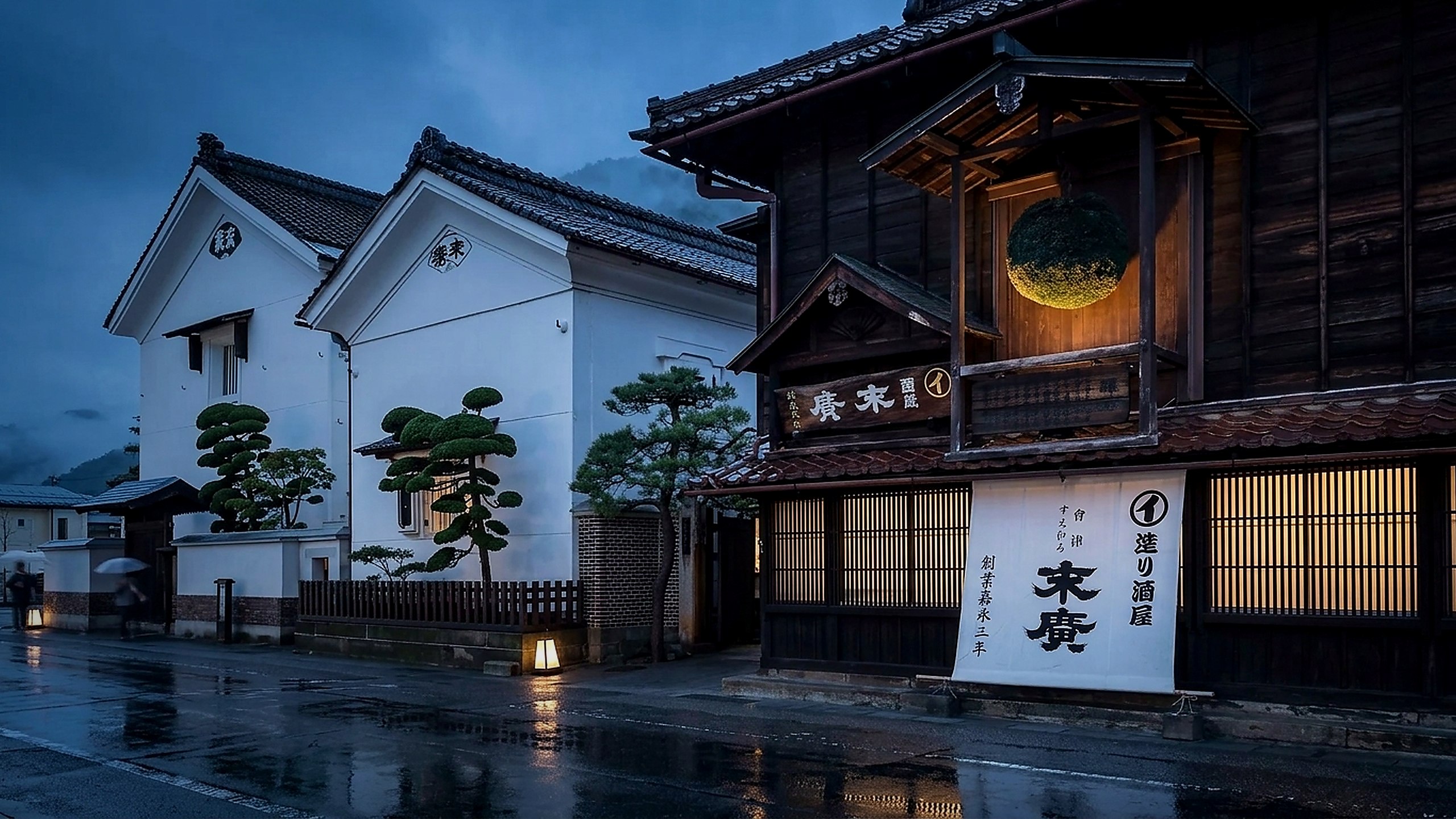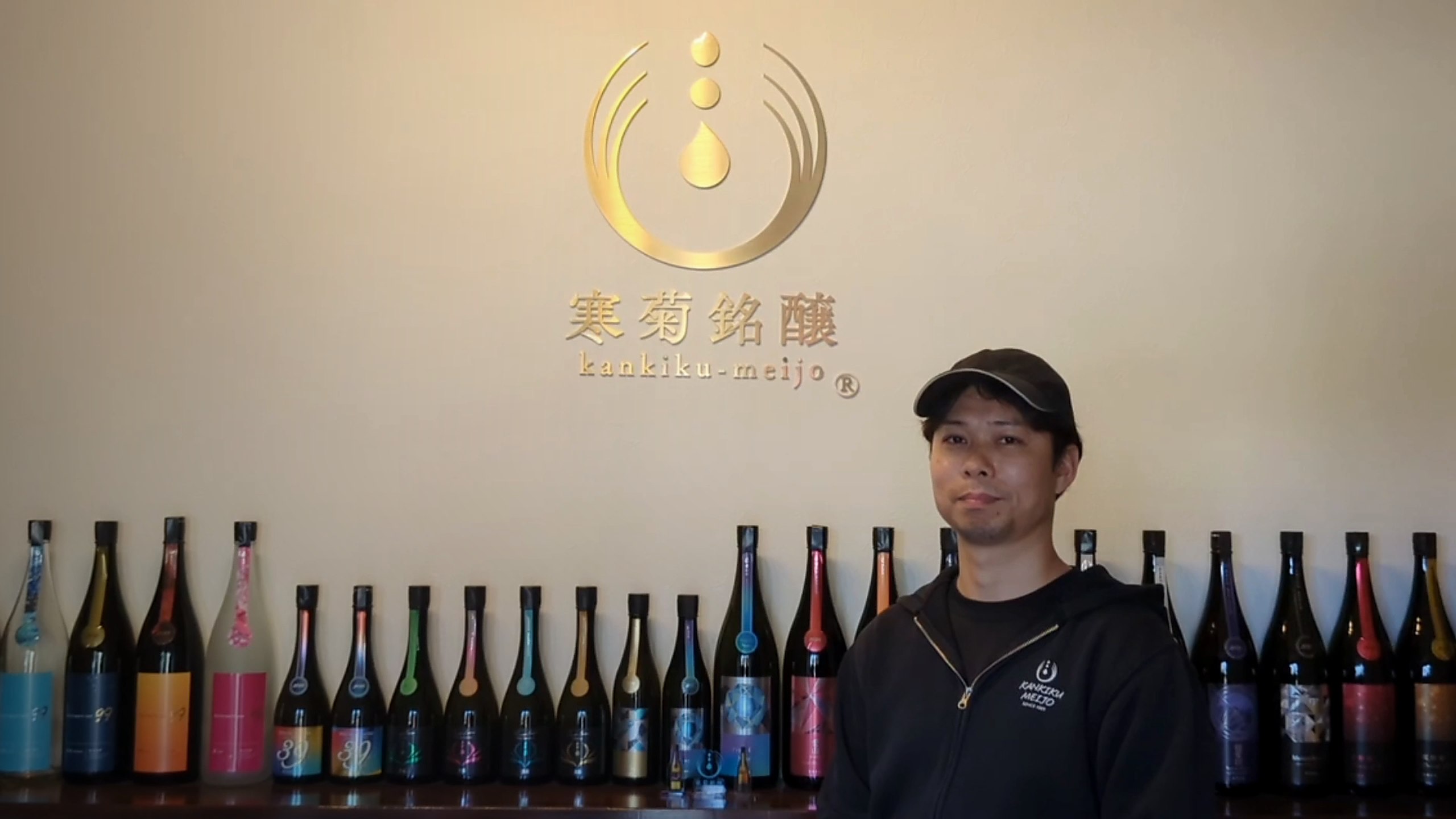
Aramasa Shuzo in Akita. The birthplace of Yeast No.6, opening sake's future through wooden barrel brewing.
Yeast No.6 — The Microorganism That Changed Sake History
In 1930, a groundbreaking yeast was isolated from the moromi (fermenting mash) at Aramasa Shuzo in Akita City. Named "Kyokai Yeast No.6," it possessed gentle aromas and a steady fermenting power that holds even at low temperatures. For over 90 years it has been used by breweries nationwide — the oldest brewing yeast still in distribution in Japan. By enabling ginjo brewing in cold regions, it powered modern sake's quality revolution from the microbial side.
Aramasa Shuzo was founded in 1852. The brewery maintains a strict policy of using only Yeast No.6. "We brew our sake with the yeast our brewery gave birth to" — this isn't mere stubbornness, but a declaration of identity. In an era when ever-more-aromatic new yeasts are released year after year, Aramasa deliberately narrows itself to the oldest one. Constraint as the wellspring of creation: that is the starting point of the Aramasa aesthetic.
Quick Specs & 2026 Rating Summary
Yusuke Sato's Revolution
After graduating from the University of Tokyo and working as a journalist, Yusuke Sato inherited the family brewery in 2007. The reforms begun by an eighth-generation head who had re-examined the brewery from the outside overturned one industry convention after another.
First, he eliminated all added brewing alcohol, converting entirely to junmai production. Next, he introduced kimoto brewing for all production — not the fast-starter method that adds lactic acid artificially, but the traditional Edo-era approach of raising the yeast starter on the strength of the brewery's own wild lactic bacteria. It takes several times the labor, but a starter forged through microbial survival competition is resilient, and it gives the sake a clear, defined line of acidity. He restricted all rice to Akita-grown, and in time pushed toward pesticide-free cultivation. Most shocking of all was his declaration of a complete transition from stainless steel tanks to wooden vats.
It is well known that sales plunged for a time during the reforms and long-standing accounts walked away. Sato did not bend: sake, he insisted, should be an expression of land and microbes, not an industrial product.
Why Wooden Vats Now
From the Meiji era onward, sake fermentation vessels shifted to enamel and then stainless steel tanks — easier temperature control, superior hygiene. But Sato questioned the "homogenized taste" that resulted.
Wooden vats breathe. Lactic bacteria and yeast inhabit the gaps between wood fibers, forming a microbial ecosystem unique to each brewery. Just as oak barrels add depth to wine, wooden vats bring complexity to sake. Better still, a new vat grows attuned to the brewery's microbes with each passing year — the vessel itself accumulates the "memory of the house." Yeast No.6, kimoto, and wooden vats: only when all three align is the "taste of Akita's land" that Aramasa pursues complete.
Aramasa even launched a project to craft its own vats from Akita cedar — an ambitious effort to revive vat culture across the industry, given that only a handful of vat craftsmen remain in Japan. In the Uyashinai district outside Akita City, a "sake of the land" initiative is also underway, uniting pesticide-free rice growing with brewing.
The No.6 Series — A Design Revolution
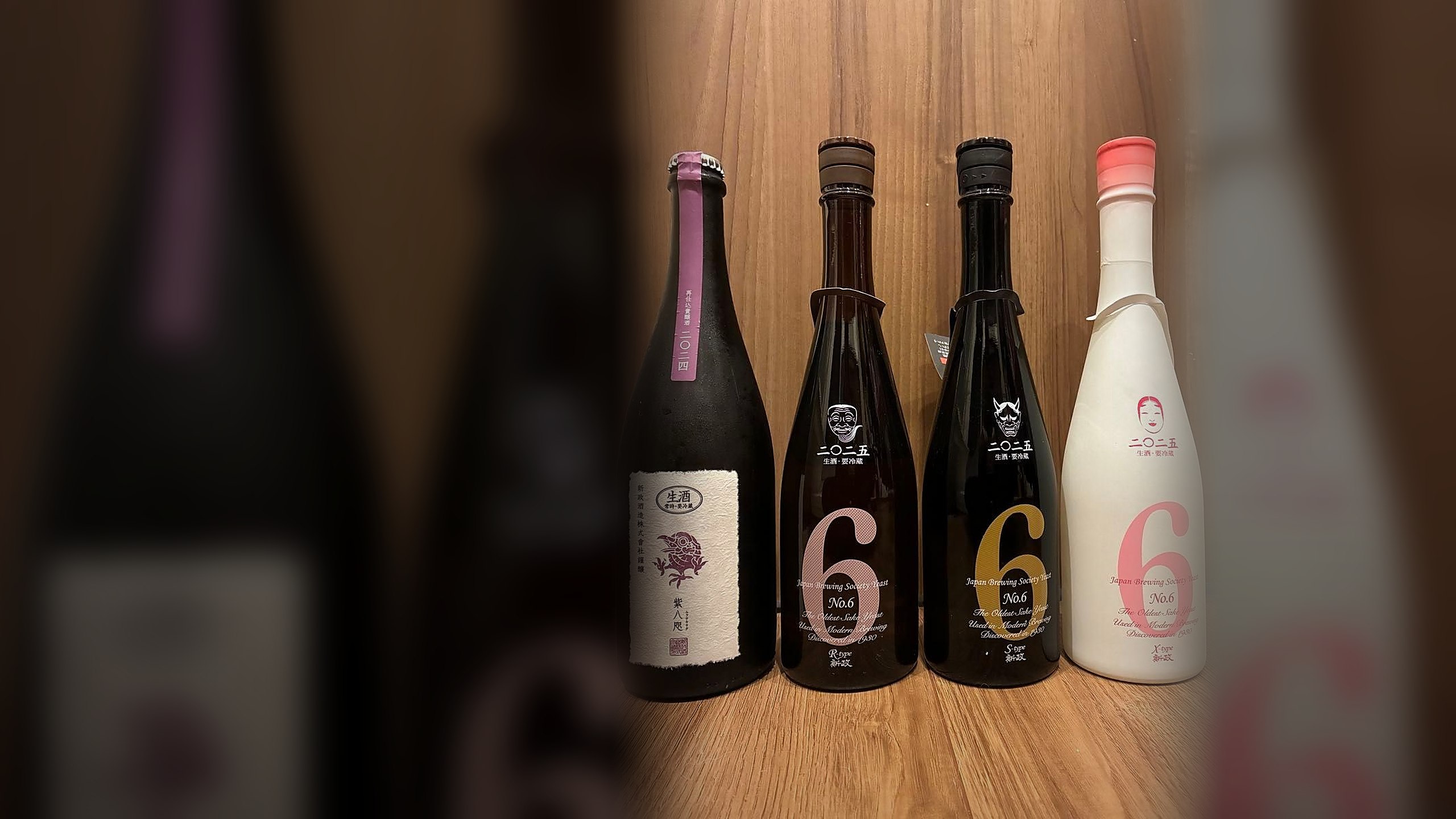
Aramasa's signature "No.6" series revolutionized sake label design. Minimal, modern aesthetics stand in stark contrast to traditional calligraphic labels, carrying the refinement of a wine bottle. The austerity of a single numeral "6" and a type designation visualizes the philosophy inside: an aesthetic of subtraction.
X-type (Extra) is the top expression of fresh nama sake, polished transparency coexisting with depth. S-type (Superior) is the balanced style, brimming with nama freshness. R-type (Regular) is approachable everyday sake. All share the delicate acidity of Yeast No.6 — a refreshing citrus character of lemon and grapefruit layered with lactic nuance from the kimoto method. The faintly spritzy, fresh attack turns the heads of Champagne and Riesling lovers alike.
The Colors Series — Expressing Rice Varieties Through Color
The Colors series is an experimental line assigning a distinct color to each sake rice variety — Ecru for Akita Sake Komachi, Lapis Lazuli (Ruri) for Misato Nishiki, Viridian for Rikuu No.132, Cosmos for Kairyo Shinko, and Earth for Rikuu No.20 — visually expressing each grain's character. By holding yeast, method, and polishing ratio constant, the design purely extracts varietal difference: a cepage theory for sake. Just as wine is discussed through grape varieties, Colors is an experimental apparatus proving sake can be discussed through rice.
The Aramasa Lineup in Practice: From No.6 to Colors
Each Aramasa series is an experiment built around a precise question. No.6 asks about the beauty of nama sake; Colors asks about rice varietality; the kijoshu line asks about fermentation's wild side. Which question you start with shapes your whole Aramasa story.
| Cuvée | Class & Polish | Ref. Price in Japan (720ml) | Character & Serving Temp |
|---|---|---|---|
| No.6 R-type | Junmai, nama (polish varies by vintage) | approx. ¥2,000 (3-5x abroad) | The standard and the gateway; citrus acidity with a faint spritz. 8-10C |
| No.6 S-type | Junmai, nama | approx. ¥2,800 | The balanced middle: freshness with depth. 8-10C |
| No.6 X-type | Junmai, nama | approx. ¥3,800 | The flagship; polished clarity coexisting with complexity. 10-12C |
| Colors Ecru | Junmai, Akita Sake Komachi, wooden vats | approx. ¥2,100 | Pasteurized stability makes it the ideal first Aramasa; light and precise. 10-12C |
| Colors Lapis Lazuli | Junmai, Misato Nishiki, wooden vats | approx. ¥2,400 | The core of the series; architectural acidity and umami. 10-12C |
| Hinotori (kijoshu) | Kijoshu, wooden vats | approx. ¥3,500 | Sake brewed with sake — honey and white grapes in a dessert key. 8-10C |
Evolution After Opening (Day 1 → Day 7)
Practical Buying & Storage Advice
The Future Aramasa Envisions
Aramasa's innovation isn't nostalgia. It's verifying Edo-era methods with modern microbiology and connecting them to the future. Wooden vats, kimoto, Yeast No.6, pesticide-free rice — this combination of "old techniques" resonates head-on with the global currents of terroir and sustainability. The brewery that holds the oldest yeast draws the sharpest vision of the future. That paradox is what's opening sake's next century.
Featured Breweries, Specs & Flavor Balance
| Flagship Label | Brewery & Region | Signature Rice & Water | Brewery Profile |
|---|---|---|---|
| Aramasa | Aramasa Co., Ltd. (6-2-35 Omachi, Akita-shi, Akita 010-0921, Japan) | Pesticide-Free & Estate-Grown Akita Rice (Kairyo Shinko, Rikuu No. 132, Misato Nishiki, Akita Sakekomachi) · Mount Taihei Subterranean Soft Water (Akita City) | Brewery Profile |
| Kiokeshikomi | Terada Honke Co., Ltd. (1964 Kozaki-Honjuku, Kozaki-machi, Katori-gun, Chiba 289-0221, Japan) | Pesticide-Free Organic Rice (Miyama Nishiki, Gohyakumangoku, Koshihikari, Kamenoo) · Sacred Forest Subterranean Well Water from Kozaki Shrine Grounds | Brewery Profile |
| Mirai | Uehara Shuzo Co., Ltd. (1524 Ota, Shin-Asahi-cho, Takashima-shi, Shiga 520-1502, Japan) | Wataribune No. 2, Tamasakae, Ginfubuki, Yamadanishiki, Omachi, Kamenoo · Hira Mountain Range Artesian Subterranean Soft Water (Harie Spring Vein) | Brewery Profile |
| Denshu | Nishida Shuzoten Co., Ltd. (46 Ohama, Oaza Aburakawa, Aomori-shi, Aomori 038-0059, Japan) | Hanaomoi, Hanafubuki, Kojononishiki, Yamada Nishiki · Mt. Hakkoda Subterranean Soft Spring Water | Brewery Profile |
| Lapis Lazuli | Nakano Sake Brewery Co., Ltd. (2-24 Higashihonmachi, Handa-shi, Aichi 475-0878, Japan) | Chita Peninsula Yumeginga, Wakamizu, Yamada Nishiki · Chita Peninsula deep subterranean water (soft water) | Brewery Profile |
| Ubusuna | Hananoka Shuzo Co., Ltd. (2226-2 Nishiyoshiji, Nagomi-machi, Tamana-gun, Kumamoto 861-0906, Japan) | Nagomi-machi Natural-Farmed Homase, Higo Kabashiko, Yamada Nishiki · Brewery Shrine Spring Water (Kikuchi River Basin Subterranean Water from the Former Bairin Tenmangu Well) | Brewery Profile |
As the birthplace of Kyokai No. 6 yeast, Aramasa represents the pinnacle of modern sake brewing through 100% kimoto fermentation in cedar vats using exclusively Akita-grown rice. Its vibrant citrus acidity, low-alcohol elegance, and silky sweetness evoke fine white Burgundy, pairing effortlessly with sashimi, crudo, and modern gastronomy.
Fermented in traditional cedar vats by natural-sake pioneer Terada Honke, 'Kiokeshikomi' delivers profound earthy depth, smoky wooden-vat complexity, and transcendent warmth when heated. Supported by Sacred Forest Subterranean Well Water from Kozaki Shrine Grounds, it layers firm structure that shines even at hot atsukan temperatures, subtle smoky, earthy complexity, savory richness that blossoms when warmed to reflect the unmistakable terroir of Chiba.
A special-edition junmai sake brewed with pesticide-free organic rice and indigenous yeast, embodying a sustainable vision for the future of sake brewing.
Pioneering Japan's pure-rice revival since 1974 under the philosophy of using nothing beyond the rice paddy, Denshu is Aomori's crowning jewel. Crafted from prized rice varieties like Hanaomoi, Kojonishiki, and Yamadanishiki, it delivers plush, savory rice umami with a razor-sharp finish that elevates bluefin tuna sashimi, uni, and grilled scallops.
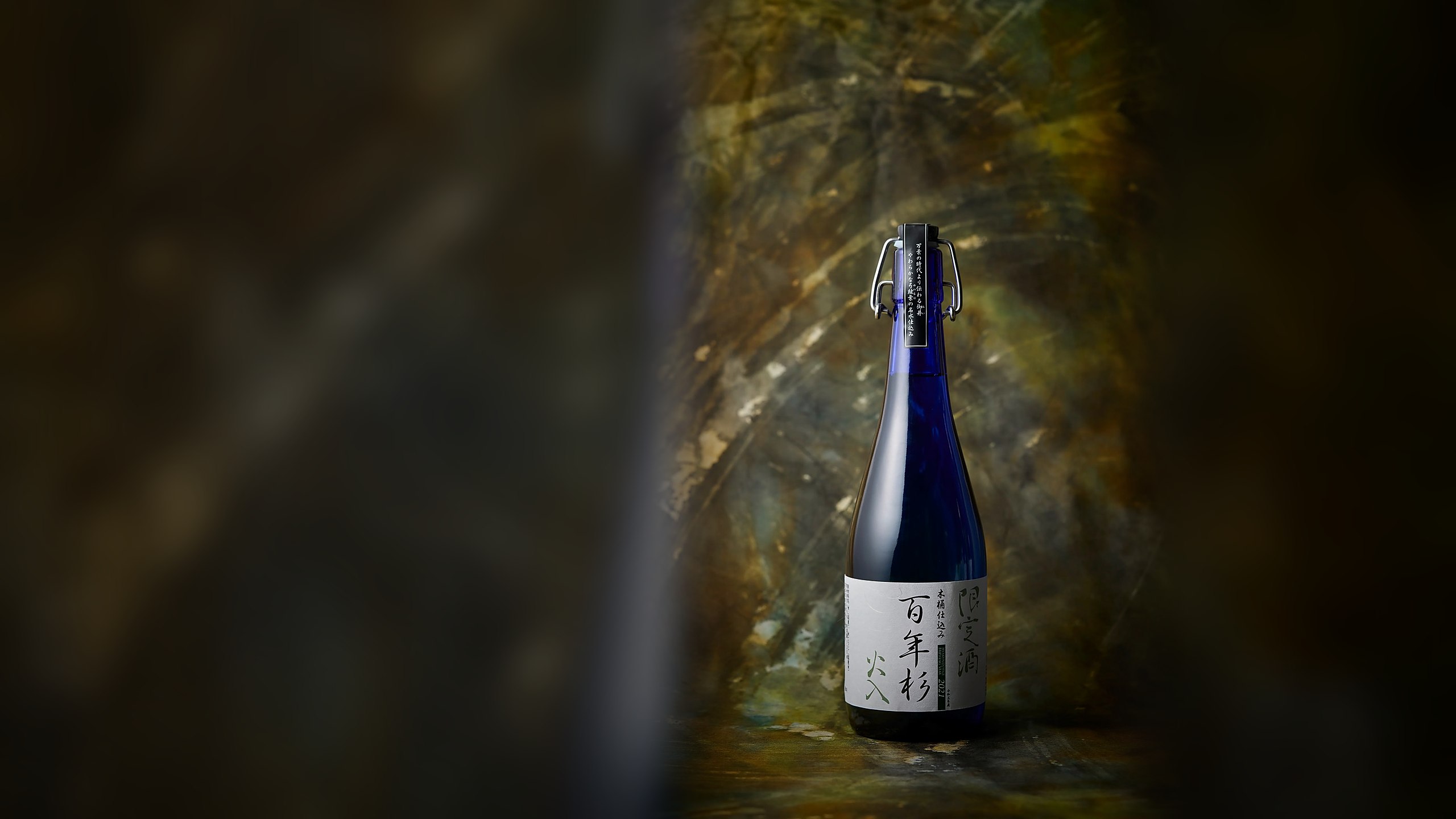
Presented in a striking ultramarine bottle, this modern Junmai Daiginjo made from Aichi Yumeginga rice offers fruity aromatics and supple sweetness. Brewed by Nakano Sake Brewery Co., Ltd. in Aichi using Chita Peninsula deep subterranean water (soft water) and Chita Peninsula-grown Yumeginka, Wakamizu, and Yamada Nishiki, it brings together versatile, cuisine-elevating table-sake poise, savory, resonant rice umami, harmonious balance of umami, acidity, and finish with memorable poise.
Created in Nagomi, Kumamoto by Kiyotaka Kanda of Hananoka Shuzo to embody 'earth, native ecosystem, and ancestral regenerative agriculture,' Ubusuna stands at the absolute pinnacle of contemporary craft sake. Brewed with pesticide-free local Yamada Nishiki and revived Edo-era heirloom rices (Homase and Kabashiko) using kimoto and wooden vats, its Champagne-like pinpoint mousse and electric orchard-and-yuzu complexity transfix fine-dining tables worldwide.
Recommended Pairing
Weekly Sake & Tasting Dispatch
Curated seasonal releases, sub-zero arrivals, and tasting city guides across global editions.