How to Read a Sake Label
Culture & Trends

How to Read a Sake Label

2025-12-087min readSakeStream
Back
EXECUTIVE SUMMARY & KEY TAKEAWAYS

Polish ratio, SMV, acidity... How to decode sake's personality from the label.

Key Sections in This Report:

Sake Labels Are Treasure Maps

Sake labels are dense with everything you need to predict a bottle's personality. Learn to read them and you can gauge an unknown brand at a glance. Just as a wine label speaks through grape variety and appellation, a sake label publishes the blueprint of the brew through its designation, rice, polish ratio, sake meter value, and acidity. Put bluntly: until you can read the label, every sake purchase is a gamble on pretty packaging. This guide works step by step through the grading system, the numbers, and the words that say more than numbers ever could. Master it once, and both the shop shelf and the restaurant list resolve into focus at an entirely different resolution.

Quick Specs & 2026 Rating Summary

Core theme
A decoding method that predicts the taste of an unfamiliar bottle with high accuracy from public label data — designation, polish ratio, SMV, and acidity
Scientific mechanism
SMV is a specific-gravity (residual sugar) index; acidity totals lactic, malic, and succinic acids. Only their intersection reveals actual sweetness and body
2026 global trend
Export growth has driven bilingual English-Korean back labels and QR codes disclosing yeast and acidity data
Benchmark bottles in practice
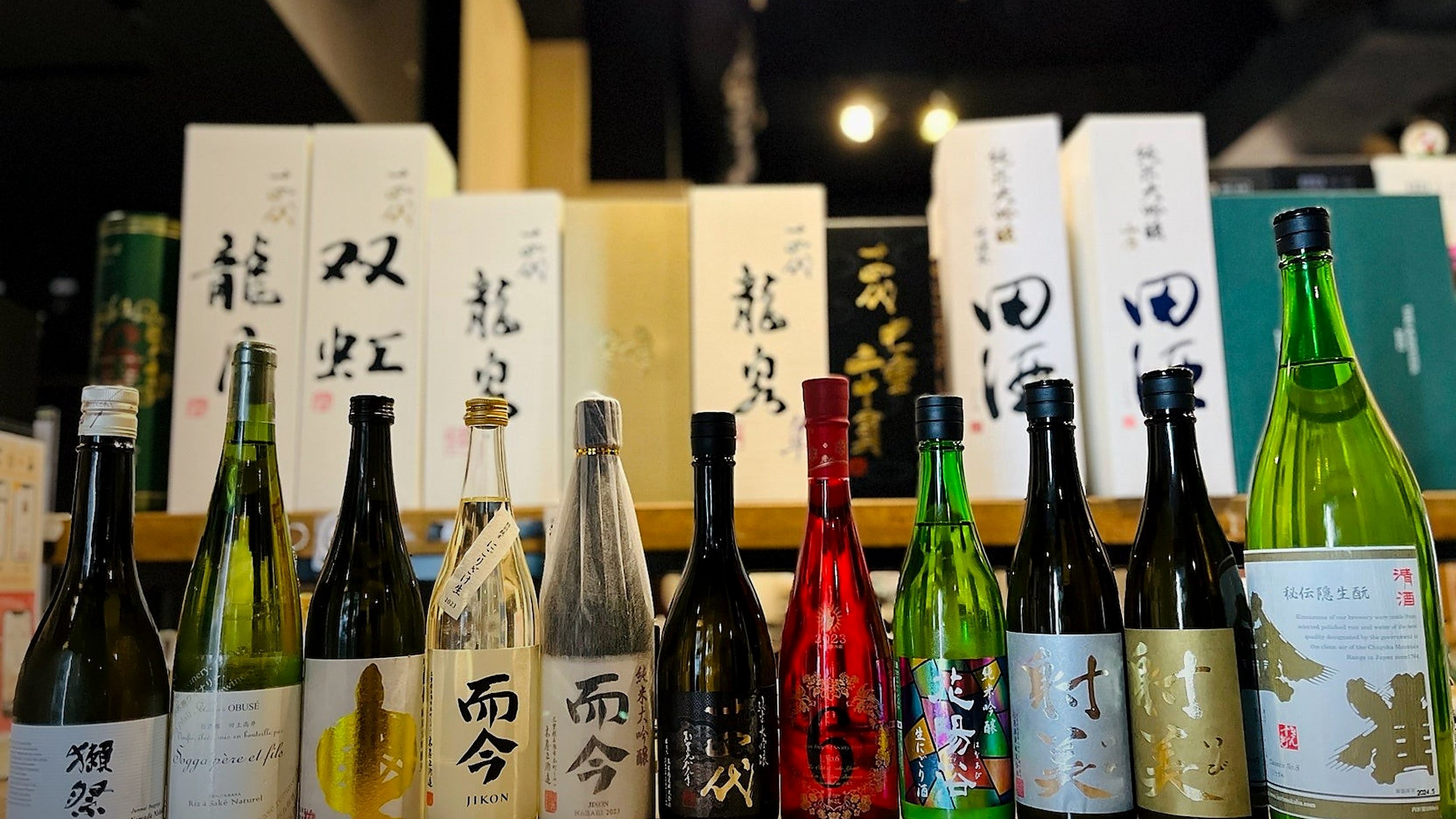
Dassai (獺祭) Migaki 23 (23% polish), Aramasa (新政) with its No.6 yeast and kimoto method, Jikon (而今) unfiltered nama genshu — labels that double as brewery manifestos

Designation (Grade)

The core classification system, based on ingredients and polish ratio:

Junmai Daiginjo — Rice and koji only, polished to 50% or less. The pinnacle.

Daiginjo — Polished to 50% or less with brewer's alcohol added. Peak aromatic expression.

Junmai Ginjo — Rice/koji only, 60% or less. Balanced.

Ginjo — 60% or less with alcohol. Fruity, light.

Tokubetsu Junmai — Rice/koji only, 60% or less or special process.

Junmai — Rice/koji only, no polish requirement. Rice umami shines.

Honjozo — 70% or less with small alcohol addition. Clean finish.

One crucial correction to a common misunderstanding: the designations mark differences in design philosophy, not a ladder of quality. The small addition of brewer's alcohol is a traditional technique for fixing aromatics in the sake — which is precisely why competition entries are so often daiginjo. Junmai or not is a declaration of stylistic intent, not of rank.

Polish Ratio (Seimaibuai)

Lower numbers mean more polished. At 50%, the outer half of each grain is milled away. The proteins and lipids concentrated in the outer layers cause off-flavors and excess heaviness, so lower polish generally means cleaner, more elegant sake — the extreme being Dassai's Migaki 23 at 23%. Yet the tide has begun to turn: a growing number of breweries deliberately brew at 80-90% polish to showcase the rice's power and complexity. By 2026, "more polished is better" is no longer gospel. With avant-garde houses like Senkin (仙禽) and Aramasa (新政) championing the aesthetics of low polish, this pluralism has spread worldwide. Read the polish ratio not as a quality score but as the expressive range the brewery has chosen.

Sake Meter Value (Nihonshudo)

A specific-gravity index with water at ±0: more sugar swings negative (sweet), less swings positive (dry). +3 to +5 reads as typically dry, -3 and below as sweet. But SMV alone cannot settle the question. A -2 sake with high acidity can taste crisply dry, while a +5 with gentle acid and abundant umami compounds can feel round and sweet. Only in combination with acidity does the real flavor come into focus.

Acidity

The total of lactic, malic, and succinic acids. Higher acidity sharpens the palate — even a nominally "sweet" SMV can taste dry with enough acid. The normal range is 1.0-1.8; above 2.0 expect pronounced, white-wine-like acidity. If an amino acid value is also listed, higher numbers signal a richer, umami-driven style. Plot SMV on one axis and acidity on the other, and every sake finds its place on a single map from light-dry to rich-sweet.

Other Key Info

Yeast — Association No.7 is gentle, No.9 balanced, No.1801 flamboyant. No.6 — used exclusively by Aramasa (新政) — is the oldest surviving association yeast, yielding calm, refined sake.

Rice — Yamada Nishiki: elegant. Omachi: powerful. Gohyakumangoku: light.

Water — Hard water makes bold sake; soft water makes gentle sake.

Alcohol — Typically 15-16%. A genshu designation signals undiluted strength at 17-20%; around 13% reads as a deliberately light, modern design.

Production Date — Newer means fresher vibrancy, though aged bottles offer deeper maturation.

Reading the Words Beyond the Numbers

Some label vocabulary speaks louder than any figure. Muroka nama genshu — unfiltered, undiluted, unpasteurized — promises the sake exactly as it left the tank: fresh and concentrated. Kimoto and yamahai name traditional starters built on wild lactic bacteria, forecasting complex acidity and depth. Arabashiri, nakadori, and seme identify which fraction of the pressing you hold — nakadori being the clearest, most prized heart. These words, dancing across the labels of Jikon (而今) and Kankiku (寒菊), state the brewery's design intent outright. A BY (brewing year) notation opens the further pleasure of following a sake through maturation like a vintage. And if you spot tobin-gakoi or shizuku-dori, you hold competition-grade extravagance — only the drops that fell freely from the pressing bags, collected one by one. The richer the label's vocabulary, the more visible the sheer labor the brewery poured into that single bottle.

The In-Store Cheat Sheet

Label knowledge only matters if you can use it in the aisle. Here is the translation table for the terms you will actually meet, plus a three-step selection method.

Label TermMeaningBuying Hint
Junmai Daiginjo / Junmai GinjoRice and koji only; polished to 50% / 60% or belowStart here for aromatics; serve chilled
Tokubetsu Junmai / JunmaiRice umami takes the leadThe shelf to search for food sake
HonjozoA touch of brewer's alcohol for crispnessThe warming-sake workhorse; peak value zone
Polishing ratio __%Smaller number, more polishedLower means pricier — not necessarily tastier to you
SMV (+/−)Plus trends dry, minus trends sweetA guide only; always read it with acidity
Acidity~1.0 = gentle, 1.8+ = firmHigh acidity loves Western and meat dishes
Nama / Namazume / NamachozoHow many times, and when, it was pasteurizedAny "nama" on the label means keep refrigerated
Muroka nama genshuUnfiltered, unpasteurized, undilutedFresh and powerful; the new generation's favorite style
BY (brewery year)When it was brewedYoung = fresh, older = matured; read the intent
①

First, Narrow the Shelf by Classification

A fragrant date-night bottle: junmai daiginjo. A nightly food companion: tokubetsu junmai. Warm comfort: honjozo. Convert purpose into classification, and you can already read 80% of the store.

②

Then Predict the Flavor from SMV × Acidity

SMV +3 with acidity 1.1 promises tidy, light dryness; SMV −2 with acidity 1.8 promises juicy sweet-tartness. Cross the two numbers and the flavor blueprint appears.

③

Finally, Check for "Nama" — and the Shelf It Sits On

Any bottle marked nama belongs in the refrigerator case. Never buy nama off a room-temperature shelf — this single rule prevents most failures. A trustworthy sake shop is, by definition, one where that discipline is absolute.

1,215 Breweries · 2,891 Labels · Neutral Archive
Linked from 1,215 Breweries · 2,891 Labels · 8,673 Reviews

Featured Breweries, Specs & Flavor Balance

Flagship LabelBrewery & RegionSignature Rice & WaterBrewery Profile
DassaiDassai Inc. (Asahi Shuzo Co., Ltd.) (2167-4 Osogoe, Shuto-cho, Iwakuni-shi, Yamaguchi 742-0422, Japan)Yamada Nishiki (100% Exclusive Use) · Osogoe Natural Subterranean Soft Water (Shuto-cho, Iwakuni)Brewery Profile
AramasaAramasa Co., Ltd. (6-2-35 Omachi, Akita-shi, Akita 010-0921, Japan)Pesticide-Free & Estate-Grown Akita Rice (Kairyo Shinko, Rikuu No. 132, Misato Nishiki, Akita Sakekomachi) · Mount Taihei Subterranean Soft Water (Akita City)Brewery Profile
JikonKiyasho Sake Brewery Co., Ltd. (314-1 Honmachi, Nabari-shi, Mie 518-0726, Japan)Yamadanishiki, Aiyama, Omachi, Hattannishiki, Senbonnishiki · Subsurface water from the Nunobiki mountain range (brewery well water, soft water)Brewery Profile
SenkinSenkin Co., Ltd. (106 Baba, Sakura-shi, Tochigi 329-1321, Japan)Domaine Sakura Estate-Grown Rice (Kamenoo, Yamada Nishiki, Omachi) · Kinugawa River System Subterranean Ultra-Soft Water (Domaine Aquifer)Brewery Profile
2167-4 Osogoe, Shuto-cho, Iwakuni-shi, Yamaguchi 742-0422, Japan · Dassai Inc. (Asahi Shuzo Co., Ltd.) (Est. 1948)
Dassai安定フルーティガス
Osogoe Natural Subterranean Soft Water (Shuto-cho, Iwakuni) Yamada Nishiki (100% Exclusive Use) Proprietary Cultured Ginjo Yeast (Kyokai No. 9 & No. 1801 Strains)

From the mountain valleys of Iwakuni, Yamaguchi, Dassai revolutionized global sake through data-driven precision brewing and ultra-polished Yamada Nishiki rice. Led by the iconic Dassai 23, its opulent aromas of white peach and Poire Williams, silky-smooth mid-palate, and crystalline finish pair effortlessly with fine Edomae sushi and Michelin-starred French cuisine.

Flavor Balance (1–5 Rice Grains)Shows which flavor direction the balance leans toward (1 to 5 rice grains), never a quality rank or score.
Serving & Glassware:Recommended Temperature: 10–13°C (Chilled / Hanabie to Suzubie) / Recommended Glassware: Thin-rimmed, medium-bowled white wine glass (such as Riedel O Daiginjo). Avoid over-chilling below 6°C so the delicate esters are not muted. Upon pouring, experience crystalline purity from Osogoe Natural Subterranean Soft Water (Shuto-cho, Iwakuni) and lifted orchard-fruit aromatics; after 15 minutes as the glass warms to 14°C, silky Yamada Nishiki (100% Exclusive Use) mid-palate umami opens gracefully.
Global Gastronomy Pairings
• Shimonoseki wild tiger pufferfish tessa wrapped around Yasuoka green onion and kelp-cured Hagi tilefish
• Dry-aged Korean wild sea bream hoe and chilled king prawn salad (daeha-naengchae) in pine-nut sauce
• Poached lobster tail and white asparagus warm salad with yuzu-infused citrus hollandaise
“Returning to Dassai 23 after years of drinking geeky craft sake reminds you just how astonishingly pure and regal it is. Honeyed melon and floral notes glide across the palate before vanishing into a water-pure finish.”
Domestic Review · SAKETIME / 国内口コミ吟醸香マイスター
“The most requested luxury sake in our Paris dining room. The elegance achieved from Yamada Nishiki polished down to 23% creates a transcendent pairing with poached blue lobster and caviar, rivaling prestige Champagne.”
Global Sommelier · Vivino / Global SakeClaire Laurent
“Opened a bottle of Dassai Beyond for visiting international guests. The moment it hit the Riedel glasses, the entire table lit up with floral perfume—an undeniable superstar bottle.”
SNS Buzz · X (Twitter) / Instagram@tokyo_gourmet_note
6-2-35 Omachi, Akita-shi, Akita 010-0921, Japan · Aramasa Co., Ltd. (Est. 1852)
Aramasaガス酸味ワイン
Mount Taihei Subterranean Soft Water (Akita City) Pesticide-Free & Estate-Grown Akita Rice (Kairyo Shinko, Rikuu No. 132, Misato Nishiki, Akita Sakekomachi) Kyokai No. 6 Yeast (Birthplace Brewery, 100% Exclusive Use)

As the birthplace of Kyokai No. 6 yeast, Aramasa represents the pinnacle of modern sake brewing through 100% kimoto fermentation in cedar vats using exclusively Akita-grown rice. Its vibrant citrus acidity, low-alcohol elegance, and silky sweetness evoke fine white Burgundy, pairing effortlessly with sashimi, crudo, and modern gastronomy.

Flavor Balance (1–5 Rice Grains)Shows which flavor direction the balance leans toward (1 to 5 rice grains), never a quality rank or score.
Serving & Glassware:Recommended Temperature: 10–14°C (Cool Cellar) & 42–45°C (Bain-Marie Warmed / Nurukan) / Recommended Glassware: Thin-rimmed white Burgundy or Riedel O Daiginjo wine glass. Right after opening at 10°C, savor the vibrant micro-effervescence and taut lactic/citric tension shaped by Mount Taihei Subterranean Soft Water (Akita City); after 15 minutes as it reaches 14°C, multi-dimensional Pesticide-Free & Estate-Grown Akita Rice (Kairyo Shinko, Rikuu No. 132) umami and savory kimoto complexity blossom.
Global Gastronomy Pairings
• Charcoal-grilled Hinai-jidori chicken kiritanpo hotpot and smoked iburigakko with sake-lees cream cheese
• Charcoal-seared Hanwoo 1++ brisket point (chadolbagi) paired with aromatic minari and chilled dongchimi radish
• Pan-roasted Breton blue lobster with Champagne, tarragon, and cultured butter beurre blanc
“Opened a bottle of No. 6 X-type and was floored by the burst of Shine Muscat and white peach aromatics, backed by multi-dimensional kimoto acidity and crystalline purity from cedar vat fermentation. An absolute masterpiece of contemporary Japanese brewing.”
Domestic Review · SAKETIME / 国内口コミ六号酵母の求道者
“A revelation for Burgundy and Champagne lovers: laser-focused lactic and malic tension, delicate wooden-vat complexity, and incredible concentration at just 13% ABV. Pairs brilliantly with Dover sole and shellfish.”
Global Sommelier · Vivino / Fine Wine & SakeMarc L.
“Finally scored Amaneko and Ecru through a bottle shop lottery! That lively micro-effervescence on opening and bright, juicy sweet-tart balance is unmatched—turned my wine-drinking friends into instant sake fanatics.”
SNS Buzz · X (Twitter) / Reddit r/Sake@tokyo_sake_hunter
314-1 Honmachi, Nabari-shi, Mie 518-0726, Japan · Kiyasho Sake Brewery Co., Ltd. (Est. 1818)
Jikonバランスガス旨味
Subsurface water from the Nunobiki mountain range (brewery well water, soft water) Yamadanishiki, Aiyama, Omachi, Hattannishiki, Senbonnishiki In-house cultured yeast (Kyokai No. 9 lineage)

Named after the Zen phrase 'living fully in the present moment,' Jikon by 6th-generation brewer Tadakatsu Onishi in Nabari, Mie stands at the absolute summit of modern sake. Radiant muscat and white peach aromatics, crystalline Nunobiki mountain soft-water sweetness, and electric acidity achieve a golden-ratio balance that enchants on its own or alongside Matsusaka Wagyu and fine sushi.

Flavor Balance (1–5 Rice Grains)Shows which flavor direction the balance leans toward (1 to 5 rice grains), never a quality rank or score.
Serving & Glassware:Recommended Temperature: 10–13°C (Chilled / Hanabie to Suzubie) / Recommended Glassware: Thin-rimmed, medium-bowled white wine glass (such as Riedel O Daiginjo). Avoid over-chilling below 6°C so the delicate esters are not muted. Upon pouring, experience crystalline purity from Subsurface water from the Nunobiki mountain range (brewery well water, soft water) and lifted orchard-fruit aromatics; after 15 minutes as the glass warms to 14°C, silky Yamadanishiki, Aiyama, Omachi, Hattannishiki, Senbonnishiki mid-palate umami opens gracefully.
Global Gastronomy Pairings
• Ise-Shima spiny lobster sashimi and chilled ginjo-steamed Matoya oysters
• Jeju silver belt-fish sashimi and delicate pan-fried scallop & cod jeon with citrus soy
• Poached lobster tail and white asparagus warm salad with yuzu-infused citrus hollandaise
“Jikon Tokubetsu Junmai Muroka Nama and Junmai Ginjo Aiyama deliver bursting freshness, translucent juicy sweetness, and a laser-precise acid line—the Platonic ideal of modern Japanese sake.”
Domestic Review · SAKETIME / 国内口コミ日本酒マイスター
“One of the most coveted cult sakes among global sommeliers; the contrast between silky Nunobiki soft-water texture and vibrant acidity commands the spotlight at any Michelin table.”
Global Sommelier · Vivino / Global SakeAlexander Sterling
“How Toji Tadakatsu Onishi translates every rice variety—from Iga Yamada Nishiki to Sakemirai and Hakutsuru Nishiki—through Jikon's golden balance is pure wizardry.”
SNS Buzz · X (Twitter) / Instagram@jikon_chronicles
106 Baba, Sakura-shi, Tochigi 329-1321, Japan · Senkin Co., Ltd. (Est. 1806)
Senkinガス酸味甘酸っぱい
Kinugawa River System Subterranean Ultra-Soft Water (Domaine Aquifer) Domaine Sakura Estate-Grown Rice (Kamenoo, Yamada Nishiki, Omachi) Ambient Brewery Yeast (No Added Yeast), Tochigi Prefectural Yeast

Pioneering the 'Domaine' terroir concept in Tochigi using estate-grown Kamenoo, Yamada Nishiki, and Omachi rice irrigated by the same ultra-soft Kinugawa aquifer as its brewing water, Senkin crafts natural sake through 100% kimoto fermentation in cedar vats with minimal rice polishing. Vibrant green apple and muscat tartness intertwines with savory wood-aged minerality, making it an extraordinary match for French seafood dishes, soft bloomy-rind cheeses, and herb-driven appetizers.

Flavor Balance (1–5 Rice Grains)Shows which flavor direction the balance leans toward (1 to 5 rice grains), never a quality rank or score.
Serving & Glassware:Recommended Temperature: 10–14°C (Cool Cellar) & 42–45°C (Bain-Marie Warmed / Nurukan) / Recommended Glassware: Thin-rimmed white Burgundy or Riedel O Daiginjo wine glass. Right after opening at 10°C, savor the vibrant micro-effervescence and taut lactic/citric tension shaped by Kinugawa River System Subterranean Ultra-Soft Water (Domaine Aquifer); after 15 minutes as it reaches 14°C, multi-dimensional Domaine Sakura Estate-Grown Rice (Kamenoo, Yamada Nishiki, Omachi) umami and savory kimoto complexity blossom.
Global Gastronomy Pairings
• Charcoal-grilled Tochigi Wagyu tenderloin with tamari-sansho glaze and dashi-simmered kanpyo
• Crispy-scaled Jeju tilefish (okdom) and creamy abalone liver (geu) rice porridge risotto
• Pan-roasted Breton blue lobster with Champagne, tarragon, and cultured butter beurre blanc
“Beyond the signature juicy malic-acid brightness that made Modern Senkin famous, the recent return to Edo-era kimoto and cedar-vat methods has added remarkable mid-palate depth and structural grip. As it warms from chilled to cellar temperature, the wild, earthy umami of local Kamenoo rice blossoms beautifully.”
Domestic Review · SAKETIME / 国内口コミ東京・日本酒ペアリング研究家
“The single easiest sake to introduce to French natural wine collectors. With genuine single-aquifer Domaine terroir and electric Riesling-like acidity balanced by gentle lactic creaminess, it pairs effortlessly with pan-seared scallops and lobster.”
Global Sommelier · Vivino / Wine & Sake SommelierJulien M., Paris Sommelier
“Did a side-by-side tasting of Senkin Organic Nature and Classic Kame-no-O—unbelievable how a 90%+ rice polishing ratio can taste this luminous, brisk, and silky. The sweet-tart citrus snap and minimalist bottle design make it an instant favorite.”
SNS Buzz · X (Twitter) / Instagram@nat_sake_tokyo

Recommended Pairing

Mackerel Simmered in Miso
With a minus-SMV, high-acid junmai — sweet-salty miso met by sweet-tart sake, the chart in action.
Roast Beef
Become the person who picks the 1.8-acidity kimoto — its acid leans into the meat’s iron.
Camembert
With a bottle marked muroka nama genshu — powerful sweet umami locking into the creamy rind.
SakeStream
A neutral global sake editorial archive and database documenting 1,215 breweries, 2,891 labels, brewing water & rice provenance, and 8,673 verified tasting records without proprietary ranking tiers.
Weekly Sake Dispatch

Weekly Sake & Tasting Dispatch

Curated seasonal releases, sub-zero arrivals, and tasting city guides across global editions.
ArticlesBreweries